
Our Work
Building climate leadership in Central and Eastern Europe
Central and Eastern Europe (CEE) has a critical role to play in securing Europe’s climate-neutral future and the opportunity to become an innovation catalyst for the continent’s energy transition.
CATF seeks to build a robust, durable policy landscape that enjoys broad political support in the CEE region and provides a resilient pathway to decarbonisation.

Our approach
Central and Eastern Europe’s energy transition, while fraught with compound socio-economic challenges, offers growth opportunities that should be properly evaluated and utilised. The region is facing a myriad of challenges, including overreliance on coal, relatively slow renewable deployment, aging infrastructure, and fiscal constraints that need to be tackled with the following principles in mind:
- A systems perspective: Climate action cannot be an isolated focus; it must be integrated with energy and economic security, a just transition, and should be contemplated within the wider political economy and geopolitical context.
- An options-based strategy: Energy transition challenges in Central and Eastern Europe necessitate the development of climate policies that incorporate broad solutions options and enable each country in the region to deploy solutions that suits its individual resource endowments and economies.
- An innovation-driven and cost-efficient transition: The energy transition should be underpinned by durable policies that enjoy broad political support and make the region appealing for long-term investments and continuous innovation, while delivering on energy and economic security.

CATF in Central and Eastern Europe
The region’s strategic importance for Europe’s energy security and innovation potential provides a clear opportunity to cultivate and leverage its leadership. CATF works in the CEE region to advance climate solutions tailored to each country’s resource endowments, foster cross-regional partnerships, and develop country-specific analysis to inform local decision-making.

Clean Air Task Force CEE Fellowship
Empowering energy and climate leaders of tomorrow
This transformative eight-week program is for early-career professionals committed to tackling the complex challenges of the energy transition in Central and Eastern Europe (CEE). Fellows will collaborate with Clean Air Task Force (CATF) experts, engage in rigorous learning sessions, and will have an opportunity to get connected with peers and key stakeholders in the energy and climate space.

CEE Pulse
CEE Pulse is CATF’s new bi-annual update dedicated to climate and clean energy developments across Central and Eastern Europe. It offers a clear snapshot of how momentum is building in the region and where it’s headed next.










Our areas of focus in Central and Eastern Europe
Learn more about CATF Programs active in the CEE region
Advanced Nuclear Energy
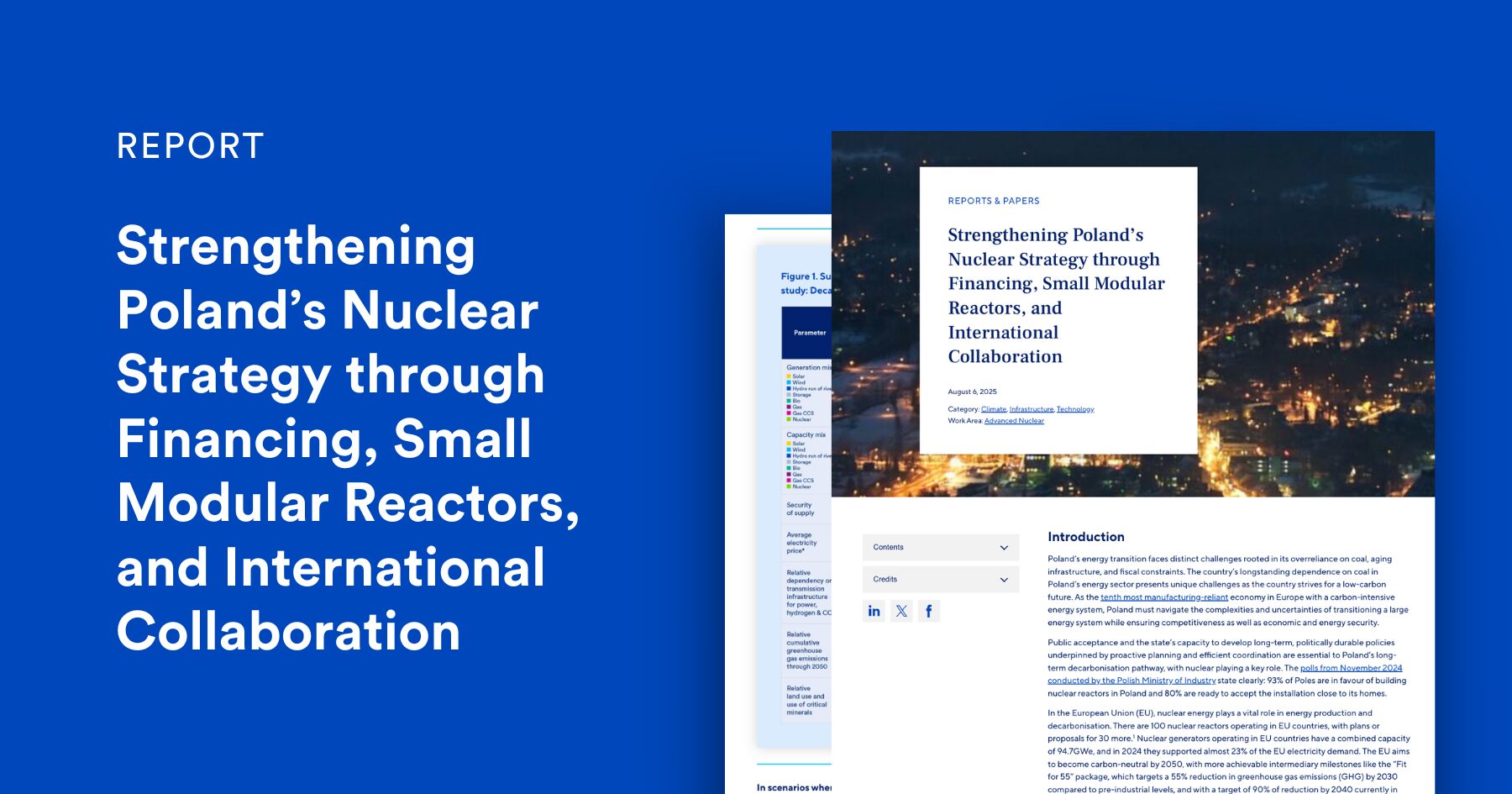
CATF is working to support the role of advanced nuclear energy in Central and Eastern Europe as an important part of a secure, low-carbon energy system. As countries in the region seek to reduce dependence on imported fossil fuels while increasing the need for clean reliable power for industry and economic growth, nuclear energy offers a proven source of firm, 24/7 carbon-free electricity. It can complement variable renewables, stabilise power systems, and help deliver deep decarbonisation while strengthening energy sovereignty and regional cooperation.
While many CEE countries (like Czechia, Hungary, or Slovakia, for example) already highly rely on nuclear energy, others like Poland do not yet generate electricity from nuclear energy sources but are actively developing it. In this context, the sector is entering a new phase. Extending the lifetime of existing reactors, advancing new large-scale projects, and accelerating the development of small modular reactors (SMRs) can expand nuclear energy capacity cost-effectively and flexibly, at the scale and speed needed to decarbonise.
At the same time, enabling policy frameworks, access to public and private financing, and strengthening supply chains are critical to unlock investment and ensure timely deployment. With the right conditions in place, nuclear energy can continue to play a central role in delivering reliable, affordable, and clean energy across the CEE region.
Explore more:
Carbon Management
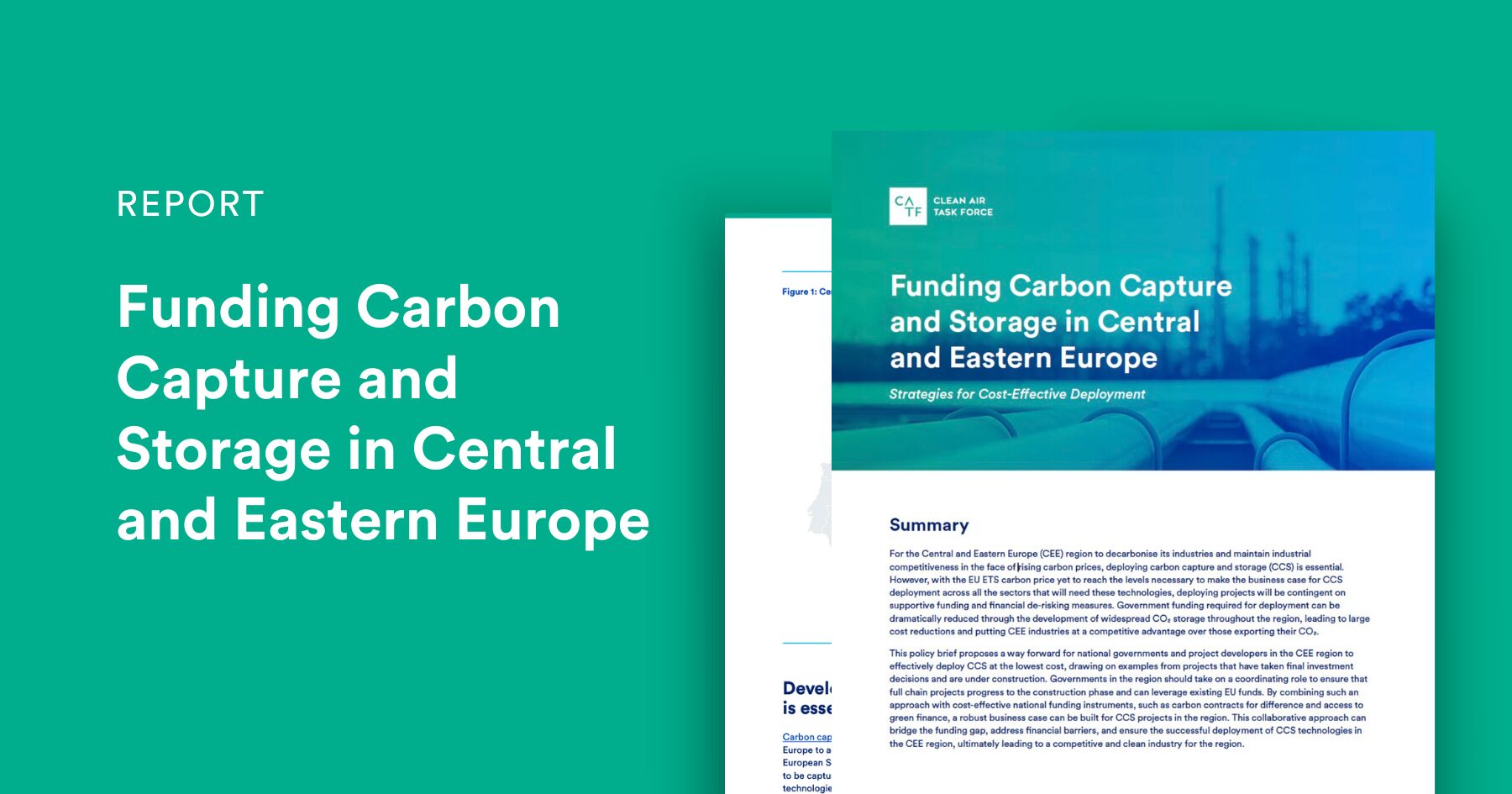
CATF is working to accelerate the deployment of carbon management solutions in Central and Eastern Europe to support industrial competitiveness and long-term decarbonisation for hard-to-abate sectors. This includes advancing policies and projects related to carbon capture and storage (CCS), CO₂ transport infrastructure, and CO₂ removal solutions. As EU climate and industrial policy evolves, carbon management will be critical for regional industries to reduce emissions while remaining competitive.
Central and Eastern Europe is well positioned to play a strategic role in Europe’s emerging carbon management ecosystem. The region combines a strong industrial base with growing cross-border infrastructure opportunities and significant potential for geologic storage of CO2. CATF works with policymakers, industry stakeholders, and regional partners to help create the enabling conditions for deployment across the region, including through regulatory and financing frameworks development, regional cooperation, infrastructure planning, and increased public awareness of the economic and industrial opportunities linked to carbon management.
Explore more:
Clean Firm Power
Achieving an affordable, reliable, and abundant clean energy future in the CEE region will require electricity systems to grow while rapidly decarbonising. Delivering a low-carbon, least-cost power system will depend on scaling renewables, storage, and demand-side solutions, as well as on deploying clean electricity technologies with complementary capabilities. These technologies, such as nuclear fission and advanced geothermal, can deliver “firm” power — meaning reliable, dispatchable power regardless of weather or seasonal variability — with low-carbon emissions.
Evidence from decades of electricity system analysis shows that complementing variable renewable energy sources and grid build out with increased storage and clean firm generation capacity provides several benefits, including a more cost-effective and timelier decarbonisation, reduced need for fossil-based electricity generation, reduced infrastructure buildout, and land-use. Therefore, incorporating the development and deployment of clean firm technologies into the region’s energy transition strategy, could enable growth at lower total system costs and allows CEE to decarbonise fast and with resilience.
Find out more in our report: What is clean firm electricity, and why does it matter for decarbonizing the grid
Industrial Innovation
CATF is working to advance a credible industrial decarbonisation agenda for Central and Eastern Europe; one that strengthens competitiveness and translates EU climate and industrial policy into pragmatic solutions.
CEE countries are among the fastest-growing economies in the European Union and represent a market of roughly 120 million people, offering significant potential demand for low-carbon and decarbonised industrial products. The region is home to a highly skilled workforce and a strong industrial base, with a significant concentration of hard-to-abate sectors, such as steel, cement and lime, chemicals, refining, and other energy-intensive industries. These industries are located especially in southern, central, and northern Poland, Moravia-Silesia, Slovakia, Hungary, Romania, and along the Baltic and Black Sea coasts. The region’s industries emit approximately 90.5 million tonnes of CO₂ annually while continuing to play a vital role in national economies, contributing a higher-than-average share of gross value added (GVA) compared with the EU average.
Against a backdrop of high energy and carbon costs and intensifying global competition, industrial decarbonisation must be approached not only as a climate imperative, but also as an opportunity for growth, resilience, and competitiveness. As a result, CEE is strategically important for the demand for low-carbon industrial products and the development of clean technologies.
Explore more:
Methane
CATF is working to rapidly reduce methane emissions across Central and Eastern Europe as a critical step toward near-term climate and air quality goals. Methane is a potent greenhouse gas, trapping over 80 times more heat in our atmosphere than carbon dioxide over a 20-year period. Cutting emissions from the oil and gas industry, coal mines, agriculture, and waste can deliver some of the fastest climate benefits available today.
In the CEE region, where energy systems are still transitioning and legacy infrastructure remains in place, addressing methane leakage is a key opportunity to improve air quality, reduce wasted resources, and strengthen environmental performance without compromising energy security.
Since 2021, CATF has partnered with national and regional CSOs in Poland, Croatia, Czechia, Hungary, Bulgaria and Romania to bring the landmark EU Methane Regulation to practice, monitor implementation, and hold polluters accountable. We combine our advanced methane detection capabilities and expertise with field investigations, engagements with communities, and media outreach to the invisible methane visible, and reduce methane pollution.
Read more on how to protect the EU Methane Regulation.
Next-Generation Geothermal
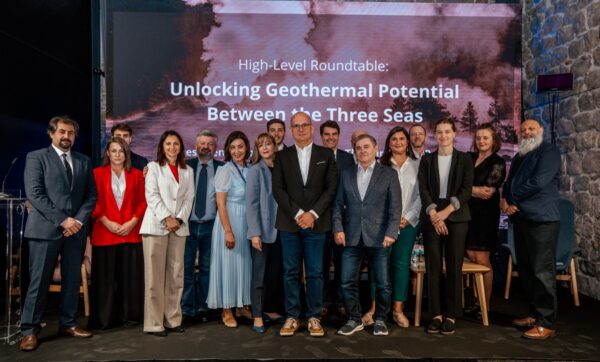
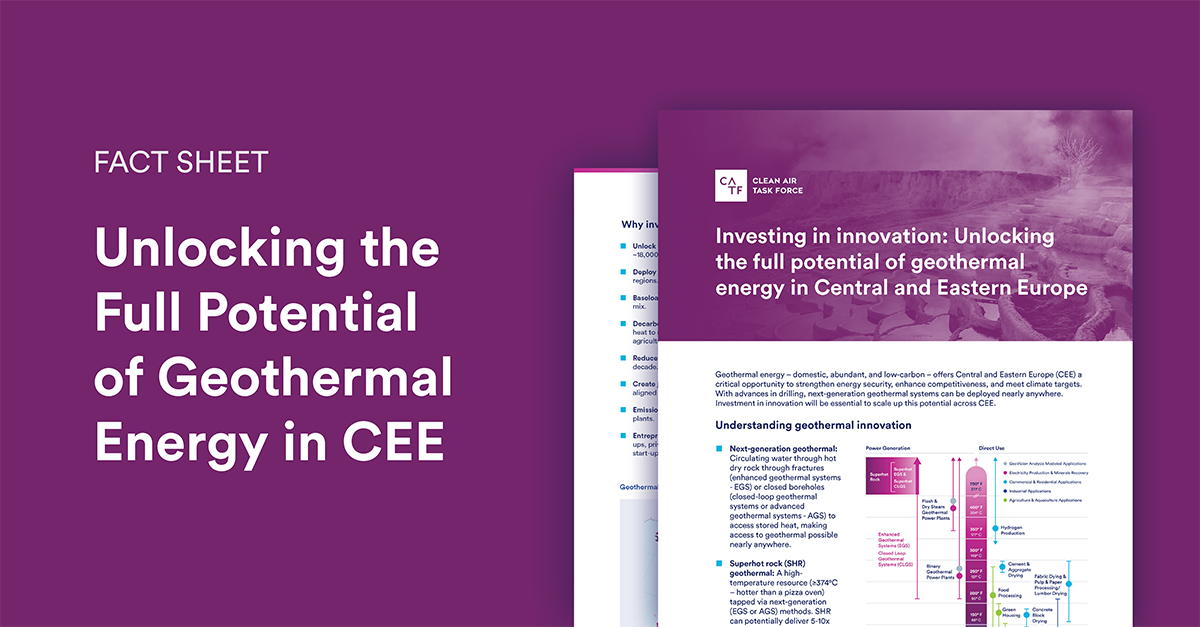
CATF is working with partners across the region to advance next-generation geothermal energy in Central and Eastern Europe, where countries continue to face the questions of how to expand domestic heat and power production, reduce reliance on imported fuels, and ensure a stable, low-carbon energy system. Geothermal offers a compelling solution: a reliable, always-on energy source that can enhance energy security, support industrial competitiveness, and contribute to the development of a more integrated energy corridor while reducing exposure to fossil fuel price volatility.
Although geothermal has long been used in Europe primarily for heating, its role in cost-competitive power generation has been limited. This is beginning to change, and a large share of this cost-competitive potential is concentrated in Central and Eastern Europe, particularly in Hungary and Poland. Other countries, including Romania, Croatia, and Slovakia, also hold significant promise for next-generation geothermal development. While some markets are at an early stage, they combine favourable geological conditions with increasing momentum around clean energy transitions.
Explore more:
Resources
Central and Eastern Europe


Poland




Other Countries




CEETalks: Building Resilient Climate Solutions in Central and Eastern Europe
The potential of Central and Eastern Europe is often overlooked. While the region still has work to do to reduce its emission intensity, it offers real opportunities to become a key voice of the continent’s energy transition. Watch the webinar recordings below to explore this potential with leading experts and how the region can charter a path toward resilient decarbonisation and energy and economic security.


Meet our experts working
in the CEE region
-

Sara Albares Martin
Regional Manager, Europe -

Alex Carr
Deputy Director, Industrial Innovation, Europe -

Jenna Hill
Superhot Rock Geothermal Innovation Manager -

Théophile Humann-Guilleminot
Senior Manager, Emissions Monitoring and Fieldwork, Methane Pollution Prevention -

Julia Kislitsyna
Communications Manager, Europe -

Bartłomiej Kupiec
Policy Advisor, Central and Eastern Europe -

Tamara Lagurashvili
Director, Central and Eastern Europe -

Brandon Locke
Associate Director, Global Policy, Methane Pollution Prevention -

Malwina Qvist
Director, Nuclear Energy Program -

Codie Rossi
Senior Policy Manager, Carbon Management -

Lindsey Popken
Program Implementation Manager, Nuclear Energy Program -

Adriana Matić
Associate, Carbon Capture, Europe
Stay in the know
Sign up to receive updates on our work in Central and Eastern Europe
"*" indicates required fields
