
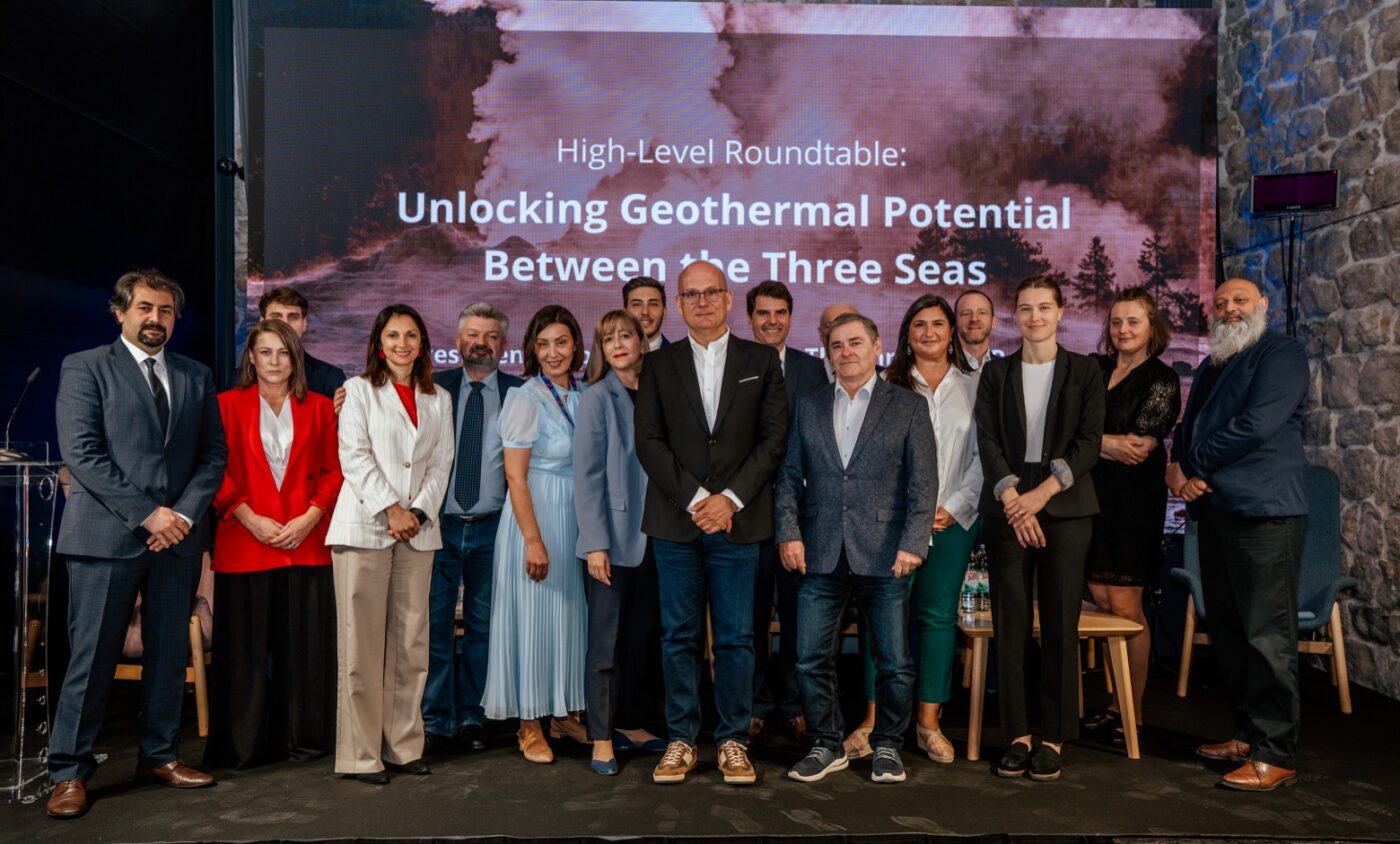
Unlocking geothermal potential in the Three Seas region: Key takeaways from the Dubrovnik TSI roundtable

This blog was co-authored by Nolan Theisen, Senior Research Fellow for Energy and Climate Policy, Slovak Foreign Policy Association and Katarzyna A. Kurek, Chief Executive Officer, Geotermia Polska
In late April 2026, stakeholders from across government, industry, finance, and civil society gathered in Dubrovnik under the auspices of the Three Seas Initiative (TSI) to discuss one of the most underutilized yet strategically significant energy resources in Central and Eastern Europe: geothermal energy.
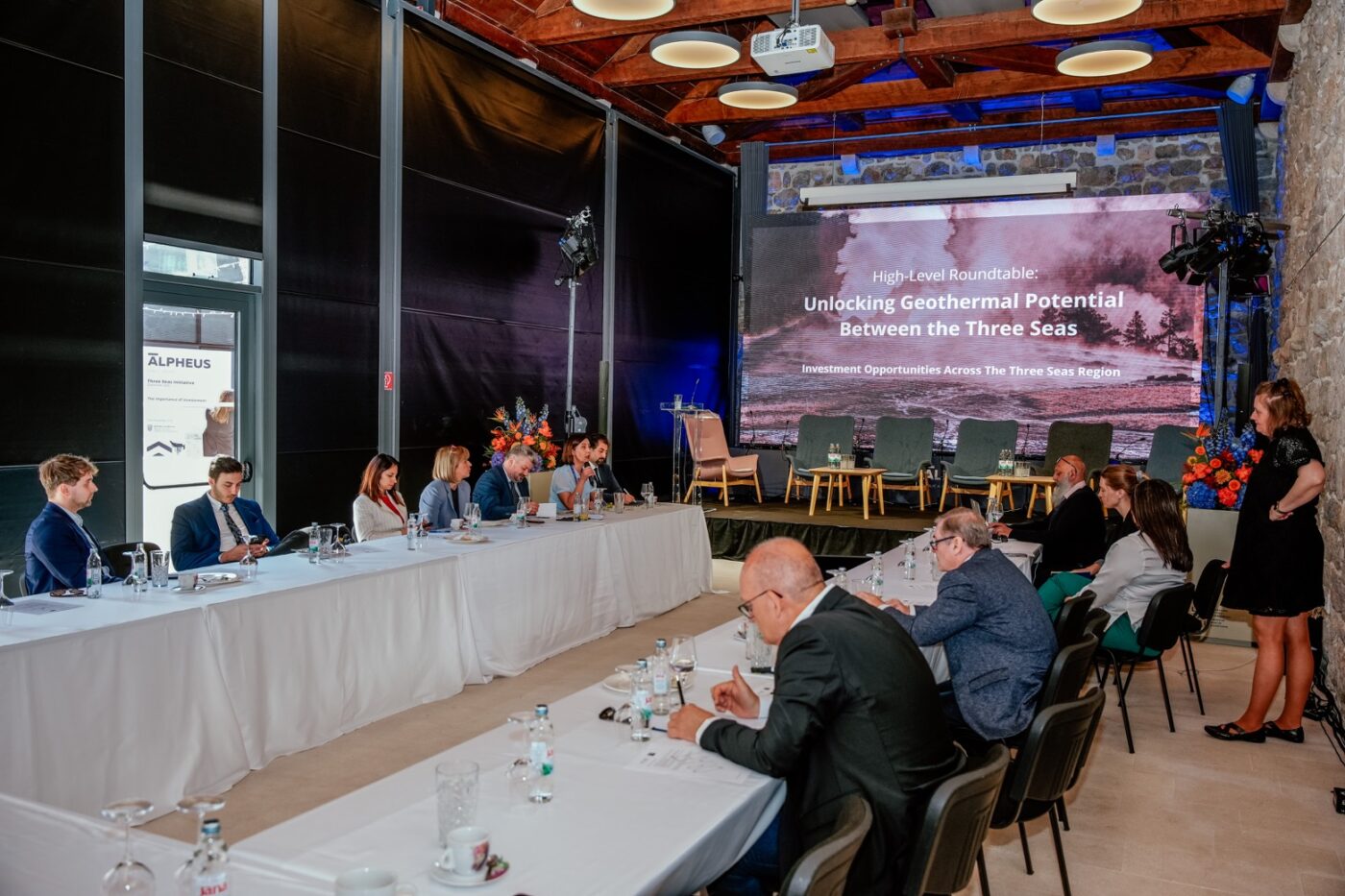
Co-hosted by CATF, CEEGEO Initiative, and Alpheus Public Affairs, the high-level roundtable, Unlocking Geothermal Potential Between the Three Seas, positioned geothermal energy as a strategic infrastructure asset, not simply as another renewable technology. Speakers consistently linked geothermal to energy security, reliable local heat supply, industrial competitiveness, grid stability, and European technological leadership. The central message was clear: geothermal can provide reliable, domestic, 24/7 energy, but it will not scale without clear political targets, faster permitting, risk-sharing finance, and bankable offtake structures.

The Dubrovnik Geothermal Declaration
The key outcome of the roundtable was the endorsement of The Dubrovnik Geothermal Declaration, as expressed by all roundtable participants, and to be passed for further advancement at the next Three Seas Initiative Summit in Bratislava under the Slovak Presidency (2026-2027). The Declaration is a forward-looking framework intended to translate the shared political, technical, and financial priorities into concrete regional action, giving Three Seas countries a common platform to accelerate investment, reduce project risks, harmonize permitting, mobilise international financial institutions, and turn geothermal potential into a bankable infrastructure pipeline.
The declaration sets out three key strategic commitments:
- Investment acceleration and project pipeline (mitigating financial risks), which includes doubling current investment levels by 2030 and the ‘TSI 10’ to showcase and bring attention to a list of ten projects in various stages of development.
- Regulatory harmonization (mitigating permitting and regulatory risks), focusing on faster permitting, standardized offtake agreements, and removal of preferential treatment for fossil fuels in heating and electricity markets.
- Innovation and infrastructure integration (mitigating technological and connectivity risks), including a proposed transatlantic next-generation geothermal pilot by 2029 and positioning geothermal as foundational infrastructure for regional “energy highways.”
What this means for the CEE region
Central and Eastern Europe has the essential foundation for geothermal deployment between favourable geology for power generation, existing district heating network assets, and significant industrial and municipal demand that is mostly met by fossil fuels and biomass. However, participants emphasized that these advantages have not yet been translated into the scalable deployment framework needed to turn this potential into bankable projects.
A key CEE-specific takeaway was that geothermal must move beyond small municipal, pilot, or recreational uses and become part of the region’s baseload energy system. The next practical step is to map geothermal resources, match them with heat and electricity demand, and develop national roadmaps.
The Three Seas Initiative as a catalyst for regional cooperation
The Three Seas Initiative was identified as a key enabling platform for scaling geothermal development. The discussion emphasised that rather than treating geothermal development as a series of isolated national efforts, a coordinated regional approach is needed. This includes the creation of shared project pipelines, harmonized regulatory frameworks, and structured knowledge exchange between countries with different levels of geothermal maturity.
The Three Seas geothermal benchmark cannot rest on the ambitions of a single or few countries alone. Croatia, Hungary, Slovakia, Romania, Poland, and other countries have relevant resources, projects, and policy experience to contribute.
The practical ask is for Three Seas countries to work together on common project models, including standardised heat purchase agreements, municipal offtake contracts, permitting approaches, and cross-border “learning by doing” exchanges.
The Dubrovnik Geothermal Declaration should support stronger national and local 2030 targets, greater involvement of cities and municipalities, reliable district heat, local job creation, and optimization of geothermal resources so that high-temperature geothermal can be used for power, then district heating, and other downstream sources.
Municipalities at the center of deployment
Another practical insight from the roundtable was the central role of municipalities in enabling geothermal deployment, as national plans alone will not be enough. Geothermal targets in NECPs must be matched by municipal and regional heat plans, because real deployment will happen at the city level, from Karlovac, to Miskolc, Cluj, and beyond. All of these municipalities with district heat demand and geothermal potential would benefit from being reached and educated by industry, so that they can adapt their medium and long-term strategies accordingly.
Financing the transition: From high risk to standardized bankability
The financing discussion was clear: international banks and financial institutions have an important role to play, but public money, risk-sharing mechanisms, and national prioritisation must come first.
The European Investment Bank (EIB) can provide long-term loans on favourable terms, which is particularly relevant for geothermal projects because they are capital-intensive and run for decades. EIB also brings experience from financing geothermal projects in Europe and beyond, and can help tailor instruments for both mature projects and more innovative early-stage developments.
However, Member States ultimately decide whether geothermal becomes a national funding priority. This means governments must create the right frameworks so that development banks, international financial institutions, and private investors can step in with confidence.
The most important financial takeaway was the call for dedicated geothermal funding windows. It was argued that although the Three Seas countries are eligible for support through instruments such as the EU Modernisation Fund, geothermal has not yet benefited meaningfully from these sources in the region. The three Seas Initiative countries should replicate programme-level geothermal funding models like Portugal has implemented, rather than relying on isolated one-off project support.
Going forward, international and national financial institutions and regional investment platforms should support geothermal through dedicated financial schemes, including exploration-risk insurance, concessional loans, project-preparation facilities, blended finance, and support for municipal heat offtake structures. These instruments would help move geothermal from a promising resource to a bankable regional infrastructure pipeline.
Importantly, the Dubrovnik Geothermal Declaration is intended not as a symbolic statement, but as a practical policy and investment roadmap. It lays the groundwork for geothermal to become a key pillar of the Slovak Presidency of the Three Seas Initiative agenda, ensuring continuity in implementation.

