
Our Work
Chemicals
Chemicals form the cornerstone of modern life, serving as key components for everyday products like the fertilizers that grow our food and the medicines that keep us healthy. But the chemicals sector is also a major source of industrial greenhouse gas emissions, driven largely by the production of four key chemicals: ammonia, methanol, ethylene, and propylene.
Chemicals by the numbers
7%
Global CO2 emissions are from the chemicals sector.
15 million
People employed globally by the chemicals sector.
$6.2 trillion
Annual revenue generated by the chemicals industry.

Why address emissions from chemicals?
- Addressing emissions from chemicals is crucial, both due to the scale of emissions from current and growing global production – 7% of global CO2 emissions – as well as the extent to which chemicals are embedded in our global economy.
- Chemicals form the building blocks of modern life, contributing to our medicines, food production, and everyday products like cleaning agents. Chemical products like plastics, paints, and solvents are essential for many other manufacturing industries, including the construction and transport sectors which underpin a productive economy.
- Chemicals also supply essential materials for the clean energy transition, from composite materials in wind turbine blades to solvents in EV batteries. Decarbonizing these inputs can help reduce the carbon footprint of downstream materials and products.
Solutions
Chemicals are deeply integrated in global trade and supply chains, and global demand is expected to grow. The state of the chemicals industry is also region-specific, with some mature markets facing decline due to structural and supply chain pressures, while other emerging economies increase their share of the global chemicals market using fossil-based production pathways.
Despite the historic reliance of the chemicals sector on high-emitting fossil fuels, there are solutions available today that could accelerate decarbonization, through the right combination of:
- Deploying technologies like electrification, clean hydrogen, and carbon capture and storage (CCS), supported by an uptake of alternative feedstocks and biochemicals, chemicals recycling, and energy efficiency measures.
- Implementing coordinated policies across energy, trade, and manufacturing to ensure decarbonization of the chemicals sector is sufficiently supported and regulated, while accounting for its complex interdependencies.

Our work
CATF is an emerging voice on chemicals decarbonization, providing deep expertise on the state of the chemicals sector and the technological solutions needed to achieve deep emissions reductions.
Education and thought leadership
- Advance a systems-based narrative for chemicals decarbonization that goes beyond technology to encompass economic prosperity, energy security, and local benefits.
- Develop analytical frameworks that clarify technology interactions, tradeoffs and total system benefits including co-pollutant reductions and modernization gains.
- Communicate the full value of a clean chemicals industry to audiences ranging from local communities to national policymakers.
Coalition building
- Engage policymakers, funders, industry, and civil society around sector-level solutions.
- Build regional coalitions around clean industry clusters to create local demand for decarbonization and reduce infrastructure costs through co-location.
Policy advocacy and innovation
- Design policy approaches that unlock investment, infrastructure upgrades, and coordinated deployment.
- Develop demand-side and supply-side market mechanisms that create the market signals needed for bankable clean industrial projects.
- Advance regulatory and market reforms that enable chemicals decarbonization at scale.
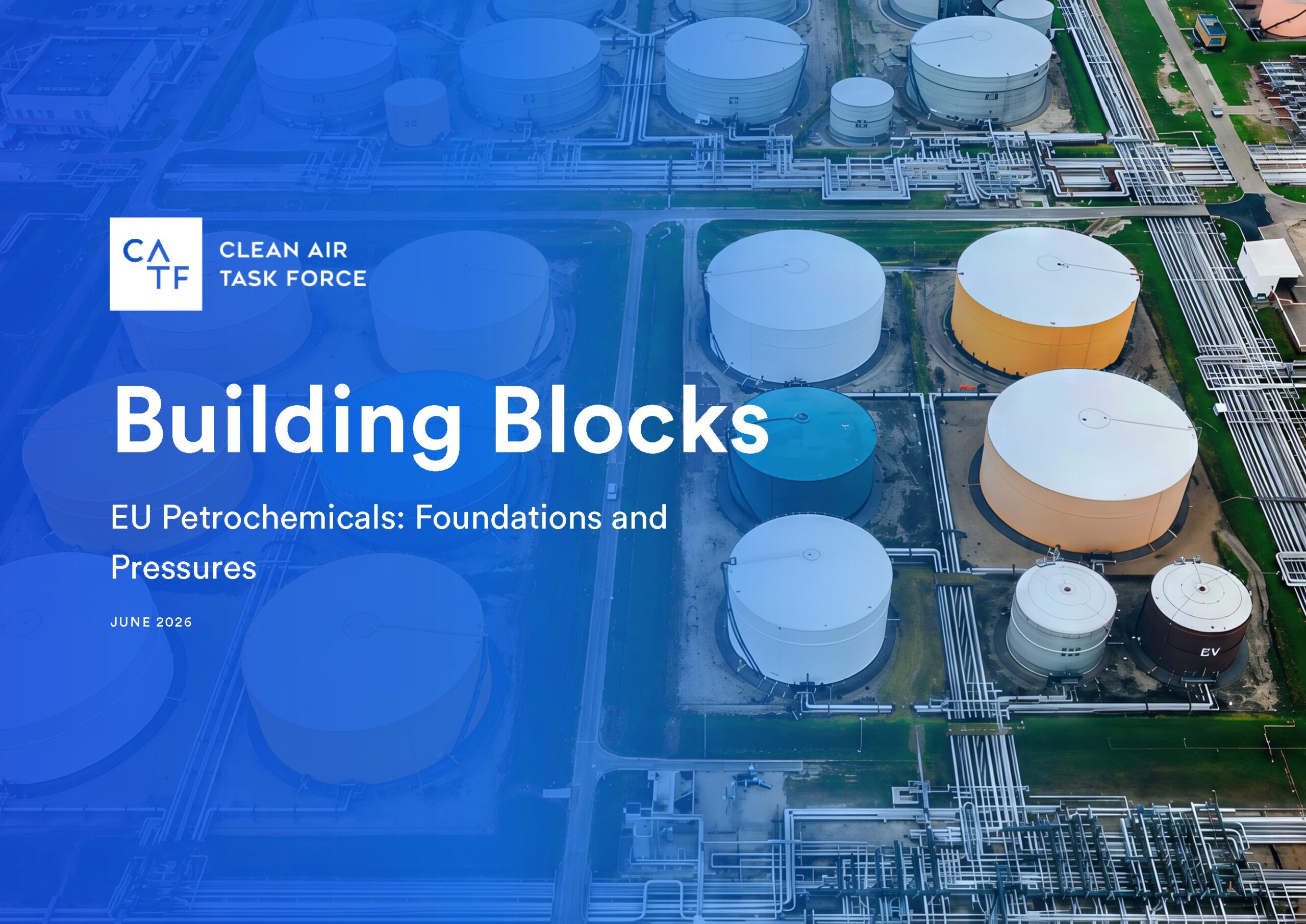
EU Petrochemicals: Foundations and Pressures
The EU’s chemical industry is one of the largest industrial sectors in the bloc, providing the essential building blocks for virtually every downstream sector, from fertilisers for food products, automotive, and construction to packaging and clean energy technologies. It is also a major source of industrial emissions while simultaneously being one of the hardest sectors to decarbonise.
This report aims to close the gap and inform more pragmatic advocacy and regulatory engagement on decarbonising the chemicals sector across the EU and beyond.

EU Nitrogen Fertilisers: Foundations and Pressures
Nitrogen fertilisers are a foundational aspect of the EU chemical industry and underpin EU manufacturing, agriculture, and food security.
The report is designed to support policymakers and industry partners with clear data and overview of the sector’s challenges to engage effectively on the decisions that will determine how the EU nitrogen fertiliser sector stabilises while remaining competitive and preserving economic security.








Related resources
Stay in the know
Sign up to receive updates on the latest in industrial innovation
"*" indicates required fields
