
Cementing California’s Future
Policy Recommendations for Decarbonizing California’s Cement Sector
Executive Summary
As California implements its diverse portfolio of comprehensive climate policies and goals, the industrial sector remains one of the largest greenhouse gas (GHG) emitters in the state, including the cement subsector. Cement is a foundational element to California’s infrastructure and economic advancement, with steady forecasted demand. However, cement production is difficult to decarbonize due to its high-temperature kilns and chemical processes. While the state has begun to implement a new law requiring cement production to achieve net-zero GHG emissions by 2045, the path that will help lead the state to meet that goal is still unclear.
The scope of this report builds on CATF and Synapse Energy Economics accompanying technical report “Assessment of Decarbonization Pathways for California’s Cement Sector” (“technical assessment”) of various potential decarbonization pathways at cement plants: carbon capture and storage (CCS), alternative fuels, kiln electrification, and use of supplementary cementitious materials (SCMs) to create novel cement blends. In light of those decarbonization pathways, this report focuses on the cement sector and explores the policies California could utilize to reach net-zero cement by 2045.
The technical assessment modeled Scope 1 and Scope 2 (purchased electricity emissions) carbon dioxide (CO2) emissions for four different decarbonization pathways plus a baseline model. The purpose of the modeling was to generate high-level cost and GHG emissions estimates that would allow for evaluating tradeoffs between the pathways.
Table ES-1: Modeled Decarbonization Pathways
| Pathway | Technology |
|---|---|
| Pathway 1 | CCS only (Amine-based) |
| Pathway 2 | Electrification + CCS (Compression, Purification) |
| Pathway 3 | Blended cement (LC3) + CCS |
| Pathway 4 | Blended cement (LC3) + Alternative Fuels + CCS |
The purpose of Pathway 1 is to examine the impact of retrofitting an existing cement plant with CCS, without any additional changes to cement production processes, while Pathways 2, 3, and 4 examine CCS in conjunction with other decarbonization strategies available to the cement sector. While the technical assessment found that significant CO2 emissions reductions are achievable with the technologies analyzed in this report, reaching net-zero across all pathways will require designing for higher carbon capture rates, demonstration of kiln electrification at scale, decreasing electric grid carbon intensity, additional carbon removal, or other strategies. A more detailed summary of the conclusions of the technical assessment can be found in the technical assessment section of this report.
A single policy instrument is unlikely to fully address the diverse challenges of decarbonizing the cement sector in California. However, clear policy frameworks establish standards, create economic incentives, improve air quality, and provide economic, regulatory, and financial certainty for industry investments in cleaner technologies. The policies identified in this report should be viewed as a menu of options: not all solutions are needed, nor is the list exhaustive. Instead, this is a set of solutions that could be considered to meet the above-stated goals.
The policy recommendations described in this report fall into three broad categories and are as follows:
A. Financial Support
- State Revolving Loan Fund
- RD&D Funding for Early State Decarbonization Technologies
- Complementary Financial Support Policies
B. Market-based Mechanisms
- Modifying the Cap-and-Invest Program to Better Incentivize Low-Carbon Cement Production
- Establishing a Carbon Border Adjustment Mechanism (CBAM)
- Transparent and Verifiable Third-Party Labeling
- Use of Low-Carbon Cement in Public Procurement and Construction Projects
- Advanced Market Commitments
- Contracts for Difference
C. Regulatory Interventions
- Providing Statewide Guidance on California Best Available Control Technology Requirements for CCS Projects
- Ensuring Public Transparency on Facility Decarbonization Strategies
Seeking ways to decarbonize California’s cement industry will not only reinforce California’s climate leadership, but will also present opportunities for technological innovation, economic advancement, and reducing harmful GHGs and air pollutants. However, achieving these aspirations depends on collaboration between policymakers, industry stakeholders, and community members to develop policies that can help bridge existing policy gaps. State policymakers should consider and prioritize certain policy concepts, such as those listed in this report, to meet the state’s climate goals.
Introduction
As the impacts from climate change have accelerated over the past few decades, California has positioned itself as a global leader in emission mitigation efforts and has set aggressive climate goals through comprehensive policy. In 2006, former Governor Schwarzenegger signed Assembly Bill (AB) 32 (Núñez and Pavley, 2006), California’s landmark climate law, which established the goal of reducing greenhouse gas (GHG) emissions to 1990 levels by 2020.1 The law also gave the California Air Resources Board (CARB) the authority to create market-based compliance mechanisms to achieve emissions reductions in a cost effective manner, which resulted in the Cap-and-Trade (renamed Cap-and-Invest in September 2025)2 and Low Carbon Fuel Standard (LCFS) programs, as well as a requirement that CARB produce, and regularly update, a comprehensive blueprint for how the state would achieve the emission reduction targets laid out in the bill, known as the Scoping Plan.
In 2014, the state met the AB 32 GHG reduction goal four years ahead of schedule,3 and in 2022, California updated its GHG reduction targets through legislation, AB 1279 (Muratsuchi, 2022), to reflect the opportunity for further reductions. AB 1279 established the goal for the state to reach economy-wide net-zero GHG emissions no later than 2045 and to reduce anthropogenic GHG emissions by at least 85% below 1990 levels by 2045.4 Achieving these statewide goals will require action across all sectors of the economy.
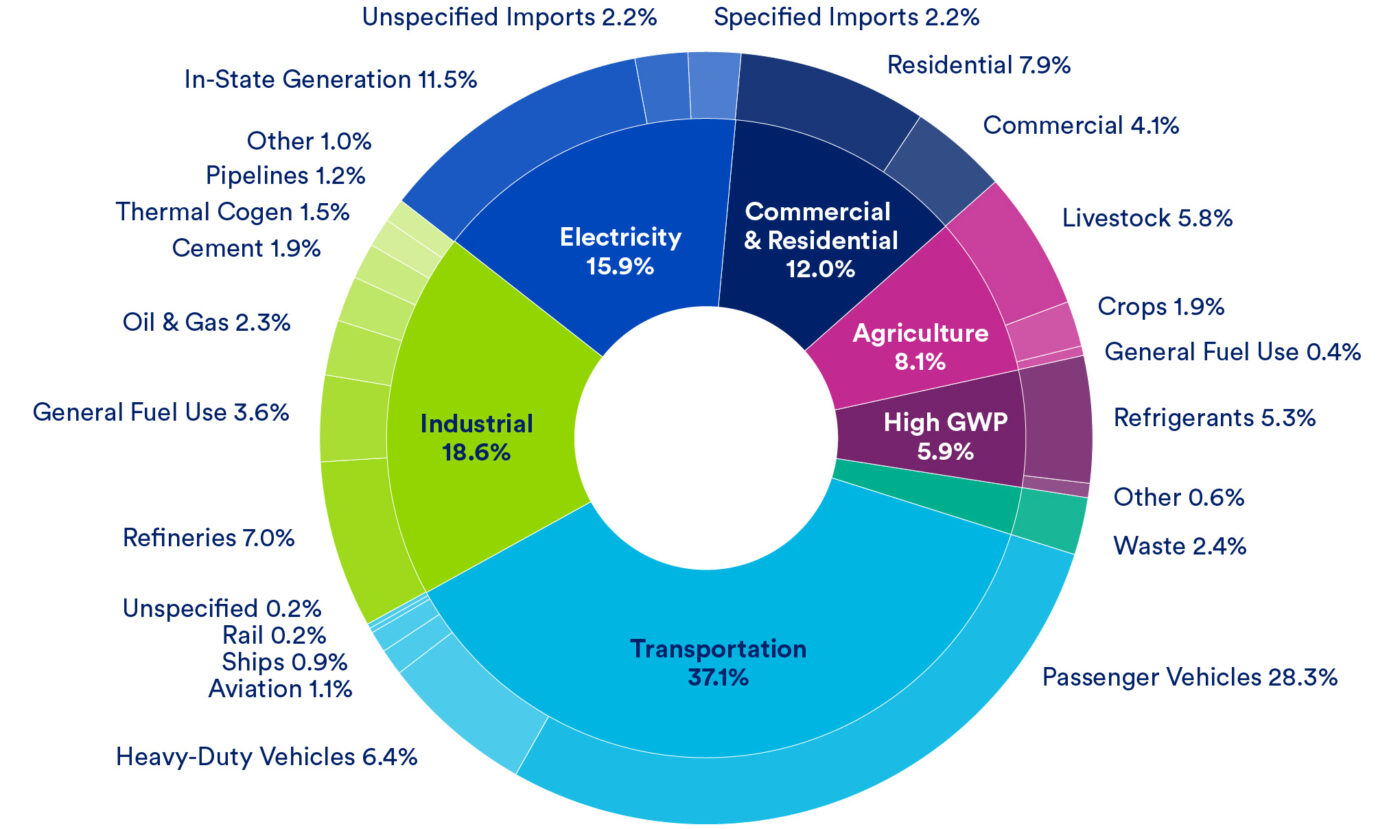
The industrial sector remains one of the largest GHG emitters in the state. According to CARB’s 2025 edition of the Greenhouse Gas Emissions Inventory, the industrial sector accounted for 18.6% of the state’s 2023 GHG emissions and is the second largest GHG emitting sector behind transportation.5, 6 The top emitting industrial subsectors include refineries, general fuel consumption, oil and gas, and cement.
Within the industrial sector, cement production is especially important: it is both foundational to California’s infrastructure and difficult to decarbonize due to the inelasticity in the market for this product, some of which is imported. This report focuses on the cement sector and explores the policy pathways California could utilize in order to reach net-zero cement by 2045.
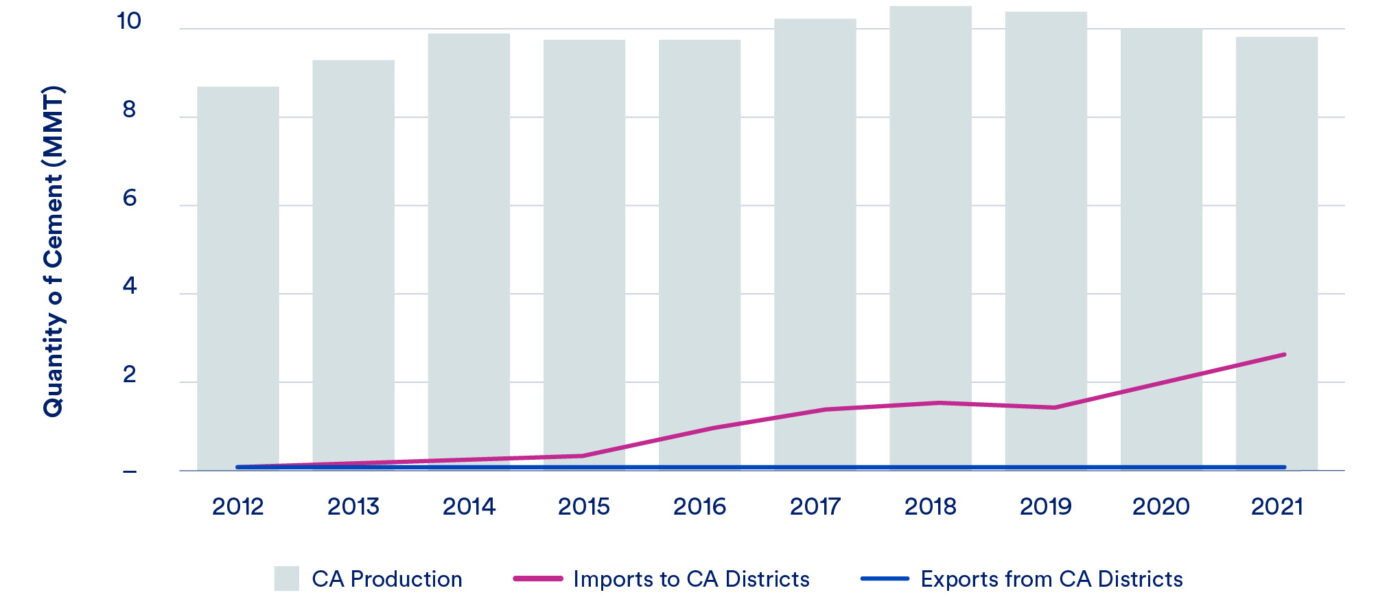
Portland cement7 production is inherently carbon intensive: raw materials must be heated to extremely high temperatures – up to 1,450 °C – to form clinker, the key ingredient in cement.8 In California, there are currently eight total kilns across seven operating cement plants, all of which have the capability to produce blended cements.9, 10 Collectively, these plants produce approximately 10 million metric tons of cement annually, emitting roughly 8 million metric tons of carbon dioxide equivalent – around 2% of statewide emissions, a figure that has not significantly improved since 2010.11 As shown in Figure 2, the quantity of cement imported into California through ports of entry has steadily increased since 2014, amounting to over 2 million metric tons of imported cement in 2021.11
Figure 1: 2023 GHG Emissions by Scoping Plan Sector and Sub-Sector
Source: California Air Resources Board
There are two processes within cement production that are the leading sources of GHG emissions:
- Fuel combustion to heat the kiln and precalciner to high temperatures (~40% of GHG emissions), and
- Process carbon dioxide (CO2) emissions from chemically transforming limestone (~ 60% of GHG emissions).
The manufacturing process largely emits CO2, but other air pollutants such as nitrogen oxide (NOx), sulfur dioxide (SO2), and carbon monoxide (CO) significantly contribute to a facility’s emissions profile.12 In order to further realize emission reductions in this sector, cement manufacturers will need to take a multi-pronged approach depending on multiple factors, including process configuration, location, access to alternative fuels and feedstocks, and more. This can include the use of carbon management technologies, such as carbon capture and storage (CCS); alternative fuels for process heat; novel cement blends; and the use of advanced technologies.13
Figure 2: California Cement Imports and Exports Relative to Domestic Production
Source: CARB SB 596 Draft Net-Zero Greenhouse Gas Emissions Strategy for the California Cement Sector
Cement Policy Landscape
The California Nevada Cement Association (CNCA) developed a Carbon Neutrality Plan14 that was a foundational component used to craft Senate Bill (SB) 596 (Becker, 2021), which was signed by Governor Newsom in 2021.15 This landmark bill requires the state to achieve net-zero GHG emissions associated with cement used in the state no later than December 31, 2045. SB 596 is unique because it is the first bill in the U.S. to require a sector-specific net-zero emissions target by 2045. To achieve this target, SB 596 requires CARB to 1) develop a comprehensive strategy to achieve net-zero, 2) establish a baseline to measure GHG reductions, 3) prioritize actions which leverage state and federal funding, and 4) evaluate measures to support the market demands and financial incentives to encourage production and use of cement with low GHG intensity.
To achieve the net-zero GHG emissions target, CARB’s SB 596 Draft Net-Zero Greenhouse Gas Emissions Strategy for the California Cement Sector (“draft cement strategy”) recognizes that a suite of decarbonization levers are needed. These levers include carbon capture, which could achieve 30–50% of GHG emissions reductions from the sector, as well as alternative fuels, kiln electrification, and lower-carbon alternative materials like supplementary cementitious materials (SCMs).16 Given the need for CCS as a mitigation strategy,17 the development of California’s CCS regulatory framework, as directed by SB 905 (Caballero, 2022), will help achieve SB 596’s goals.18, 19 CARB’s 2026 amendments to California’s Cap-and-Invest program further strengthen this connection by establishing that projects that sequester or utilize captured CO2 may only receive compliance recognition under a Board-approved quantification methodology through SB 905.20
Under those amendments, the Cap-and-Invest program will include a financial incentive component for industrial decarbonization through the Manufacturing Decarbonization Incentive (MDI) Fund.21 The program is estimated to provide $4 billion through 2035 to accelerate emissions reductions at covered industrial facilities in California through the deployment of GHG reduction projects such as electrification, low carbon fuels, renewable energy, alternative materials, and carbon sequestration.22
Projects that receive support through MDI will be required to include project quantification details, expected annual GHG reductions, and changes to fuel use and type, as applicable. Despite the clear timelines and targets providing regulatory certainty, these programs will not overcome the cost gaps and technology and permitting uncertainty for industry to make timely investments. As this report explores, additional policies are needed to fill these gaps.
Figure 3: California Cement Policy Landscape23, 24
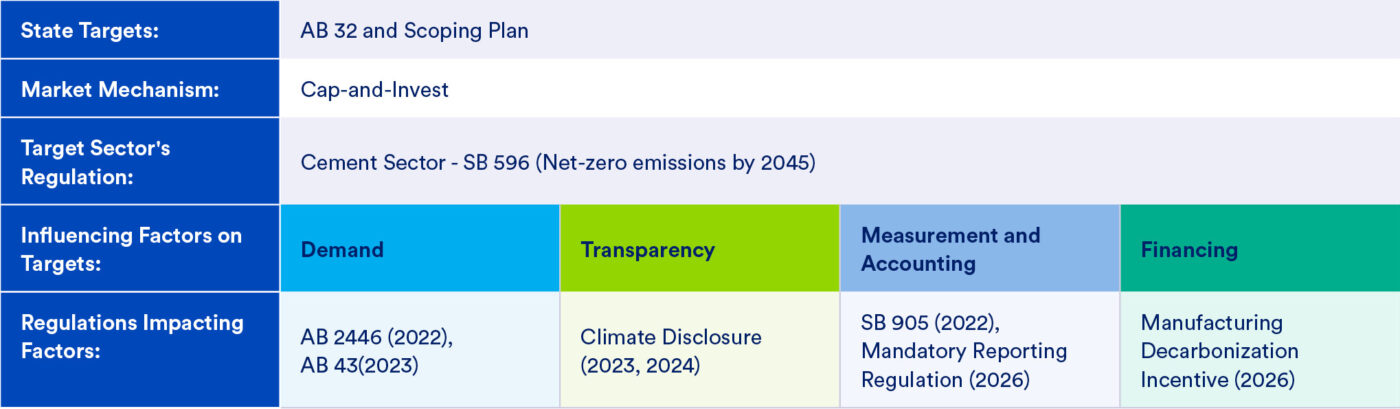
- Scoping Plan defines WHY we need action on cement decarbonization
- Cap-and-Invest determines WHAT types of GHG reductions are recognized
- SB 596 illustrates WHERE & WHEN to decarbonize cement industry
- SB 905 will define HOW CCS technologies will be deployed
- The Manufacturing Decarbonization Incentive supports HOW industrial decarbonization projects will be funded.
Report Scope
The scope of this report builds on CATF’s accompanying technical report, “Assessment of Decarbonization Pathways for California’s Cement Sector” (“technical assessment”) of various potential decarbonization pathways at cement plants: CCS, alternative fuels, kiln electrification, and use of supplementary cementitious materials (SCMs) to create novel cement blends. This report explores policy recommendations for decarbonizing the California cement sector in light of those pathways.
This report acknowledges there are many technology pathways beyond those evaluated in the technical assessment that may spur cement decarbonization efforts in the short- and long-term. These include advanced production processes, additional alternative cement chemistries, clinker reduction, and design efficiencies, among others.25 SB 596’s draft cement strategy indicates that a mix of these technologies will likely be needed to meet the 2045 net-zero goal. To date, cement industry associations have identified operators’ preferred decarbonization pathways through roadmaps, which include new cement blends, CCS, alternative clinkers, alternative fuels, renewable electricity, and waste heat recovery.26, 27 CATF’s technical assessment focused on the subset of technology pathways that industry appears likely to use and that CARB, industry, and outside researchers have identified as important decarbonization levers.
Technical Assessment Summary and Decarbonization Pathways
The technical assessment modeled Scope 1 and Scope 2 (purchased electricity emissions) CO2 emissions from cement production for four different decarbonization pathways plus a baseline model. The purpose of the modeling was to generate high-level cost and CO2 emissions estimates that would allow for evaluating tradeoffs between the pathways. The purpose of Pathway 1 is to examine the impact of retrofitting an existing cement plant with CCS, without any additional changes to cement production processes, while Pathways 2, 3, and 4 utilize CCS to abate residual emissions following the application of other decarbonization strategies available to the cement sector. Focusing on the specific technologies in the pathways allows for better exploration of the barriers to entry. Furthermore, the pathways were chosen due to their feasibility for uptake by industry. For example, elements of Pathway 4 are already being explored as a viable option for National Cement’s Lebec Net-Zero Project located in Lebec, California.28 CCS is included in each pathway because it is necessary for long-term decarbonization of the cement industry, especially to address process CO2 emissions inherent to clinker production.
All pathways assume a retrofit of a representative cement plant29 when the existing cement kiln reaches end-of-life. Cement kilns are long-lived assets—the average age of operational cement kilns in California is 35 years—so when they reach end-of-life, plant owners face a natural decision point about what technology to use for replacement.30, 31 The retrofitted plant begins operation in year one, 2028, with the new capital equipment.
A brief summary of the pathways is as follows:
- Baseline: The baseline scenario assumes the cement plant continues to use conventional technology while installing a new conventional rotary kiln.32 It also continues to use a mixture of fossil fuels (coal, petroleum coke or “petcoke,” and gas) and alternative fuels (tires and biomass) for pyroprocessing. The fuel mix of the representative facility matches the current fuel mix for the California cement industry.33 To provide a fair comparison to the cost of decarbonization pathways that involve replacement of the rotary kiln (primarily Pathway 2), the baseline includes the cost of fully replacing the rotary kiln. Startup is assumed to be 2028 for the purposes of this study. The Baseline scenario used in the modeling is not the same as the 2019 baseline emissions intensity recommended in the SB 596 Draft Cement Strategy.34 The Draft SB 596 recommended baseline is intended to help establish interim GHG emission targets and includes the carbon intensity of imported cement whereas the Baseline in this report allows for comparison of decarbonization pathways and is based on an average cement plant in CA using publicly available information.
- Pathway 1 (CCS only): In Pathway 1, the representative facility installs the same conventional kiln as in the baseline and continues to rely on the baseline fuel mix. It also installs an amine-based, post-combustion CCS system that removes 90%35 of the carbon dioxide in the plant’s exhaust stream for long-term storage. Pre-treatment of the flue gas is required to reduce concentrations of SO2 and PM entering the carbon capture unit and the facility installs an SO2 scrubber and a wet electrostatic precipitator. The CCS system burns natural gas in a boiler to produce steam, which it uses to heat the CO₂-rich amine solvent in a stripping column, releasing the captured CO₂ and regenerating the solvent for reuse. The CCS system also captures 90% of the CO2 emissions resulting from the natural gas boiler.
- Pathway 2 (Electrification + CCS): In Pathway 2, the representative facility electrifies fully, installing both an electric precalciner using resistive heating and an electric kiln using plasma generators. Electricity is sourced from the grid. In the electrified system, the only on-site emissions are process emissions, 90% of which are emitted from the precalciner in an exhaust stream that is essentially pure CO2 (99% CO2 by volume). The remaining 10% of emissions are emitted from the kiln in a dilute stream. In this pathway, the representative facility installs a compression and purification unit to compress and purify the precalciner emissions, so the effective capture rate for Pathway 2 is 90% which is the same as for Pathways 1, 3, and 4. Unlike in Pathways 1, 3 and 4, the representative facility in Pathway 2 does not include an amine-based CCS system.36, 37
- Pathway 3 (Blended Cement + CCS): In pathway 3, the representative facility also begins producing limestone calcined clay cement (LC3), which has a lower concentration of clinker than ordinary Portland cement (explained further in the technical report). The modeling assumes the facility will produce both clinker and calcined clay for the LC3 on-site in separate rotary kilns. The facility also installs the same type of amine-based CCS system as in Pathway 1, including pre-treatment.
- Pathways 4a & 4b (Blended Cement + Alternative Fuels + CCS): In Pathway 4, the representative facility produces LC3 in an identical way to Pathway 3 while also increasing its use of alternative fuels by substituting woody biomass (Pathway 4a)38 or engineered municipal solid waste (EMSW)39, 40 (Pathway 4b) for 30% of the heat input delivered by petcoke and coal in the baseline. The facility also installs the same type of amine-based CCS system as in Pathway 1, including pre-treatment. Woody biomass and EMSW were chosen as illustrative examples of solid fuels that could replace petcoke and coal in cement production; however, other alternative fuel options may be more suitable. There is considerable uncertainty around emissions factors and non-GHG emissions associated with combustion of EMSW. EMSW may have chlorinated plastic content and may require further processing. These uncertainties around EMSW and other potential alternative fuels must be addressed with additional analyses to determine suitability of individual alternative fuels.
Key findings from the modeling include the following:
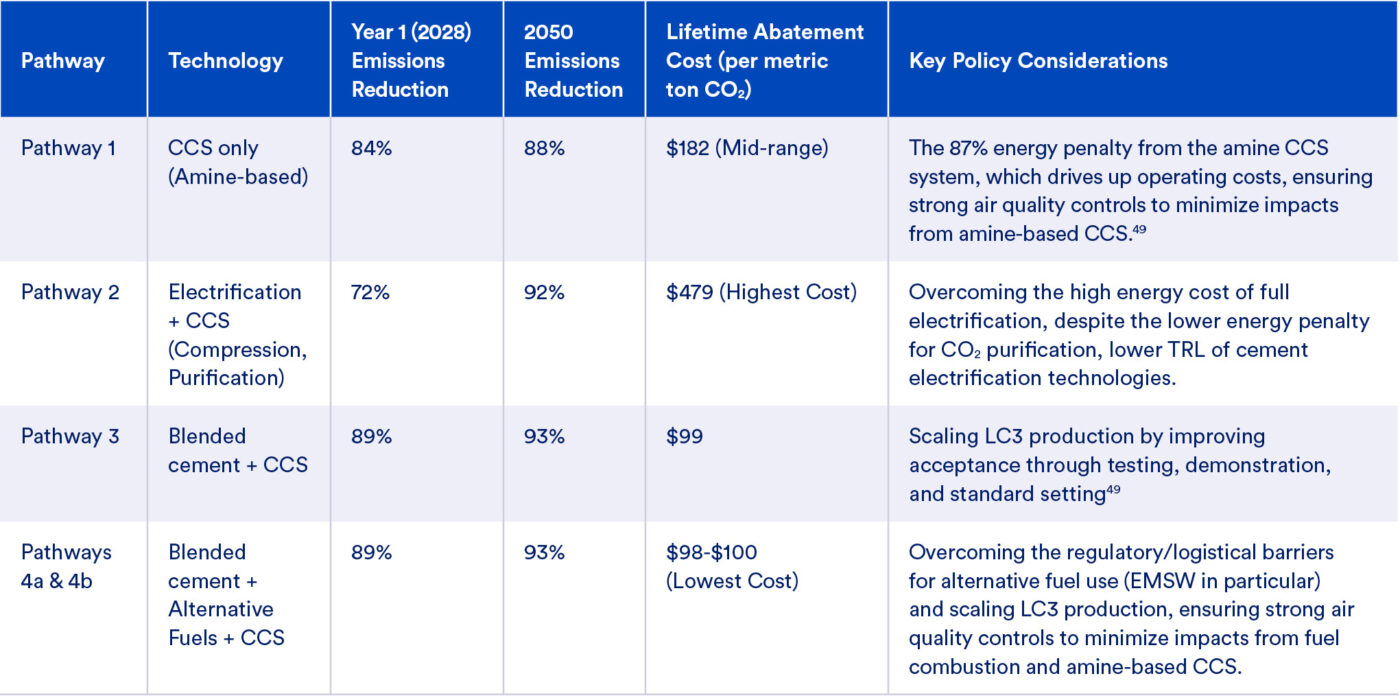
- All four pathways offer substantial CO2 emissions reductions relative to the baseline scenario starting in 2028, the year the equipment begins operating. Pathway 1 reduces year 1 cement emissions intensity by 84%, Pathway 2 by 72%, and Pathways 3 and 4 by 89%. These reductions increase over time as the electricity supply in California decarbonizes41—especially in Pathway 2, where an additional 20% reduction brings the pathway to a final 92% reduction relative to the baseline by 2050. Pathways 1, 3, & 4 each decrease an additional 4% relative to the baseline by 2050.
- Pathways 3 and 4 have the lowest lifetime carbon abatement cost at around $100 per metric ton (t) of CO2 (2024$), largely driven by adoption of LC3, which uses 44% less clinker per metric ton of cement than ordinary Portland cement. Pathway 2 has the highest lifetime carbon abatement cost at $479 per metric ton of CO2 (2024$), mainly due to high energy costs from electrification.42 The abatement cost of Pathway 1 is $182 per metric ton CO2 (2024$), which is partway between the cost of Pathway 2 and those of Pathways 3 and 4.
- Energy costs dominate increases in lifetime costs relative to the baseline of $63 per metric ton of cement ($2024), ranging from 40% of a $70 increase per metric ton of cement in Pathways 3 & 4 to 87% of a $302 increase per metric ton of cement in Pathway 2. Capital costs range from $155–$275 million (2024$) in the decarbonization pathways, compared to $24 million (2024$) in the baseline.43 Capital costs — including the flue gas pre-treatment required for amine-based CCS pathways — remain a minor share of levelized cement costs (up to 17% in Pathway 1) and lifetime abatement costs (up to 25% in Pathways 3 & 4). By contrast, both levelized cement costs and lifetime abatement costs are mainly driven by differences in energy and carbon transport and storage costs across the pathways.
- The energy penalty for amine-based CCS nearly doubles the energy required to produce one metric ton of cement in Pathway 1 relative to the baseline (87% increase), and it also increases the energy intensity of cement in Pathways 3 and 4 (26% increase) relative to the baseline. The increase in energy intensity is smaller in Pathways 3 and 4 because the substitution of calcined clay for a portion of the clinker partially offsets the energy intensity of the amine-based CCS system. Pathway 2 sees the smallest increase in energy intensity (13% increase) because it uses a compression and purification unit without the need for an amine-based CCS system to capture CO2. This is possible in Pathway 2 because the only on-site emissions are process CO2 emissions, about 90% of which are emitted from the precalciner in an essentially pure stream of CO2. This means the energy-intensive separation of CO2 from a mixed exhaust stream containing both process emissions and combustion emissions is unnecessary.
- Pathways 1, 3, and 4 generate, capture, and permanently sequester biogenic CO2 resulting from the combustion of partially or fully biogenic-based alternative fuels, including woody biomass, tires, and EMSW. Pathway 4 is said to achieve net-zero or even net-negative emissions (Scope 1 and 2 only) under the assumption that permanently sequestered biogenic CO2 results in net-negative CO2 emissions, particularly as the Scope 2 emissions decrease towards 2050.44 In California, the cement industry has a distinct opportunity to deploy bioenergy with carbon capture and storage (BECCS), leveraging the state’s abundant woody biomass resources generated through planned forest fuel load reduction efforts to reduce wildfire impacts.45 Integrating BECCS at cement facilities using or expanding the use of biogenic-based alternative fuels might provide carbon dioxide removal (depending on a facility’s direct and indirect lifecycle emissions) while supporting cement decarbonization and forest management.46
- Modeling in this study does not include a quantitative analysis of the air quality impacts of the decarbonization pathways. Qualitatively, considering the combined impact of the factors above, all pathways would likely offer net air quality benefits:
- In Pathway 1, the addition of CCS will necessitate add-on pollution controls that will reduce SO2 and PM emissions, as described above. Emissions of volatile organic compounds (VOCs) related to the amine-based solvent would likely increase slightly.47
- Full electrification in Pathway 2 eliminates on-site production of toxic air contaminants associated with fuel combustion. Process-related air emissions of PM and associated air toxics would still occur in this pathway.
- In Pathway 3, adoption of LC3 will also reduce thermal NOX, SO2, and PM by substituting calcined clay for a portion of the clinker. Finally, installation of amine-based CCS in this pathway will have similar impacts to Pathway 1; add-on pollution controls will offer deep reductions in SO2 and PM emissions, but VOC emissions may increase.
- Pathway 4 builds on the improvements from LC3 and CCS in Pathway 3. The shift from coal and petcoke to woody biomass and EMSW generally reduces SO2, NOX, and PM, if the alternative fuel and controls are well-managed.
Figure 4: CO2 emissions breakdown by process, purchased electricity, fossil, and biogenic in each pathway
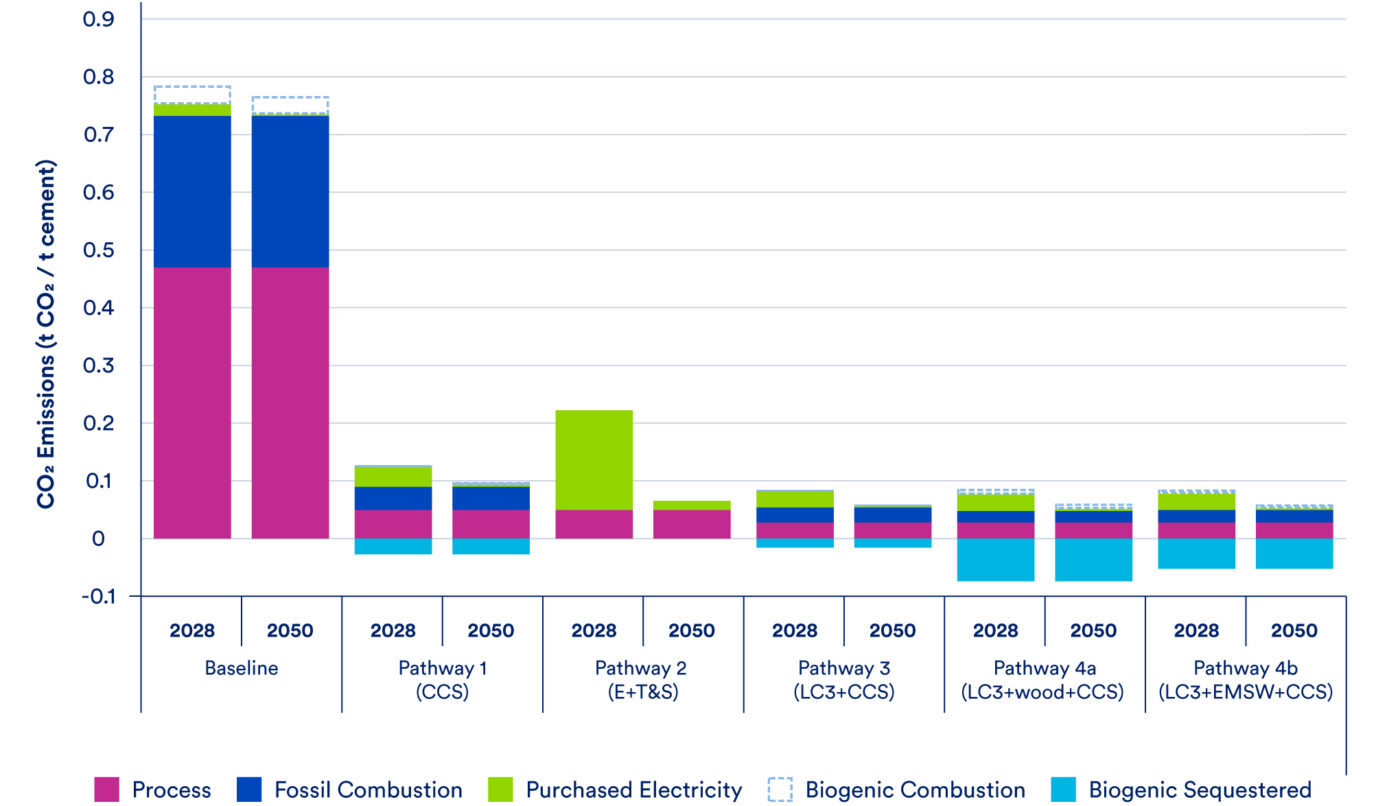
Figure 5: Levelized cost of energy, materials, and equipment for cement
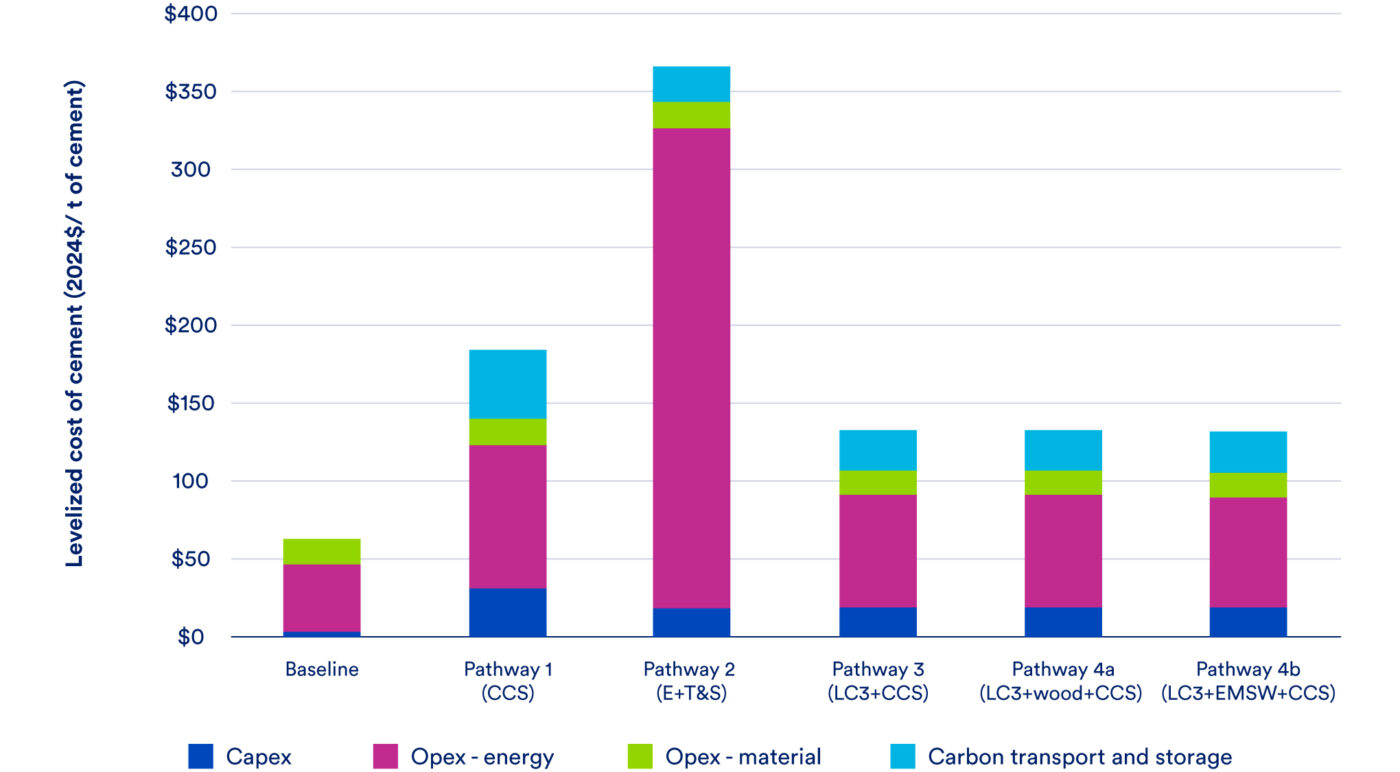
Figure 6: Input energy requirement per metric ton of cement in each pathway
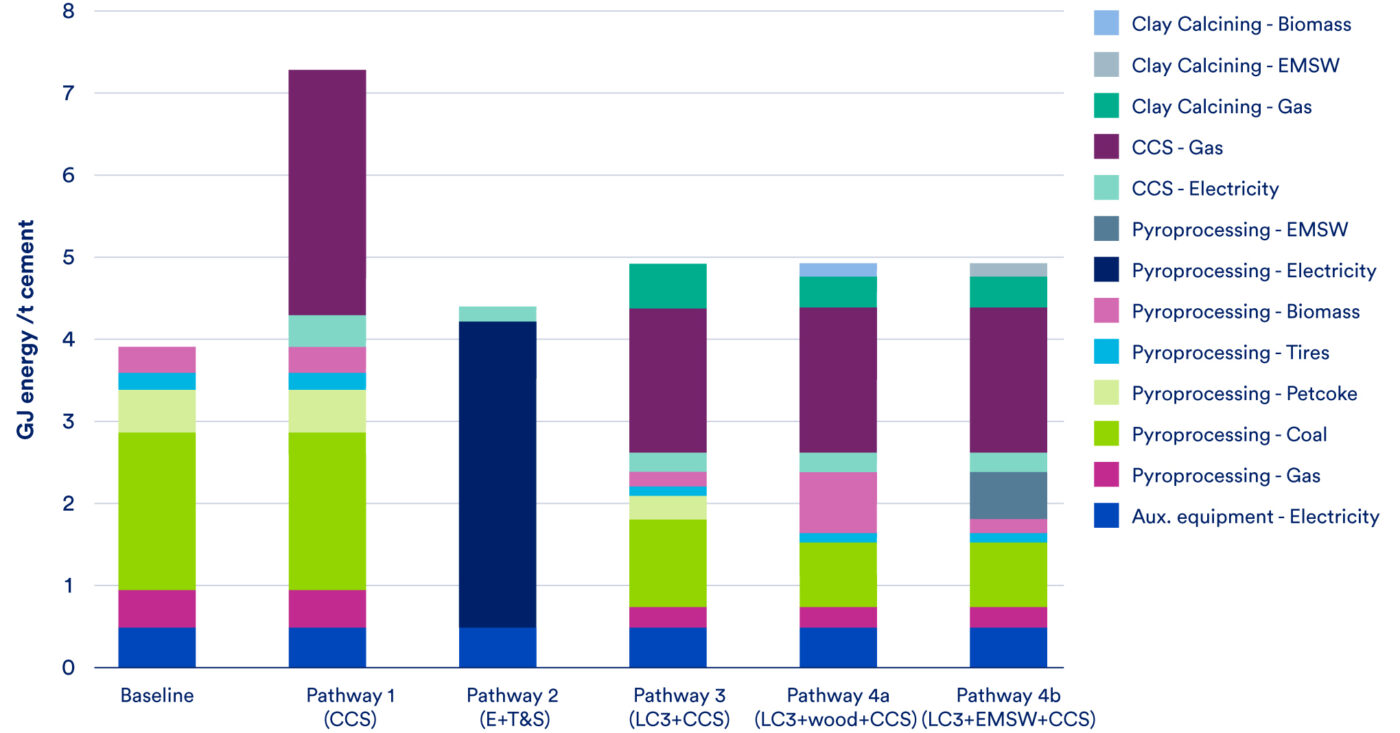
Table 1: Key Takeaways from the Technical Analysis
While the technical assessment found that significant CO2 emissions reductions are achievable with the technologies analyzed in this report, reaching net-zero across all pathways will require designing for higher carbon capture rates, demonstration of kiln electrification at scale, decreasing electric grid carbon intensity, additional carbon removal, or other strategies. This suggests the necessity of the integration of other carbon dioxide removal technologies into the overall state strategy to meet SB 596 targets. A similar conclusion was made in CARB’s 2022 Scoping Plan and in a 2023 paper by University of California, Davis researchers Alyson Kim and Sabbie A. Miller where they also note that technologies such as direct air capture will be necessary to help reach net-zero emissions in the cement sector.50, 51
Policy Recommendations
Strong and well-designed public policy plays a decisive role in reducing emissions from cement plants. Clear policy frameworks establish standards, create economic incentives, improve air quality, and provide economic, regulatory, and financial certainty for industry investments in cleaner technologies.
To reach net-zero, the cement sector must navigate a complex mix of regulatory, economic, and social considerations. Affordability is a central concern, as the significant costs of deploying new technologies could be passed down to consumers in the form of higher cement and concrete prices. The significant capital costs of deploying certain decarbonization technologies, like CCS, may have only a fractional impact on total project costs in which cement product is an input. The U.S. Department of Energy (DOE) estimates that cement produced using 95% carbon capture would result in a 20-40% price premium.52 This report aims to recommend policies that will support the deployment of a suite of decarbonization technologies in California, including options with a higher capital cost.
Policy Recommendation Categories
A single policy instrument is unlikely to fully address the diverse challenges of decarbonizing the cement sector in California. For example, source performance standards can push immediate efficiency gains, while carbon pricing can create long-term economic signals, and targeted research, development, and deployment support can accelerate the commercialization of emerging technologies. When deployed in combination, such measures reinforce one another, reduce risks of policy gaps or unintended consequences, and provide both the flexibility and certainty needed for industry to make sustained progress toward deep emission reductions.
The policy recommendations described in this report fall into the following broad categories, and have focused on policies in California that will directly support the technology pathways modeled:
- A. Financial Support
- B. Market-based Mechanisms
- C. Regulatory Interventions
A. Financial Support
Financial support mechanisms such as grants, concessional loans, and tax incentives aim to address the high upfront costs of deploying low-carbon cement technologies. These technologies—including carbon capture, alternative fuels, electrification, and novel clinker substitutes—are often capital-intensive and carry investment risks that deter private financing. CATF’s technical assessment shows that even with federal funding like 45Q, which offers significant incentives for CO2 sequestration, carbon capture technologies at cement facilities still have substantial cost gaps and will need additional financial support.53 Government-backed funding has long supported industry investments in infrastructure and technology enhancements, including the cement sector. For example, public financing can accelerate innovative decarbonization projects at scale and attract private capital. In this way, financial support lays the groundwork for market confidence and long-term cost reductions and can send signals to industry on the types of technologies that are supported. While California‘s MDI provides a significant incentive opportunity for the industrial sector, including cement facilities, the MDI should be viewed as one funding pool of a broader financing need. Additional mechanisms, such as those listed in this section, will likely remain necessary to close project financing gaps, reduce investment risk, and support deployment of capital intensive decarbonization technologies.
1. State Revolving Loan Fund
Policy Description:
A State Revolving Loan Fund (SRF) is a well-established financing mechanism that provides low- and no-cost financing for critical infrastructure that is commercially ready and provides public benefits. SRFs have been used at the state54 and federal55 levels for decades to support investments in water quality projects, drinking water projects, and brownfield projects, among others.
An SRF for cement decarbonization in California would operate as a sustainable financing tool that recycles public funds to support ongoing industry investment. Initially, the State of California would capitalize the fund with seed money, which is then loaned at low- or zero-interest to cement producers for clearly defined eligible projects, such as installing carbon capture systems or switching equipment and infrastructure to utilize alternative fuels. As borrowers repay their loans, the repayments flow back into the fund and become available for new loans, creating a continuous cycle of reinvestment without requiring constant new public spending. This approach maximizes the impact of limited public resources, ensures accountability through repayment obligations, and encourages private-sector co-investment.
This model addresses two key challenges in cement decarbonization: high upfront capital costs for a sector that has balance sheet constraints and the lack of affordable private financing for commercially available technologies. By offering favorable loan terms, an SRF lowers financial risk for producers while accelerating deployment of cleaner solutions. Over time, the revolving nature of the fund ensures that one round of state investment can support multiple generations of projects, building momentum toward sector-wide decarbonization while keeping public costs relatively stable. The funding can also target projects of varying scale and complexity allowing multiple types of projects across various cement decarbonization technologies.
Implementation Considerations:
- Establish the Fund. Would require state legislation authorizing the creation of an SRF to provide financing for decarbonizing the cement industry in California. Would need to define eligible technologies, emissions thresholds, and project criteria, such as providing local criteria and air toxic pollution emission reduction benefits. This could be established as a new fund, or the state could expand the eligible categories within the existing Climate Catalyst Fund at iBank,56 or build upon the green bonds at California Pollution Control Financing Authority57 within the State Treasurer’s office.
- Capitalize the Fund. Use a combination of: State appropriations, proceeds from state carbon pricing programs (and out of state carbon adjustments), green bonds, or public-private partnerships. Funding could come from the recently created California Climate Innovation Fund ($85 million allocated for fiscal year 2026-2027).58 Proceeds from a carbon border adjustment fee could also partially fund the SRF.59
- Administer the Fund. When administering a state revolving loan fund, several key considerations are essential to ensure effectiveness and accountability. The program should establish guidelines for providing low- and/or zero-interest loans with flexible terms—such as deferred payments or performance-based forgiveness—to make financing accessible and attractive for industry. Clear rules must also be established regarding loan approval criteria and appropriate maximum and minimum loan amounts. These safeguards help strike a balance between providing meaningful financial support for large, transformative projects and maximizing the number of companies and facilities that can benefit from the SRF.
A State Revolving Loan Fund would:
- Accelerate innovation in clean cement technologies.
- De-risk private investment in high-cost, first-of-a-kind projects.
- Leverage limited public funds through loan repayment and reinvestment.
- Create jobs and modernize a critical sector of the state economy.
2. RD&D Funding for Early Stage Decarbonization Technologies
Policy Description:
For earlier-stage technologies that are not yet ready for commercial scale (and therefore are not eligible for an SRF loan), the state should establish new programs and/or expand existing California programs to be inclusive of cement decarbonization technologies. Lower technology readiness level (TRL) technologies that may benefit from Research, Development, and Demonstration (RD&D) funding include novel cement technologies, electric kilns and precalciners, and other advanced processes.
State programs funding decarbonization technologies should have the flexibility to provide targeted RD&D funding for early-stage, high-potential cement decarbonization technologies. These innovations face steep challenges, including high upfront research and development costs, significant technical uncertainty, material acceptance, investor risk aversion, and the absence of scalable prototypes that can attract private capital. Allowing state funding programs to direct funding toward higher-risk technologies will help build a pipeline of commercially viable, low-carbon cement technologies, ensuring that transformative solutions are ready for demonstration and future market adoption. Funding program administrators should have the flexibility to prioritize awards based on the greatest emissions reduction potential to maximize the climate impact of limited funds.
In addition, California’s decarbonization funding mechanisms should have the authority and flexibility to direct funding toward low-TRL technologies60 of different types in order to strengthen California’s path to economywide net-zero goals. For example, while SRF funding may be awarded for the installation of high-TRL CCS technology, providing RD&D funding for novel CCS technology with a low TRL may be warranted if the technology has the potential to significantly reduce costs or improve decarbonization performance compared to other technologies on the market.
Implementation Considerations:
- Utilize Creative Funding Mechanisms. RD&D funding should be provided on a competitive basis but may take several forms, such as grant funding, cost-share partnerships, milestone-based payments, and innovation prizes. Applications for competitive financial awards should be prioritized based on highest emissions reduction potential (e.g., greater than 50% reduction).
- Identify Technical Focus Areas. Direct funding for early-stage technologies, including some types of CCS, biocement, electrochemical calcination, and electric and hydrogen-fueled kilns and precalciners to advance them from lab-scale to pilot-ready stages. Could alternatively establish a carbon reduction benchmark (>85-90% abatement) and consider any technologies that would achieve significant reductions.
- Support Effective Program Administration. RD&D funding for early-stage technologies should be carried out by establishing new programs and/or expanding existing California programs to be inclusive of cement decarbonization technologies. Appendix A outlines RD&D programs in California and shows where funding gaps remain. These programs should provide funding for all types of industrial decarbonization technology or be amended to provide that authority if it does not currently exist. For example, the Advanced Climate Technologies (ACT) Innovation Fund is an emerging new program, under negotiation in the Legislature, that could support RD&D on low-TRL cement decarbonization technologies, given the program’s broad applicability. Existing programs that could be further expanded to encompass early-stage technologies include: the California Energy Commission’s (CEC) Industrial Decarbonization and Improvement of Grid Operations (INDIGO),61 CEC’s Carbon Removal Innovation Support Program (CRISP).62
RD&D Funding would:
- Accelerate innovation in breakthrough technologies that could achieve near-zero emissions in cement production.
- Support California-based firms working on advanced clean energy technologies and deployment.
- Complement federal R&D efforts.
3. Complementary Financial Support Policies63
- Investment Tax Credit (ITC) for Low-Carbon Cement Technologies. An ITC is a well-established and often-used incentive by Federal and State governments64 to reduce the cost pressure on projects with extensive up-front capital requirements, such as low-carbon cement production. The Federal Section 48C tax credit is an example of a recent ITC that successfully reduced costs for eligible projects while leveraging private investment.65 A California-specific ITC that provides facilities in the state making eligible capital expenditures a 20-30% refundable tax credit on its state taxes would provide meaningful support that could unlock private investment that otherwise would never be made. Eligible projects/expenditures could include: CCS, alternative fuels and fuel switching, clinker substitutes (e.g., limestone calcined clay cement, slag, fly ash), electrification of kilns, advanced process controls, waste heat recovery, and others. The ITC could be structured to include bonus credits (e.g., +10%) for projects located in disadvantaged or low-income communities, aligning with California’s SB 535 and AB 1550 equity goals.66, 67, 68
- Accelerated Depreciation and Sales Tax Exemptions for Investments in Low-Carbon Cement Technologies. These complementary policies help companies reduce both the upfront and ongoing costs of adopting cleaner technologies, thereby smoothing the cost-curve on these important investments. Accelerated depreciation allows companies to write off (for state tax purposes) the cost of new low-carbon equipment more quickly (e.g., 3 years versus the typical 5–10-year timeframe), improving near-term cash flow and shortening the payback period. California sales tax exemptions, like those available at the California Alternative Energy and Advanced Transportation Financing Authority (CAEATFA),69 lower the purchase price of equipment, fuels, or materials needed to decarbonize production, making investment in these solutions more financially attractive. Given that cement plants operate on thin margins and face high capital costs when upgrading equipment or shifting to alternative chemistries, these policies together with other financial support reduce financial risk and improve returns on investment.
- Clean Heat Production Tax Credit (PTC): A PTC for clean industrial heat would help incentivize facilities to generate low- or zero-emissions heat in industrial processes. Most industrial thermal processes in cement, and other heavy-industry facilities, typically rely on the combustion of natural gas and coal and, in many service territories, electricity is much more expensive per unit of energy than fossil fuels. A clean heat PTC could help drive electrification-based decarbonization pathways by providing an incentive that covers the operating cost premium of electrified industrial heat. Qualifying production of clean heat does not necessarily have to be limited to electrified heat generation (and can, for example, include combustion of low- or zero-carbon fuels like hydrogen and biomass), but the PTC can be designed to induce electrification if the incentive defines “clean heat” to require reductions of conventional pollutants in addition to GHGs. Other implementation considerations include specifying productive heat that should be rewarded (over waste heat), establishing minimum thresholds, timeline and phase-outs, and complementary policies such as power sector decarbonization.
B. Market-based Approaches
Market-based mechanisms, such as carbon pricing, emissions trading systems, and material performance-based procurement, seek to correct the current market imbalance in which conventional cement remains cheaper despite its higher environmental costs. Without a price signal or demand-pull, producers lack incentive to shift toward cleaner production methods. These policy tools are not specific to the technology pathways studied in this report, but instead broadly value emissions reductions and create competitive advantages for low-carbon products. These tools help ensure that sustainable cement alternatives can compete on a level playing field. Over time, such mechanisms can stimulate innovation, reward efficiency, and steer investment toward the lowest-cost decarbonization options.
1. Modify the Cap-and-Invest Program to Better Incentivize Low-Carbon Cement Production
Policy Description:
Long-term market certainty is essential to support sustained investment in industrial decarbonization. California’s Cap-and-Invest program provides this signal by requiring large emitters, including cement producers, to report and manage their GHG emissions within a framework that channels investment toward lower-carbon technologies. CARB’s 2026 amendments to the Cap-and-Invest program encourage the use of supplementary cementitious materials (SCMs), which is an important first step. There remain targeted changes and implementation considerations for the Cap-and-Invest program to better incentivize low-carbon cement production in California, including progressively tighter benchmarks to reward efficiency and innovation. Overall, this approach aligns regulatory oversight, market incentives, and financial support to drive continuous emissions reduction while ensuring fairness and competitiveness in the cement industry.
Implementation Considerations:
- Ensure Timely Recognition of CCS Under the Cap-and-Invest Program. CARB has taken an important step by establishing compliance recognition for sequestered CO2. To support successful implementation of the state cement strategy, CARB should ensure timely development of quantification methodologies under SB 905. With those regulations, CCS projects at cement facilities will be able to receive credit for reducing emissions, thereby providing additional price support for these projects.70
- Modify the Cap-and-Invest Program
- Tighten sector-specific benchmarks. Benchmarks for the cement sector should be gradually reduced to reflect available decarbonization technologies and encourage continuous improvement. The rate of reduction should be calibrated to meet the 2045 carbon neutrality targets tied to both SB 596 and Cap-and-Invest.
- Prevent carbon leakage while promoting innovation. CARB should maintain leakage protection for trade-exposed producers, but tie the level of protection to progress on emissions reduction.
- Support market demand for low-carbon cement. The Legislature should consider the use of auction revenues to fund other cement decarbonization initiatives, including capitalizing the State Revolving Loan Fund, funding RD&D for lower-TRL technologies, or supporting a Contracts for Difference (CfD) program for low-carbon cement (further described in other sections of the report). The MDI, while a useful funding mechanism, is available across all major industrial sectors, not just cement. Therefore, it will be necessary to deploy multiple market demand drivers such as those listed above.
Cap-and-Invest modifications would:
- Improve transparency of industrial emissions data.
- Encourage investment in decarbonization technologies and process innovation.
- Reduce emissions leakage risk while supporting California’s climate goals.
2. Establishing a Carbon Border Adjustment Mechanism (CBAM) for Cement in California
Policy Description:
A CBAM for low-carbon cement in California is a policy tool designed to prevent “carbon leakage”—the shifting of production and emissions to regions with weaker climate policies—while ensuring that California cement producers that invest in cleaner technologies are not placed at a competitive disadvantage. Under such a system, imported cement, and possibly clinker (the main cement ingredient), would be subject to a fee based on its embedded carbon emissions. The fee would be calibrated to equalize the carbon costs of out-of-state producers with those borne by in-state producers under California’s climate policies and would help strengthen the environmental integrity of the state’s climate policies. It also sends a clear demand signal for cleaner cement production in global markets, encouraging producers abroad to reduce their emissions if they wish to maintain access to California’s large construction market.
There already is a discussion among California stakeholders about the merits of utilizing a CBAM for the cement industry. In 2017, the Legislature directed CARB to assess a CBAM for the entire industrial sector. The cement industry has advocated for a CBAM in California for many years, and some environmental NGOs have begun to show support for the concept, especially as it relates to emissions mitigation.71, 72 Additionally, a CBAM is mentioned in SB 596 (Becker, 2021) as a potential strategy for minimizing leakage and accounting for embedded emissions in imported cement,73 and CARB subsequently offered commentary on the topic, most recently in the Cap-and-Invest rulemaking.74
Policy Design Considerations:
- Establish Scope and Coverage. A CBAM should apply to cement, clinker and SCMs imported into California from out-of-state or international sources and it should cover both bulk materials and cement-containing products used in construction.
- Establish an Emissions Benchmark and Accounting Standards. Establish a CO₂/metric ton benchmark based on emissions intensity of California’s best-performing cement producers. Benchmarks are periodically updated to reflect technological progress. Determine accounting standards such as chain of custody for emissions reporting.
- Set a Carbon Pricing Requirement. There are different ways to go about setting up a pricing requirement. CARB could require importers to pay a carbon fee or surrender emissions allowances for emissions above the established emissions benchmark for cement. Fees could be tied to the market price of carbon under California’s Cap-and-Invest program.
- Require Emissions Reporting. Importers report product-level emissions using verified emissions data. Where verified emissions data is unavailable, default values may be utilized subject to specific considerations such as export region carbon intensities.
- Administration and Enforcement. This program could be administered by CARB, which will be responsible for compliance checks, verification, and penalty enforcement.
- Revenue Use. Revenues generated by fees paid on cement imported into California can be used to fund further cement decarbonization programs, including a State Revolving Loan Fund for low-carbon cement production, CfD for low-carbon cement production,75 or RD&D projects for decarbonization technologies.
- Dormant Commerce Clause: The policy should be designed in conjunction with other California climate policies so as to not discriminate between in-state and out-of-state producers, consistent with requirements of the Commerce Clause of the U.S. Constitution.
A Carbon Border Adjustment Mechanism would:
- Prevent carbon leakage and protect local jobs.
- Support clean domestic manufacturing and fair competition.
- Align market forces with California’s climate goals.
- Encourage global producers to reduce emissions for market access.
3. Complementary Market-based Approaches
- Transparent and Verifiable Third-Party Labeling. Environmental product labeling and environmental product declarations (EPDs) play a vital role in fostering a market for low-carbon products, including cement. EPDs should be product-specific, user-friendly, and based on transparent, verifiable data validated by independent third-party verifiers. EPDs should be harmonized across geographies to account for imports versus in-state production. EPDs are primarily designed for business-to-business communication rather than public use and there is already a robust process for setting up and verifying product-specific EPDs in the United States. EPDs are likely to be especially crucial and impactful for cement products due to the diversity of cement types and sources and the need to ensure comparison of like-to-like products. EPDs have been around for more than three decades, with their use beginning in Europe and spreading to the United States. In California, EPDs are required under the Buy Clean California Act for carbon steel rebar, structural steel, flat glass, and mineral wood board insulation.76 In addition, the California Department of Transportation (Caltrans) has implemented specifications to require EPDs for hot-mix asphalt and concrete in certain contracts. California also requires environmental product labeling for many products sold in-state to show compliance with toxic control measures.77
- Use of Low-Carbon Cement in Public Procurement and Construction Projects. California policies could accelerate the adoption of low-carbon cement products in California’s public infrastructure by integrating carbon performance criteria into state procurement, contracting, and construction standards. Policy mechanisms that could increase the use of low-carbon cement in public procurement and construction projects include:
- Low-Carbon Performance Standards for Public Projects. Requiring all cement and concrete used in state-funded infrastructure projects to meet carbon intensity thresholds. Expansion of the product categories within the Buy Clean California Act to cover concrete as a covered material is one recognized policy tool for state-owned buildings and projects.78 Depending on the implementation of California’s Embodied Carbon program,79 it is also possible that a “Low-Carbon Building Standard” could play a strong role in greater demand for low-carbon concrete, as this policy spans both public and private projects.
- Incentives for Exceeding Standards. Preference points in bid scoring systems for contractors that use cement significantly below the carbon intensity threshold.
- Low-Carbon Cement Contractor Designation. Recognizing contractors regularly exceeding minimum carbon standards with a formal state designation that gives competitive advantage in bids.
- EPD and Labeling Requirements. Requiring all cement used in public projects to be accompanied by third-party verified Environmental Product Declarations (EPDs).
- Public Infrastructure Carbon Tracking. Creating a centralized carbon reporting platform for all state-funded construction projects.
- Advanced Market Commitments. An Advanced Market Commitment (AMC) is a demand-pull strategy that establishes a minimum price or volume guarantee for specific products that a government or private entity plans to purchase in the future. An AMC is a guarantee to purchase the product at a future date, contingent on product availability at specified quantities and prices. This approach incentivizes producers by ensuring a reliable buyer for their product and signals a willingness to pay something that is above the market price absent an AMC. An AMC works by sending a strong and immediate signal that there is a market for a product. Strengths of this strategy include avoiding specifying winning technologies, maintaining optionality, and derisking investment in emerging technologies. AMCs can drive innovation for technologies at various stages of development and commercialization. For technologies close to commercialization, AMCs primarily serve to demonstrate market demand, encouraging investments in production capacity.80
- Contracts for Difference. CfD are a financing approach where a buyer agrees to purchase an asset, such as low-carbon cement, and pay the seller the difference between the future market value of that asset and a predetermined value or “strike price” set at the time the contract was initiated; however, if the market price is higher than strike price at the time of the sale, the seller pays the buyer the difference. A guaranteed premium for the low-carbon cement market helps offset production costs, while the potential for upside benefits limits the buyer’s risk. A buyer could be the State or could be large contractors working to meet future requirements under CARB’s Embodied Carbon program.
C. Regulatory Interventions
Regulatory interventions can function as guardrails while providing clear standards and requirements that apply when investments in cement decarbonization are pursued. Well-designed regulations provide certainty, allow for technical innovation by establishing targets or performance-based thresholds, and ensure a level playing field for all market participants. By setting clear long-term climate targets, regulatory directives ensure that all market actors move in step toward decarbonization, complementing financial and market-based measures with firm legal obligations.
This clarity is especially important because technology investment decisions carry significant risk. While GHG emission reduction targets are important, they are only one part of the broader regulatory landscape that industry must consider when making investments. In the air quality space alone, there may be additional regulatory requirements established by federal, state, or local regulatory agencies to address various air contaminants. These regulatory requirements are not always clearly aligned with climate programs, meaning that technologies and fuels utilized to reduce GHGs may only partially address or even increase local air pollution. For industry, regulatory signals on long-term emission reduction goals can be useful to minimize the risk of unanticipated future control technology costs or the threat of stranded assets.
4. Providing Statewide Guidance on California Best Available Control Technology (BACT) Requirements for CCS Projects
California implements the New Source Review (NSR) provisions of the federal Clean Air Act in a number of novel ways.81 First, California has established 35 air districts, each with its own review parameters.82 The California program can be more stringent than the federal requirements in terms of its emissions limits evaluation: California “Best Available Control Technology”, or BACT, begins at the level of the federal “Lowest Achievable Emissions Rate” or LAER, for example in the South Coast Air Quality Management District (SCAQMD).83 While BACT emissions levels are still determined case by case for each project, they are also done with reference to state (and air district-specific) guidelines and prior BACT determinations,84, 85 and California maintains its own technology clearinghouse. This complex set of parameters for air permitting in California can lead to confusion for first-of-a-kind projects.
Policy Description
Under this policy, California would develop statewide BACT guidelines for CCS projects to support BACT determinations in all districts and SB 905 requirements that ensure CCS “projects meet [BACT] requirements as determined by the local air district.” The resulting guidelines would gather information about emissions limits on CCS projects permitted in and out of the state, as well as information from a literature review, for use statewide in initial BACT determinations for these projects.
This is a beneficial policy shift because it allows CARB and the air districts to take early action to evaluate potential BACT limits, utilizing their combined toxic air contaminant (CARB’s AB 2588 Hot Spot Program) and criteria air pollutant (air district’s implementation of NSR) authority to provide regulatory clarity and raise industry awareness of any future regulatory actions that could impact technology decisions. This would enhance transparency on anticipated emissions limits for industry and the public and can help ensure greater criteria and air toxic emissions reductions for all communities.
The modeled decarbonization pathways carry potential co-pollutant implications that underscore the need for clear statewide BACT guidelines:
- Carbon Capture: The use of amine-based CCS solutions, though it could reduce SO2 and PM emissions,87 has the potential for increases in VOCs and the formation of nitrosamines and nitramines (probable human carcinogens), even after the application of pollution controls for SO2 and particulate matter.88, 89, 90 California has an opportunity to lead by establishing explicit requirements to limit the creation and release of VOCs and other emissions from CCS, which can be done by identifying potential BACT limits for application of the amine capture system, in this case on cement plants.
- Alternative Fuels: Depending on the fuel utilized (e.g., biomass, waste-derived fuels), the switch to alternative fuels can result in a change, and in some cases, an increase in emissions of criteria air pollutants and toxic air contaminants.
California BACT sets emissions limits for criteria air pollutants, and toxic air contaminants, based on the maximum degree of reduction feasible.91 BACT is required for new or modified sources that exceed air district defined thresholds (e.g. major or minor source thresholds).92 BACT is applied on a project-by-project basis, based on project-specific details such as the fuel, process, and type of equipment proposed by the project applicant. The stringency of BACT limits may vary by location, with the most stringent standards required in national ambient air quality standards (NAAQS) nonattainment areas, consistent with federal requirements. These limits are documented in the state’s BACT database and are continually evolving over time as new projects are built and more advanced, often cheaper, control technology is deployed and demonstrated. Air districts often rely on BACT determinations, BACT guidelines, or permit information from other districts to ensure new and modified sources are permitted at the appropriate stringency. For sources that are not commonly permitted in California, such as CCS, where the BACT database does not yet exist to support air permitting decisions, this process can lead to project delays and uncertainty regarding emissions control requirements. The statewide guidelines for CCS BACT would improve that concern.
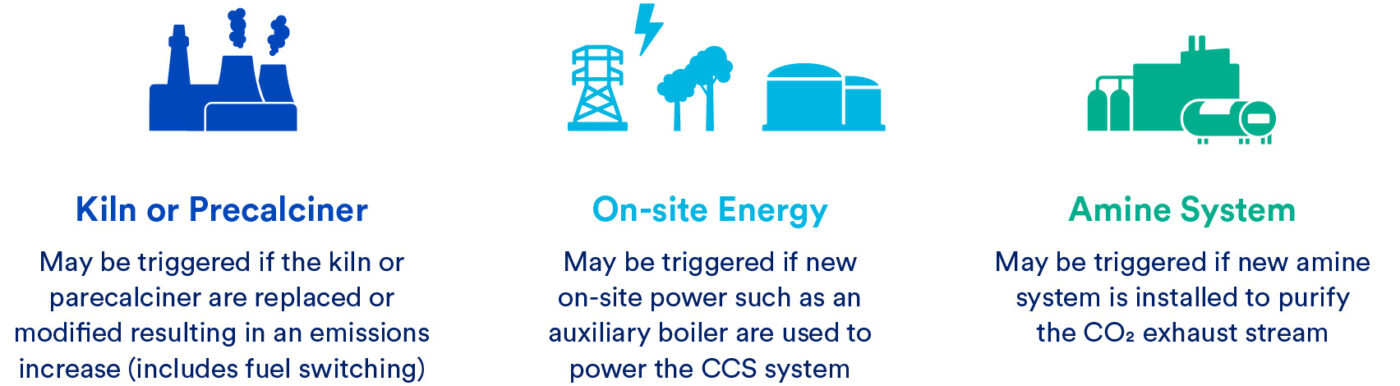
As discussed, the requirement to put on California BACT-level controls can be triggered in the cement industry when implementing decarbonization projects, if emissions exceed air district defined NSR thresholds. Some examples, illustrated in Figure 7 include:
- The replacement of existing equipment with new equipment – For new equipment, the air district must ensure that the technology achieves today’s BACT limits, as evaluated through California’s guidelines and determinations process. Those limits may be significantly more stringent than previous permit limits for the old equipment.
- The modification of existing equipment – If existing equipment such as the kiln or precalciner are modified to utilize a different fuel type and there are significant emissions increases as a result, BACT may be triggered.
- The installation of new on-site equipment to power the CCS system – New equipment at major sources such as cement plants will likely trigger BACT, unless the source is below air permit limits (such as where a zero-emission energy technology is used to power the CCS system). The installation of new on-site equipment to power the CCS system is likely, and BACT limits will vary based on the equipment type and fuel selected.
- The use of amine-based solutions for CCS systems – The installation of amine-based solution systems to purify CO2 exhaust streams may trigger BACT requirements. Different solutions may have different VOC and toxic air contaminant levels that may trigger additional requirements, such as California’s AB 2588 Hot Spots Program.
Figure 7: Examples of How Cement Decarbonization Projects May Trigger BACT
As illustrated above, there is not a single, universal BACT limit that would apply to every CCS project at cement plants, as the specific emissions limits may vary based on the facility’s location, the CO2 capture technology utilized, and the pollutants emitted. For some technologies, such as CCS utilizing amine-based solutions, an analysis of associated emissions limits has not been conducted in California to determine potential BACT limits – and so a state-wide guideline drawing from experiences in other states with these projects, and from published research can streamline the permitting effort. Such guidelines, like others in the California program, would be refined and updated over time as data from new installations becomes available. For projects that increase toxic air contaminants, air districts may also require health risk assessments and the application of California BACT for toxics (T-BACT).
Inconsistent emissions limits and extended air permitting timelines associated with determining BACT in California for first-of-a-kind projects like CCS on cement increase regulatory uncertainty. The absence of statewide guidelines for these projects creates significant risks for both communities and industry:
- Uneven requirements across the three local air districts with cement plants in California.
- Local air pollution controls that may vary by geography and not technology availability, potentially resulting in unequal community protections.
- Regulatory uncertainty since companies cannot predict what BACT emissions limits will apply to their first-of-a-kind projects, making project planning more difficult, and financing risky.
Case Study: Regulatory Triggers for a Pilot CCS Project in California
The experience of permitting small, pilot-scale CCS projects on other kinds of sources in California underscores the complexity and the regulatory gaps, and the need for a statewide guideline for each kind of application.
A CCS pilot project at an existing gas power plant, capturing only 11 tons of CO2 per day (0.04% of the stack exhaust) was found to increase emissions of multiple co-pollutants including ammonia and VOCs (specifically the carcinogens acetaldehyde and formaldehyde).93 For this small-scale pilot project, NSR and AB 2588 Hot Spots Program thresholds were both triggered:
- NSR: The emissions increase for criteria air pollutants, such as VOCs, was below the air district BACT thresholds, therefore BACT limits were not required. However, the project was required to obtain NSR offset credits if precursor organic compound (POC) emissions from the amine solvent exceeded a low threshold of 1.050 tons per year.
- AB 2588 Hot Spots Program: The project’s new formaldehyde emissions exceeded the chronic state toxic air contaminant trigger level, requiring a Health Risk Assessment (HRA).
This case demonstrates that even a very small CCS project can increase local air pollution and trigger complex air quality requirements (e.g., HRA and NSR offsets), yet the most stringent air control requirement (BACT) was not applied due to the size of the project. Given that CCS applications to control CO2 at cement plants will be significantly larger, early clarity on BACT is essential to reduce project risk and ensure community health protections.
By creating statewide BACT guidelines for CCS projects, air districts as the permitting agencies would use consistent data where there were several determinations to be made in different areas of the state. These BACT determinations would be based on the stringency of limits required and acknowledging different types of CCS technology configurations (e.g., replacement of pre-calciner vs. the use of amine-based capture systems).
Implementation Considerations:
- Regulatory Clarity. By providing clarity on emissions limits that may apply if BACT is triggered, CARB can ensure that industries are aware of expectations with respect to permit limits and associated control technology requirements prior to submitting permit applications.
- Expedited Permit Approval. If air districts can refer to a statewide BACT guideline that applies to CCS projects, it should help expedite internal review processes when applications for CCS projects are received. It is important that CARB and the air districts work together to determine the frequency that BACT guidelines should be reviewed and updated for this category, to ensure the information remains relevant, and that limits decrease as new technology becomes available.
- Enhanced Public Transparency. By publishing statewide BACT guidelines for CCS projects, whether on cement plants or other applications, the public will have enhanced transparency on the emissions limits that may be required for such projects, including VOC related emissions limits that may apply for CCS projects that utilize amine-based capture solutions.
Providing Statewide Guidelines for CCS BACT would:
- Enhance transparency about anticipated BACT limits to support industry decision making.
- Improve public awareness and understanding of permitted air emissions limits associated with CCS projects.
- Align with SB 905 goals to support CCS deployment through a unified permit system by enhancing transparency and promoting efficiency of air permitting for these projects.
5. Ensuring Public Transparency on Facility Decarbonization Strategies
Policy Description:
This strategy is aligned with analogous policies like Colorado’s GHG Emissions and Energy Management for Manufacturing 2 (GEMM 2) Rule, which requires industries to submit plans that outline strategies to decarbonize operations while achieving local air quality benefits.94 The proposed process creates transparency around how a decarbonization plan will address any local air quality implications while making significant investments in decarbonization technologies.
To support SB 596 implementation, CARB should consider utilizing the “unified permit application” as outlined in SB 90595 to enhance public transparency and support project permitting activities. Given the voluntary nature of the unified permit application, CARB can leverage the SB 905 program in three key ways that are within the Agency’s existing authority to design and implement.
- Enhanced Public Transparency and Expedited Feedback: The unified application structure can facilitate the voluntary submission of decarbonization plans to enhance early public transparency, engagement, and to receive early, informal feedback from the state. This can help confirm that the plan aligns with the state’s programs and can minimize duplication by answering questions that may be raised across individual permitting processes to help expedite subsequent local approvals.
- Permitting Roadmap and Timeline Clarity: The unified application can be designed for CARB (or another agency as determined) to identify all the state and local agencies that require approval for a CCS project, including where the project sits within each agency’s timeline and the maximum time allocated to each step. This transparency is crucial for reducing project risk because it enables the early identification, open discussion, and proactive management of potential problems.
- Knowledge Repository for Future Projects: The unified application can be used as a repository for non-confidential documents and information to support other projects by identifying the types of technologies used, standards applied, and successful justification for technology choices (e.g., establishing a template that can help justify technology choices for future applicants).
Implementation Considerations:
- Program Structure. To support the implementation of SB 596, CARB should work collaboratively with the cement industry to develop a template for a voluntary unified permit application, or plan, that outlines facility proposals for achieving carbon neutrality by 2045. CARB can also work with the cement industry to identify state and local agencies involved in CCS project approvals and associated timelines with each permitting step.
- Program Coordination. CARB can coordinate with air districts and other public agencies that are responsible for the California Environmental Quality Act (CEQA) or permit approvals to ensure awareness of the unified permit application, and determine which uses are the highest value from various stakeholder perspectives, including the local community.
- Public Engagement. Every decarbonization plan submitted to CARB shall be made available for public comment. The facility should be encouraged to work with CARB to address substantial comments in writing prior to the implementation of the plan. Final plans can be published on CARB’s website in a centralized location.
- Plan Components. Plans should include specific components, including:
- Information on the existing facility including cement blends produced, equipment utilized, equipment age, electricity usage, and fuel type.
- Technology and fuel options considered and the rationale for choosing the proposed technologies (including cost-effectiveness and GHG, criteria pollutants, and air toxics emissions of each option).
- An overview of the steps required to implement the new technologies and fuels, including a list of equipment that will be added, modified, or replaced.
- An outline of any new or enhanced emissions monitoring associated with the project, both onsite and within impacted communities.
- A description of safety protocols that will be implemented, and a description of whether removals will occur onsite or will be captured by a third-party for the CCS system.
- Timeline for project implementation.
Ensuring Transparency on Industry Decarbonization Pathways would:
- Provide public transparency early in the permitting process, to ensure meaningful participation that can influence technology choices or project outcomes.
- Potential to reduce permitting timelines through transparency and the identification of firm approval deadlines.
- Provide an evaluation of any local health and safety impacts in pursuit of GHG reductions.
Conclusion
Cement production is vital for the state’s infrastructure and economic success, but currently still accounts for a notable amount of the state’s annual GHG emissions. Seeking ways to decarbonize California’s cement industry will not only reinforce California’s climate leadership but will also present opportunities for technological innovation, economic advancement, and reducing harmful GHGs and other air pollutants. However, achieving these aspirations depends on collaboration between policymakers, industry stakeholders, and community members to develop policies that can help bridge existing policy gaps. There is no single policy that will achieve net-zero cement, and therefore a suite of policy options must be employed in order meet the state’s policy targets. State policymakers can and should build off the momentum of CARB’s SB 596 program, and California’s need to decarbonize, and begin to prioritize certain policy concepts, such as those listed in this report. Delaying policy action risks California falling behind on its decarbonization and net-zero goals.
Footnotes
- California Global Warming Solutions Act of 2006, A.B. 32, Chapter 488, Statutes of 2006. https://leginfo.legislature.ca.gov/faces/billHistoryClient.xhtml?bill_id=200520060AB32.
Climate change: Market-based compliance mechanism: Extension, A.B. 1207, Chapter 117, Statutes of 2025. https://leginfo.legislature.ca.gov/faces/billNavClient.xhtml?bill_id=202520260AB1207.
California Air Resources Board. (2022). 2022 Scoping Plan for Achieving Carbon Neutrality. https://ww2.arb.ca.gov/our-work/programs/ab-32-climate-change-scoping-plan/2022-scoping-plan-documents.
The California Climate Crisis Act, A.B. 1279, Chapter 337, Statutes of 2022.
https://leginfo.legislature.ca.gov/faces/billNavClient.xhtml?bill_id=202120220AB1279.California Air Resources Board. (2025). California Greenhouse Gas Emissions from 2000 to 2023: Trends of Emissions and Other Indicators.California Environmental Protection Agency. https://ww2.arb.ca.gov/sites/default/files/2025-11/nc-2000_2023_ghg_inventory_trends.pdf.
Cited value is for “scoping plan sectors,” which differs from economic sectors.
Portland cement is the most common type of cement in the U.S.
U.S. Geological Survey. (2025). Cement. U.S. Department of the Interior. https://pubs.usgs.gov/periodicals/mcs2025/mcs2025-cement.pdf.
In 2024, 84 million metric tons of Portland and blended cement were produced, a 4% decrease compared to 2023. While there are seven active cement plants in California in 2025, this is a decrease from 11 plants in 2006. U.S. Geological Survey. (2025). Cement. U.S. Department of the Interior. https://pubs.usgs.gov/periodicals/mcs2025/mcs2025-cement.pdf.
California Department of Transportation. (2026). Cementitious Materials for Use in Concrete. California Department of Transportation, Materials Engineering and Testing Services. https://mets.dot.ca.gov/aml/CementitiousList.php.
California Air Resources Board. (2025). Draft Net-Zero Greenhouse Gas Emissions Strategy for the California Cement Sector, 34. https://ww2.arb.ca.gov/sites/default/files/2025-03/Draft%20Net-Zero%20GHG%20Emissions%20Strategy%20for%20the%20Cement%20Sector.pdf.
For more information on the cement production process, see Figure ES-1 from Clean Air Task Force. (2025). Recasting the Future: Policy Approaches to Drive Cement Decarbonization. https://www.catf.us/resource/recasting-future-policy-approaches-drive-cement-decarbonization/.
This may include, but is not limited to: kiln electrification, different process technologies like LEILAC, or alternative cement chemistries like those produced through Brimstone or Sublime’s processes.
California Nevada Cement Association. (2023, July). Achieving Carbon Neutrality in the California Cement Industry: Key Barriers & Policy Solutions (2nd ed.). California Nevada Cement Association. https://static1.squarespace.com/static/65255bbe3f377e609244546f/t/6571fa23c11add2d88b8cc7d/1701968419719/cnca_carbonneutrality_secondedition_vfinal_07_19_23_.pdf.
The Cement Sector: Net-Zero Emissions Strategy, S.B. 596, Chapter 246, Statutes of 2021. https://leginfo.legislature.ca.gov/faces/billNavClient.xhtml?bill_id=202120220SB596.
California Air Resources Board, Draft Net-Zero Greenhouse Gas Emissions Strategy for the California Cement Sector
In addition to the draft cement strategy, CCS as a mitigation strategy was also included in a 2023 report performed by the University of California, Davis in support of SB 596. The study evaluated potential pathways to achieve net-zero GHG emissions by 2045. The report found that a 96% reduction in GHG emissions was possible from the cement sector by 2045, using a combination of mitigation strategies, including CCS, fuel switching, kiln electrification, and SCMs. See Alyson Kim and Sabbie A. Miller, 2023 Environ. Res. Lett. 18 104019, Meeting industrial decarbonization goals: a case study of and roadmap to a net-zero emissions cement industry in California,
https://iopscience.iop.org/article/10.1088/1748-9326/acf6d5/pdf.It is important to note that while SB 905’s program also includes utilization, for the purposes of this report CATF will use CCS for consistency.
Carbon sequestration: Carbon Capture, Removal, Utilization, and Storage Program, S.B. 905, Chapter 359, Statutes of 2022
https://leginfo.legislature.ca.gov/faces/billNavClient.xhtml?bill_id=202120220SB905.California Air Resources Board. (2026, May 26). Proposed Amendments to the California Cap on Greenhouse Gas Emissions and Market-Based Compliance Mechanisms Regulation [Attachment A-1, § 95891(g)(2)(H)]. https://ww2.arb.ca.gov/rulemaking/2026/cap-and-invest2026
California Air Resources Board. (2026, May 29). CARB adopts updates to California’s Cap-and Invest Program to support affordability and align with climate goals. https://ww2.arb.ca.gov/news/carb-adopts-updates-californias-cap-and-invest-program-support-affordability-and-align-climate.
California Air Resources Board. (2026, April). Manufacturing Decarbonization Incentive Fund Frequently Asked Questions. https://ww2.arb.ca.gov/sites/default/files/2026-04/nc-MDIF FAQ_April 2026.pdf.
The California Embodied Carbon Program, implemented by CARB, establishes a framework for measuring and reducing embodied carbon in building materials used in California. The program was authorized by AB 2446 (Holden, 2022), which directed CARB to develop a framework for measuring and reducing embodied carbon in construction materials, and AB 43 (Holden, 2023), which expanded and refined the program’s requirements. See California Air Resources Board, Embodied Carbon, https://ww2.arb.ca.gov/our-work/programs/embodied-carbon.
The California Corporate Greenhouse Gas Reporting and Climate-Related Financial Risk Disclosure Programs are administered by CARB and were established pursuant to SB 253 (Wiener, Chapter 382, Statutes of 2023) and SB 261 (Stern, Chapter 383, Statutes of 2023). See California Air Resources Board, California Corporate Greenhouse Gas Reporting and Climate-Related Financial Risk Disclosure Programs, https://ww2.arb.ca.gov/our-work/programs/california-corporate-greenhouse-gas-reporting-and-climate-related-financial-risk.
Advanced production processes can include technologies like LEILAC, and alternative cement chemistries may include Brimstone or Sublime.
Global Cement and Concrete Association. (2021). GCCA 2050 Cement and Concrete Industry Roadmap for Net Zero Concrete: Roadmap Overview. Global Cement and Concrete Association. https://gccassociation.org/concretefuture/wp-content/uploads/2021/10/GCCA-Concrete-Future-Roadmap-Overview.pdf.
California Nevada Cement Association. (2023, July). Achieving Carbon Neutrality in the California Cement Industry: Key Barriers & Policy Solutions (2nd ed.). California Nevada Cement Association. https://static1.squarespace.com/static/65255bbe3f377e609244546f/t/6571fa23c11add2d88b8cc7d/1701968419719/cnca_carbonneutrality_secondedition_vfinal_07_19_23_.pdf.
The Lebec Net-Zero Project is planning to use locally sourced biomass as an alternative fuel. See National Cement Company of California. (2024, December 9). National Cement Finalizes Agreement With Department of Energy for Development of the Lebec Net-Zero Project. https://lebecnetzero.com/latest-news/natcem-finalizes-doe-agreement.
For the purposes of the modeling and to calculate carbon intensity for the baseline scenario, the representative California facility is based on the most recent (2022) average fuel mix from CARB emissions inventory data, nameplate production capacity for clinker (PCA, 2019), and capacity factor data (USGS 2023 Cement Minerals Yearbook).
Portland Cement Association. (2021). U.S. Portland Cement Industry: Plant Information Summary (includes data through December 31, 2019). Portland Cement Association.
While the lifetimes of cement kilns are usually 30-50 years, existing kilns and their equipment are continually being modernized. See European Cement Research Academy. (2022). The ECRA Technology Papers 2022: State of the Art Cement Manufacturing: Current Technologies and Their Future Development. European Cement Research Academy. https://api.ecra-online.org/fileadmin/files/tp/ECRA_Technology_Papers_2022.pdf.
Kiln replacement was included in the Baseline scenario to levelize between pathways. Given the likelihood that some of these plants will need to replace their kilns in the next 50 years, we assume a kiln replacement. Cement plants are also likely to make capital improvements simultaneously to minimize the amount of downtime. No energy efficiency improvement or emissions reductions were considered as a direct result of kiln replacement.
See technical report appendix for more details. Current fuel mix from California Air Resources Board. (n.d.). Mandatory Greenhouse Gas Emissions Reporting Program Emissions Data. https://ww2.arb.ca.gov/our-work/programs/mandatory-greenhouse-gas-emissions-reporting.
The SB 596 baseline defines a metric for GHG intensity and selects a year (2019) from which to set and measure against intermediate carbon reductions progress.
A carbon capture rate of 90% was selected to represent a lower-bound, as first-of-a-kind projects are likely to seek permits for 90% capture or higher. Higher capture rates (>90%) are technically achievable and are often the target of cement CCS projects and FEED studies, such as those in Europe. See Clean Air Task Force. (2025, November). Carbon Capture and Storage in Europe: Slow but Significant Progress in 2025. https://www.catf.us/2025/11/carbon-capture-storage-europe-slow-but-significant-progress-2025/ and Du, Y., Gao, T., Rochelle, G. T., & Bhown, A. S. (2021). Zero- and negative-emissions fossil-fired power plants using CO2 capture by conventional aqueous amines. International Journal of Greenhouse Gas Control, 111, 103473. https://doi.org/10.1016/j.ijggc.2021.103473. In the U.S. (95%) see Salih, H., O’Brien, K., Dreye, D., Guerif, P.-P., Henderson, T., Clarridge, A., Lofgreen, B., Donovan, A., Slettehaugh, B., & Roberts, D.-L. (2022). FEED Study for Retrofitting Holcim U.S. Cement Facility with CO2 Capture Plant Using Air Liquide Adsorption Assisted Cryogenic Technology. Proceedings of the 16th Greenhouse Gas Control Technologies Conference (GHGT-16). https://doi.org/10.2139/ssrn.4291335.
To achieve a greater than 90% capture rate, an amine-based CCS system could be added to the kiln in Pathway 2 to capture the dilute stream of CO2 (2.9% volume, dry basis) due to the process emissions combined with the plasma gas. We did not model that option here due to the increase in costs that would result. Additionally, pre-treatment of the flue gas prior to the compression and purification is not considered and modeling assumes that any issues regarding NOx emissions can be handled by the baseline facility’s existing SNCR, a control technology which is present at all California plants besides Redding and Cushenbury. See Parra, S., Romano, M. (2023). Decarbonization of Cement Production by electrification. Journal of Cleaner Production, 425. https://doi.org/10.1016/j.jclepro.2023.138913.
Other scenarios, such as incorporating LC3 production into an electrification with CCS scenario is possible but would require further analysis of facility integration and available process information. For this analysis, this combination of technologies was not analyzed.
Pathway 4a is similar to National Cement’s Industrial Demonstration Program Project Proposal, however Pathway 4a uses woody biomass whereas National Cement suggests they may use agricultural byproducts such as pistachio shells. See National Cement Company of California. (2024, December 9). National Cement Finalizes Agreement With Department of Energy for Development of the Lebec Net-Zero Project. https://lebecnetzero.com/latest-news/natcem-finalizes-doe-agreement.
EMSW was selected as an alternative fuel given its lower CO2 emissions factor compared to biofuels, its inclusion in the California Nevada Cement Association’s (CNCA) report as one of two refuse-derived fuels with the highest potential to displace fossil fuel use, the relatively certain supply of EMSW, and its limited interactions with use of arable land. While the EMSW would need to meet the requirements of PRC § 40131.2, quantitative analysis of EMSW’s contribution to toxic air contaminants was outside the scope of this analysis and should be analyzed further. According to CNCA, EMSW can replace up to roughly 30% of a plant’s fuel mix.
California Nevada Cement Association. (2023, July). Achieving Carbon Neutrality in the California Cement Industry: Key Barriers & Policy Solutions (2nd ed.). California Nevada Cement Association. https://static1.squarespace.com/static/65255bbe3f377e609244546f/t/6571fa23c11add2d88b8cc7d/1701968419719/cnca_carbonneutrality_secondedition_vfinal_07_19_23_.pdf.
Carbon intensity of CA’s grid follows the CAISO-specific average annual long-term marginal emissions rate data from NREL Cambium’s MidCase scenario.
Note, this result is highly sensitive to the price of electricity, which, according to U.S. EIA data for 2023, was 2.3 times as costly in California compared to the national average for industry. See U.S. Energy Information Administration, Average Price of Electricity to Ultimate Customers by End-Use Sector, by State, 2023, https://www.eia.gov/state/seds/sep_sum/html/pdf/sum_pr_ind.pdf.
Capital costs in the baseline are from kiln replacement. See technical report appendix for additional details on cost assumptions.
However, the entire system must store more carbon in permanent or durable reservoirs than greenhouse gases it emits on a lifecycle basis to be considered actual biomass carbon removal and storage or carbon dioxide removal.
California has a target to implement wildfire fuel reduction treatments on between 1 and 2.3 million acres of forests and other lands annually by 2045. See California Wildfire and Forest Resilience Task Force. (2022). Roadmap to a Million Acres. https://wildfiretaskforce.org/roadmap-to-a-milllion-acres/.
Clean Air Task Force. (2025). Exploring Biomass Carbon Removal and Storage Scenarios for California. https://www.catf.us/resource/exploring-biomass-carbon-removal-and-storage-scenarios-for-california/.
Clean Air Task Force, “Air Pollutant Reductions from Carbon Capture” (2023) (reviewing emissions impacts of installing CCS on the Mojave Cement Plant, which is applicable to Pathway 1), https://www.catf.us/resource/air-pollutant-reductions-carbon-capture/.
CATF modeled co-pollutant impacts from amine-based post-combustion carbon capture units and found the potential for reductions of criteria air pollutants such particulate matter, sulfur dioxide, and nitrogen dioxide from the flue gas stream. While modeling also found the potential for increases in VOCs in the flue gas stream, nitrosamines remained below detection limits and EPA’s “ample margin of safety” threshold with a conservative sensitivity analysis. Alongside these potential criteria pollutant reductions and VOC increases, these units may increase emissions of ammonia which was outside the scope of the report. See Clean Air Task Force. (2023, December). Air Pollutant Reductions From Carbon Capture: An Analysis of the Air Quality and Public Health Benefits of Carbon Capture and Storage. https://cdn.catf.us/wp-content/uploads/2023/11/28104644/air-pollutant-reductions-carbon-capture-report.pdf.
CATF. (2025). Recasting the Future: Policy Approaches to Drive Cement Decarbonization. https://www.catf.us/resource/recasting-future-policy-approaches-drive-cement-decarbonization/.
California Air Resources Board. (2022). 2022 Scoping Plan for Achieving Carbon Neutrality. https://ww2.arb.ca.gov/our-work/programs/ab-32-climate-change-scoping-plan/2022-scoping-plan-documents.
Alyson Kim and Sabbie A. Miller, (2023). Environ. Res. Lett. 18 104019, Meeting industrial decarbonization goals: a case study of and roadmap to a net-zero emissions cement industry in California, https://iopscience.iop.org/article/10.1088/1748-9326/acf6d5/pdf.
U.S. Department of Energy. (2023, September). Pathways to Commercial Liftoff: Low-Carbon Cement. U.S. Department of Energy.
https://climateprogramportal.org/wp-content/uploads/2025/02/20230921-Pathways-to-Commercial-Liftoff-Cement.pdf.In all pathways modeled, 45Q is less than the lifetime abatement cost, ranging from $99 per metric ton of CO2 for Pathways 3 & 4 to $479 per metric ton of CO2, highlighting the need for long-term financial support beyond the current value and duration of 45Q. However, in Pathway 1, the full abatement cost is related to CCS. Conversely, in Pathways 2, 3, and 4, a portion of the CO2 reduced is not sequestered but rather avoided due to the switch from combustion to an electrified technology (Pathway 2) or the substitution of less carbon-intensive calcined clay for clinker (Pathway 3), coupled with the replacement of fossil fuels with a fuel that may emit less carbon (Pathway 4). Consequently, the 45Q credit would not be applicable to all metric tons of CO2 reduced. In addition, 45Q is valid for a duration of 12 years, which is shorter than the expected project lifetime and financiers will require a guarantee of return.
For example, the Regional Greenhouse Gas Initiative has used cap-and-trade funds to capitalize revolving loan funds through Green Banks in New York,New Jersey, Connecticut, and the District of Columbia.
Perhaps the flagship example of a revolving loan fund is U.S. EPA’s Clean Water State Revolving Fund (CWSRF) that has provided low-cost financing to communities for a wide range of water quality infrastructure projects, including municipal wastewater facilities, nonpoint source pollution control, decentralized wastewater treatment systems, stormwater runoff mitigation, green infrastructure, estuary protection, and water reuse. Over a period of 36 years, the CWSRF has provided $172 billion to communities through more than 48,000 low-cost loans.
California Infrastructure and Economic Development Bank. (n.d.). Climate Catalyst Program. https://ibank.ca.gov/climate-financing/climate-catalyst-program/.
California Pollution Control Financing Authority. California State Treasurer’s Office. https://www.treasurer.ca.gov/cpcfa.
An Advanced Climate Technologies (ACT) Innovation Fund is a mechanism designed to help ensure that California establishes itself as the hub for climate innovation and investment and remains on track to meet its 2045 net-zero goal, further cementing its role as the global leader for effective climate action. It was created via SB 840 See Greenhouse gases: Greenhouse Gas Reduction Fund: studies, S.B. 840, Chapter 121, Statutes of 2025. https://leginfo.legislature.ca.gov/faces/billNavClient.xhtml?bill_id=202520260SB840.
A carbon border adjustment mechanism is described in a subsequent section of this report.
TRLs are a widely recognized tool to measure technology maturity and manage innovation risk, usually based on a 9-level scale. TRL 1 describes a technology at the conceptual stage. TRL 5 generally describes a technology validated in real-world conditions. TRL 9 describes a technology commercially deployed and performing as intended in real-world operations.
CEC’s INDIGO Program is designed to provide incentives for industrial projects that provide benefits to the electrical grid, reduce emissions and local air pollution. See California Energy Commission, Industrial Decarbonization and Improvement of Grid Operations (INDIGO) Program, https://www.energy.ca.gov/programs-and-topics/programs/industrial-decarbonization-and-improvement-grid-operations-indigo.
CEC’s CRISP Program is designed to provide financial incentives with the goal of advancing technologies for direct air capture of atmospheric carbon in California. See California Energy Commission. (n.d.). Carbon Removal Innovation Support Program (CRISP). California Energy Commission. https://www.energy.ca.gov/programs-and-topics/programs/carbon-removal-innovation-support-program-crisp.
CATF’s “State Industrial Policy Playbook” includes a comprehensive list of tax incentive policies to help close the cost gap between low-emission and traditional industrial products and technologies. See Clean Air Task Force, The State Industrial Policy Playbook: A Policy Guide for Low-Emission Heavy Industry (Oct. 14, 2025), https://www.catf.us/resource/the-state-industrial-policy-playbook-a-policy-guide-for-low-emission-heavy-industry/.
One example of a bill like this has been introduced in New Mexico, which would provide production tax credits of $60–$120 per metric ton CO₂e reduced below facility benchmarks for eligible industrial products (e.g., concrete, steel, glass, hydrogen), with annual per-facility caps of $7M–$18M and an aggregate cap of $35M/year. Investment tax credits range from $5M–$15M based on expected CO₂e reductions (10–30% of qualified expenditures).
The Federal Qualifying Advanced Energy Project Credit (Section 48C credit) incentivized investments in advanced energy manufacturing, industrial decarbonization, and critical materials recycling by offering a tax credit of up to 30% of project costs. This competitive program required businesses to apply for an allocation, and the total allocated funding of $10 billion was exhausted across two application rounds. It stimulated substantial private sector investment and job creation.
California Environmental Protection Agency. (n.d.). California Climate Investments to Benefit Disadvantaged Communities. https://calepa.ca.gov/envjustice/ghginvest/.
California Global Warming Solutions Act of 2006: Greenhouse Gas Reduction Fund, S.B. 535, Chapter 830, Statutes of 2012 (Cal. 2012). https://leginfo.legislature.ca.gov/faces/billNavClient.xhtml?bill_id=201120120SB535.
California Global Warming Solutions Act of 2006: Greenhouse gases: Investment plan: Disadvantaged communities, A.B. 1550, Chapter 369, Statutes of 2016 (Cal. 2016).
California Alternative Energy and Advanced Transportation Financing Authority. (CAEATFA). https://www.treasurer.ca.gov/caeatfa.
The Independent Emissions Market Advisory Committee has outlined in their 2024 Annual Report key criteria that can guide this process, including permanence of storage, robust monitoring and verification, clear liability provisions for reversals, accounting for emissions from transport and electricity use, treatment of allowance allocation, appropriate regulatory oversight, and safeguards against double-counting. See Independent Emissions Market Advisory Committee. (2024). 2024 Annual Report of the Independent Emissions Market Advisory Committee. https://calepa.ca.gov/wp-content/uploads/2025/02/2024-ANNUAL-REPORT-OF-THE-IEMAC-final.pdf.
California Nevada Cement Association. (2023, July). Achieving Carbon Neutrality in the California Cement Industry: Key Barriers & Policy Solutions (2nd ed.). California Nevada Cement Association. https://static1.squarespace.com/static/65255bbe3f377e609244546f/t/6571fa23c11add2d88b8cc7d/1701968419719/cnca_carbonneutrality_secondedition_vfinal_07_19_23_.pdf.
Natural Resources Defense Council. (2025, April 21). NRDC comments to CARB on the draft net-zero greenhouse gas emissions strategy for the California cement sector [Public comment submitted to the California Air Resources Board]. https://ww2.arb.ca.gov/form/public-comments/submissions/23591.
The Cement Sector: Net-Zero Emissions Strategy, S.B. 596, Chapter 246, Statutes of 2021. https://leginfo.legislature.ca.gov/faces/billNavClient.xhtml?bill_id=202120220SB596.
CARB does not endorse or suggest implementing a CBAM through Cap-and-Invest, but rather noted that the mechanism is used as a leakage mitigation strategy in other jurisdictions, such as the European Union, and any similar approach implemented in California must be “supported by data and carefully consider broader implications.” See California Air Resources Board. (2026, January 20). Initial statement of reasons for proposed amendments to the California Cap on Greenhouse Gas Emissions and Market-Based Compliance Mechanisms Regulation. https://ww2.arb.ca.gov/sites/default/files/barcu/regact/2026/cap_invest/nc_isor.pdf.
See “Section 3: Complementary Market-based Approaches”
California Department of General Services. (n.d.). Buy Clean California Act. https://www.dgs.ca.gov/pd/resources/page-content/procurement-division-resources-list-folder/buy-clean-california-act.
An example of this is the California Air Resources Board’s Composite Wood Products Airborne Toxic Control Measure. See California Air Resources Board. (n.d.). Composite Wood Products Program. https://ww2.arb.ca.gov/our-work/programs/composite-wood-products-program.
Palmeri, J., Waldman, B., Simonen, K., & Lewis, M. (2024). Scaling Buy Clean Policy: Strategies to Achieve Larger Embodied Carbon Reductions. Carbon Leadership Forum. https://carbonleadershipforum.org/scaling-buy-clean-policy/.
The California Embodied Carbon Program, implemented by CARB, establishes a framework for measuring and reducing embodied carbon in building materials used in California. The program was authorized by AB 2446 (Holden, 2022), which directed CARB to develop a framework for measuring and reducing embodied carbon in construction materials, and AB 43 (Holden, 2023), which expanded and refined the program’s requirements. See California Air Resources Board, Embodied Carbon, https://ww2.arb.ca.gov/our-work/programs/embodied-carbon.
For more information on Advance Market Commitments, see Natural Resources Defense Council & RMI. (2025, February). Not Set in Concrete. https://www.nrdc.org/resources/not-set-concrete.
California Air Resources Board. (n.d.). BACT Program. https://ww2.arb.ca.gov/capp/cst/tch/bact-program.
California Air Resources Board. (n.d.). California Air Districts. https://ww2.arb.ca.gov/california-air-districts.
California Air Resources Board. (n.d.). BACT Definitions. https://ww2.arb.ca.gov/capp/cst/tch/bact-definitions.
California Air Resources Board. (n.d.). BACT Determinations and Guidelines. https://ww2.arb.ca.gov/capp/cst/tch/bact-determinations-and-guidelines.
California Air Resources Board. (n.d.). BACT Guidelines Tool. https://ww2.arb.ca.gov/capp/cst/tch/bact-guidelines-tool.
California Air Resources Board. (n.d.). AB 2588 Air Toxics “Hot Spots” Program. https://ww2.arb.ca.gov/our-work/programs/ab-2588-air-toxics-hot-spots.
Clean Air Task Force. (2023). Air Pollutant Reductions From Carbon Capture. Clean Air Task Force. https://www.catf.us/resource/air-pollutant-reductions-carbon-capture/.
See Rochelle, G. T. (2024). Air pollution impacts of amine scrubbing for CO₂ capture. Carbon Capture Science & Technology, 11, 100192. https://doi.org/10.1016/j.ccst.2024.100192. (concluding that, for well-designed CCS systems installed on coal and gas-fired power plants, “[e]ven with atmospheric reactions, air quality impacts of amine, nitrosamine, and other air toxics will probably be insignificant”). While the same conclusion could be made for well-designed CCS systems on cement plants, every cement plant installing CCS should perform site-specific engineering design and health-risk modeling to inform whether additional control or design changes are necessary to eliminate health and environmental impacts.
NRDC review of California Cement Plant Permits and 2022 Device-Level Emissions Inventory found that, based on findings from CATF’s Air Pollutant Reductions from Carbon Capture report, given controls installed and emission limits of cement plants, some facilities in addition to the Mojave plant would need to install an SO2 scrubber and wet electrostatic precipitator or additional controls prior to post-combustion capture operations. The Mojave cement plant, which is considered in that analysis, has an SNCR to control NOx emissions. According to the NRDC review, of the 7 operating cement plant in California, the Mitsubishi cement plant and CalPortland’s Redding cement plant do not have SNCR equipment to control NOx and therefore may need additional emissions controls prior to installing CCS.
Buist, H. E., Devito, S., Goldbohm, R. A., Stierum, R. H., Venhorst, J., & Kroese, E. D. (2015). Hazard assessment of nitrosamine and nitramine by-products of amine-based CCS: Alternative approaches. Regulatory Toxicology and Pharmacology, 71(3), 601–623. https://doi.org/10.1016/j.yrtph.2014.01.017.
The “feasibility” of control is based on the stringency of BACT triggered – and involves considerations of cost-effectiveness as well. In all cases, BACT is not technology forcing and must be based on emissions limits achieved by existing technology deployments.
Air Districts have different trigger thresholds that are locally determined. In some areas, districts may impose more stringent thresholds that trigger BACT on small projects with minimal emissions increases. Additionally, CO2 thresholds can be defined where the source otherwise triggers the need for an air permit.
California Energy Commission. (2022, September 30). Staff analysis of post-certification petition to amend the final commission decision for Los Medanos Energy Center (98-AFC-01C) (TN 246297). https://efiling.energy.ca.gov/Lists/DocketLog.aspx?docketnumber=98-AFC-01C.
Colorado Department of Public Health and Environment. (n.d.). Greenhouse Gas Emissions and Energy Management for Manufacturing 2 (GEMM 2) Rule, as approved by the Air Quality Control Commission. https://cdphe.colorado.gov/GEMM-phase-2-rule.
Carbon sequestration: Carbon Capture, Removal, Utilization, and Storage Program, S.B. 905, Chapter 359, Statutes of 2022.
https://leginfo.legislature.ca.gov/faces/billNavClient.xhtml?bill_id=202120220SB905.
Credits
CATF: Ashley Arax, Ben Grove, and Sam Bailey
AJW: Mary Solecki, Ted Michaels, Cassandra Lopina, and Caelin MacIntosh
This report was made possible with support from the William and Flora Hewlett Foundation. The analysis and conclusions presented here are those of the authors and/or Clean Air Task Force and do not necessarily reflect the views of the funder.

