
The Industrial Decarbonisation Bank: Recommendations for the EU ETS revision

The Industrial Decarbonisation Bank (IDB) is a key opportunity to deliver much-needed funding for industrial decarbonisation. The true measure of success, however, will be whether this mechanism ultimately results in operating projects. Clean Air Task Force (CATF) has put forth detailed recommendations for the design of the instrument in this policy brief, including prioritising projects with a clear path to construction, sizing support to what each project genuinely needs, and coordinating the shared infrastructure that individual projects cannot deliver alone.
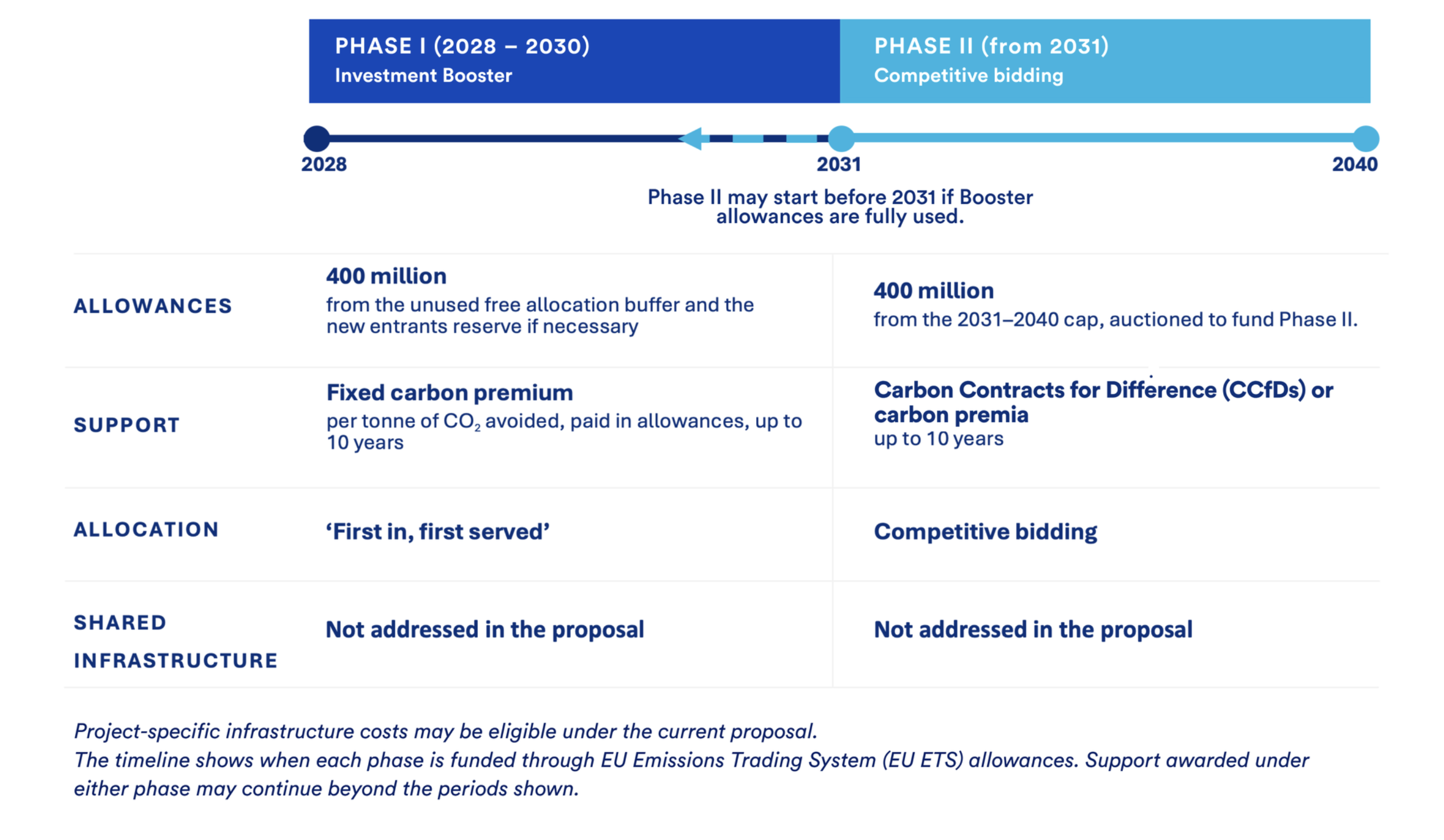
Figure 1. Overview of the IDB under the Commission’s proposal
Phase I (2028-2030): Investment Booster
As per the Commission’s proposal, in the IDB’s first phase of operation the Investment Booster would support projects with a fixed carbon premium per tonne of CO2 avoided, allocated on a ‘first in, first served’ basis and paid in allowances.
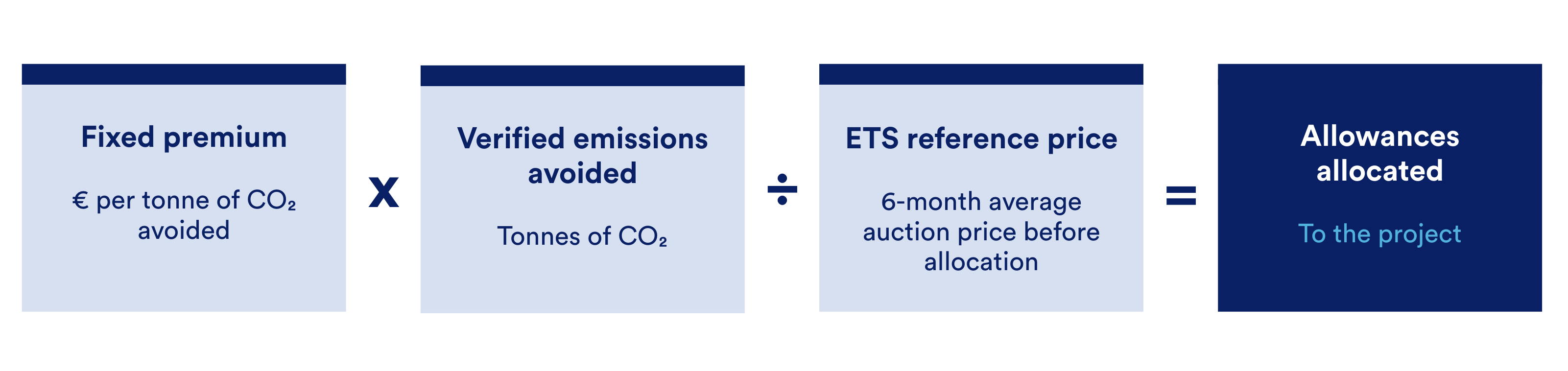
Figure 2. How Investment Booster payments are calculated
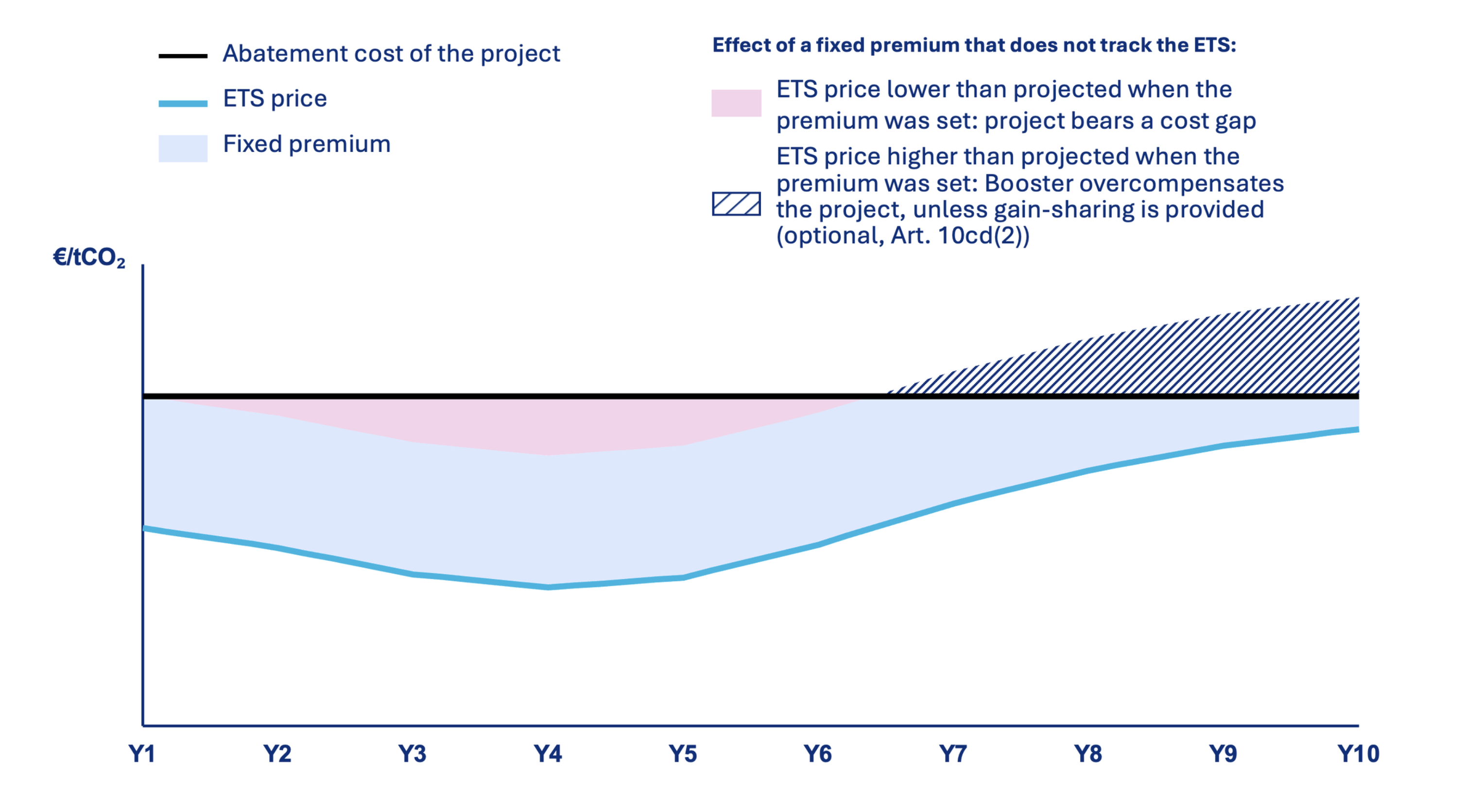
Industrial decarbonisation projects can face significant commercial and upfront investment risks, making predictable support important to the investment decision. The impact assessment supports this rationale, finding that administrative schemes with fixed premia provide predictable cash flows and a more robust financial model, increasing the likelihood that projects materialise, and that they are most needed in the early years when uncertainties are highest. That predictability, however, also depends on the premium remaining aligned with the support a project needs over time. The premium is intended to cover the cost gap a low-carbon project carries relative to conventional production. The impact assessment calculates this gap as the abatement cost minus the ETS price. The proposal recognises this by providing that the rate should be based on a funding-gap analysis and allows the Terms and Conditions to differentiate it by decarbonisation pathway. The funding gap, however, will not remain fixed over the ten-year support period. Changes in the ETS carbon price, energy prices, and technology costs can alter the level of support a project needs. A premium set administratively at the outset does not automatically adjust to these developments. The impact assessment identifies this risk, finding that a static support level can lead to overcompensation or unforeseen cost gaps and that a single rate may not reflect the different costs of decarbonisation across technologies. The Commission’s proposal allows the Terms and Conditions to provide mechanisms for sharing possible gains, and for ensuring best value for money, such as a review of the fixed premium rate if it is no longer appropriate in light of market developments, but leaves these optional. Without such a review, the premium may cease to reflect the underlying funding gap as market conditions change.
Because the premium is paid in allowances, the number required by the Booster varies with the preceding six-month average ETS auction price. A lower reference price means more allowances are needed to deliver the fixed premium. Where the Booster’s own allocation is insufficient, the proposal allows the Commission to draw on allowances reserved for Phase II, without any specific limit. A lower carbon price could therefore reduce the resources available for Phase II, including for carbon contracts for difference (CCfDs). The proposal accounts for carbon-price risk in Phase II by requiring the Commission to estimate payment exposure against a plausible range of carbon price scenarios before making commitments. This helps ensure that commitments remain within the available Phase II allowance envelope even under lower carbon prices. The Booster requires only a check that remaining allowances cover estimated demand, not an assessment across carbon-price scenarios, even though it can draw on allowances reserved for Phase II.
Figure 3. The impact of the ETS price on fixed premium payments
The ‘first in, first served’ allocation will depend heavily on the quality of the pre-selection process. As per the proposal, projects would be pre-selected, with the detailed criteria left to the Terms and Conditions, after which allowances would be allocated in chronological order based on the date and time of submission of a completion bond. Among projects that pass pre-selection, access to support would therefore depend on how quickly they can arrange the bond, rather than on a comparative assessment of readiness, delivery, or cost-effectiveness. The impact assessment finds the same: support may go to the fastest projects rather than those that are the most cost-effective, and well-resourced applicants may queue ahead of smaller ones. Much will therefore depend on whether the Terms and Conditions apply sufficiently robust readiness and delivery criteria before chronological allocation applies, and whether they contain safeguards against excessive concentration of support.
Figure 4. How the Investment Booster would work
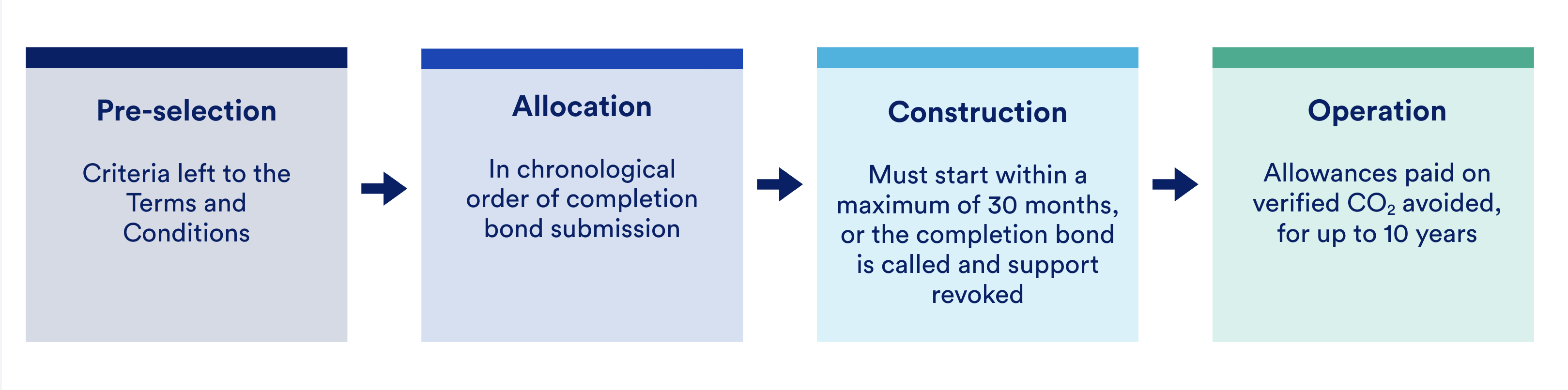
The proposal also requires projects to start physical construction within a maximum of 30 months of approval or lose the support and the completion bond. The provision does not, however, distinguish between delays caused by the project and those arising from permitting, access to infrastructure such as electricity grids, CO2 transport and storage or hydrogen networks, or other circumstances outside the project’s control. A narrowly defined exception in such cases would preserve the discipline of the deadline without penalising projects for external delays.
The timing of access to competitive support is also important. The impact assessment envisages competitive mechanisms such as CCfDs assuming a greater role as technologies mature and carbon prices rise. For some industrial decarbonisation projects, however, waiting until 2031 may be too late. Where abatement costs remain high relative to prevailing carbon prices, a CCfD may make more efficient use of available support, as support can be higher when the gap is widest and decline as the carbon price rises. The proposal allows Phase II to open before 2031 only once the Booster allowances have been fully used. This makes exhaustion of the Booster allocation, rather than market maturity, the trigger for an earlier start. Where demand for the Booster is insufficient, or too few allowances remain to support a further project, Phase II would not open early and the remaining allowances could stay unused until 2031.
Policy recommendations:
- Require a review of the fixed premium where market conditions change materially. This should include changes in the carbon price or other relevant costs which materially alter the underlying funding gap.
- Limit the risk that Booster commitments reduce the resources available for Phase II. Before making Booster commitments, the Commission should assess whether the Booster’s own allowances would be sufficient under a plausible range of carbon-price scenarios, and limit commitments accordingly. Allowances reserved for Phase II should be used only as a last resort.
- Undertake a robust pre-selection process. The Terms and Conditions should apply robust readiness and delivery criteria before chronological allocation and include safeguards against excessive concentration of support.
- Allow limited flexibility in the 30-month construction deadline for delays outside the beneficiary’s control. A narrowly defined exception should apply where construction is delayed by permitting, access to necessary infrastructure, or comparable external circumstances.
- Allow Phase II to open before 2031 not only once the Booster allowances are fully used, but also where the remaining allowances are insufficient to support further projects or demand is insufficient to use them. Any remaining Booster allowances should then be made available for Phase II.
Phase II (from 2031 onwards): Competitive bidding
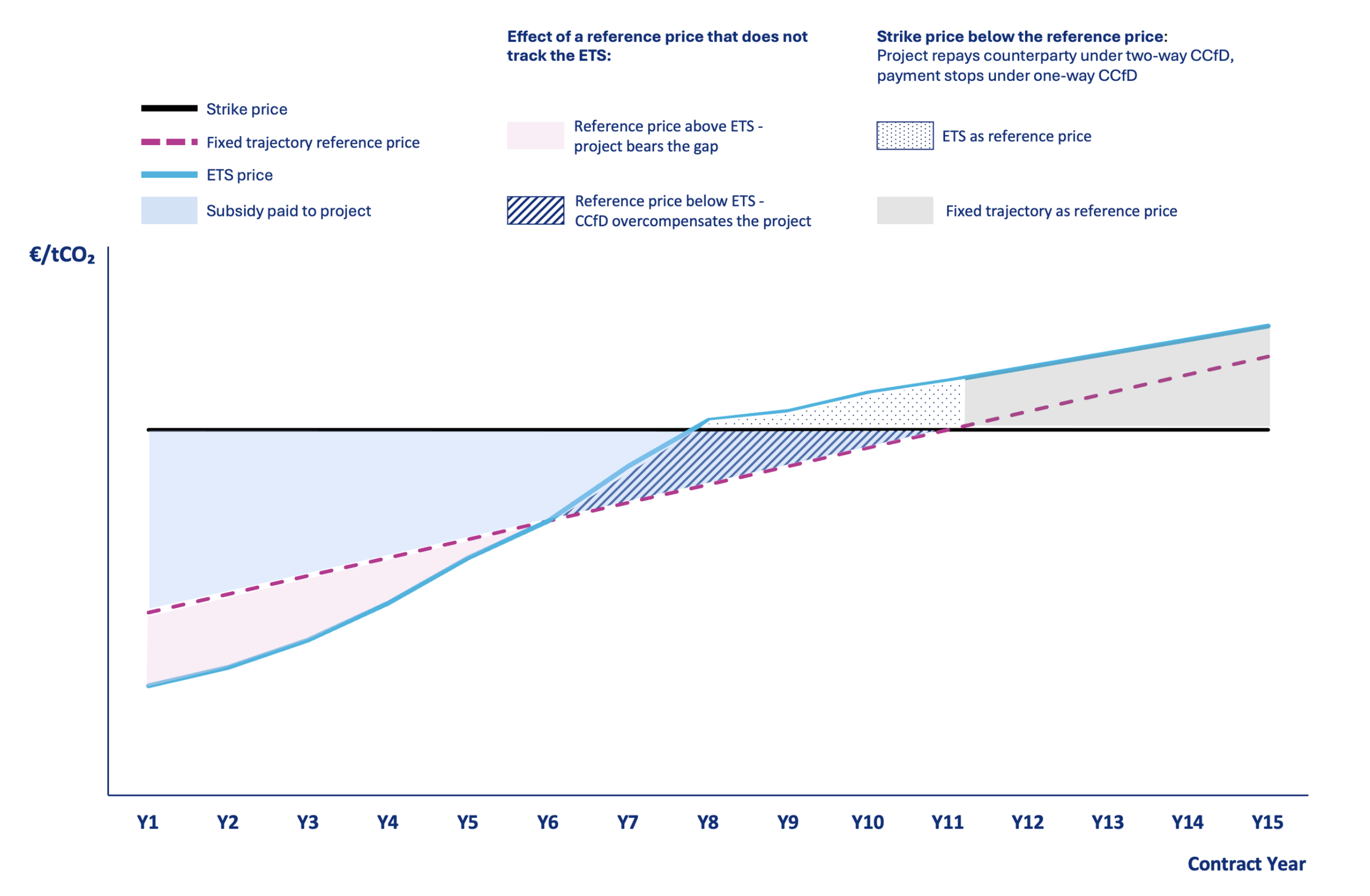
The competitive bidding phase will only deliver cost-efficiency if it limits overcompensation and non-delivery. The reference price determines the direction and size of CCfD payments, making its relationship to actual ETS prices important. The Commission’s proposal links CCfD payments to the prevailing carbon price on the common auction platform. The proposal allows, but not obliges, the Commission to require repayment of excess support, but only where the carbon price exceeds the strike price by more than a pre-determined percentage.
By comparison, if a CCfD were to settle against a fixed administrative trajectory rather than the prevailing ETS price, actual ETS prices could diverge from that trajectory in either direction over the contract duration. When ETS prices rise above the administrative trajectory, the CCfD compensates against a reference below the actual ETS, overcompensating the project. When ETS prices fall below the administrative trajectory, the CCfD compensates against a reference above the actual ETS, leaving the project to bear the gap. By contrast, a CCfD using an average of recent EU ETS prices smooths volatility without losing the connection to the market.
Figure 5. How CCfD design determines whether projects are over- or under-compensated
Safeguards against project non-delivery are also discretionary: the bid bond, construction deadline, and completion bond are left optional, despite the impact assessment finding the risk of non-delivery greater under competitive allocation and identifying these guarantees as measures to mitigate that risk. As in the Booster, a construction deadline should not penalise projects for delays outside their control.
The duration of support is important for investment certainty. For large-scale projects with long investment horizons, longer-term revenue certainty can be critical to reaching an investment decision. The proposal limits CCfDs to a term of up to ten years, while the German CCfD scheme cited in the impact assessment offers 15-year contracts. Extending the maximum term would provide projects with greater revenue certainty.
The proposal does not ensure the distribution of support across sectors, for instance by introducing technology baskets or sectoral earmarking. In a technology-neutral auction, ranking projects on cost per tonne would favour lower-cost pathways and leave sectors with structurally higher decarbonisation costs at a disadvantage. The impact assessment identifies this directly, finding that a cost-ranked auction leaves higher-cost but strategically relevant technologies (such as synthetic fuels for maritime and aviation and synthetic hydrocarbons for the chemical industry) unsupported unless budget is earmarked for specific sectors.
Policy recommendations:
- Strengthen the design of CCfDs by requiring full two-way settlement and allowing contracts of up to 15 years. Where the carbon price rises above the strike price, the project should pay the difference to the IDB for reuse in later rounds.
- Make delivery safeguards (a bid bond, construction deadline, and a completion bond) mandatory in competitive procedures, with a narrowly defined exception for delays outside the beneficiary’s control.
- Require sectoral safeguards in competitive bidding to account for sectors with structurally higher decarbonisation costs, with the detailed design set through Terms and Conditions. A proposal for a possible design is outlined in this policy brief.
Enabling infrastructure
The IDB cannot deliver industrial decarbonisation projects if it does not also enable the infrastructure on which those projects depend. The importance of infrastructure availability is also reflected in the impact assessment’s modelling of the competitive phase, which identifies it alongside the IDB’s final design, the design of funding rounds, demand for low-carbon products and project delivery risks as factors on which its actual impact will depend. The proposal determines that IDB support can be used for capital investment, including grid connection, storage and flexibility costs incurred by projects, and operational expenditure for emission reductions or removals in installations carrying out or substituting industrial production processes (defined in Annex I). Each category is tied to an individual installation and to costs incurred by that project. This leaves no clear route for supporting shared infrastructure, whose costs sit at network level and which may serve several eligible projects. Phase II may use forms of support other than CCfDs, but the proposal does not specify that these can be used for shared infrastructure.
This matters because shared infrastructure faces a coordination problem that support for individual projects cannot solve. Shared infrastructure network cannot reach a final investment decision without a credible base of users, while projects will not commit without confidence that the infrastructure network will be available. The competitive bidding phase offers a way to resolve this, as the support allocation reveals where sufficient demand exists. Where several projects in a cluster receive contracts, those awards provide the network with a credible base of users and can support its investment decision. The IDB could therefore commit infrastructure funding against confirmed project awards, rather than requiring infrastructure networks to be financed ahead of demand.
Policy recommendations:
- Coordinate IDB awards with existing infrastructure funding. Confirmed project awards under the competitive phase should inform support for the shared infrastructure on which those projects depend, including through the Connecting Europe Facility and, for electricity grids, the Strategic Infrastructure Investment Fund.
- Allow the IDB to fill remaining shared-infrastructure funding gaps in Phase II. Where other Union instruments cannot provide sufficient support, the IDB should be able to support shared infrastructure which will be used by eligible projects. The Commission should assess this need before each competitive bidding procedure and provide support where a need is identified.
- Enable consortium bidding in the competitive phase. The Terms and Conditions should allow projects that depend on the same shared infrastructure to submit coordinated bids, so that interdependent projects can be selected together where their delivery depends on common infrastructure.

