

BAAJA’s promise of good government reforms to environmental reviews undercut by its other changes to NEPA

The following blog is part of a series examining specific provisions in the Bipartisan American Affordability and Jobs Act (BAAJA). Clean Air Task Force is taking a close look at the bill to identify opportunities to strengthen its provisions, address potential gaps, and improve its effectiveness in meeting the country’s energy needs reliably and affordably.
As passed by the Senate, the Bipartisan American Affordability and Jobs Act (BAAJA) would, among many other provisions, make significant changes to the National Environmental Policy Act (NEPA). Clean Air Task Force (CATF) has spent years delving into complex questions about NEPA’s role in clean energy infrastructure deployment, with our latest research—a quantitative assessment of NEPA reviews— leveraging a new large-scale dataset. CATF’s evidence-based analysis shows that, while NEPA is often scapegoated as a primary cause of infrastructure delays and cancellations, this blame often mischaracterizes the empirical reality. Rather, when done effectively, NEPA can actually improve environmental decision making and overall permitting efficiency by providing a coordination mechanism among federal agencies.
However, effective NEPA implementation is too-often hamstrung by lack of government capacity at federal agencies, including outdated technology and understaffing. Several provisions in BAAJA—notably its inclusion of the House-passed ePermit Act (Sec. 1121), the creation of a Permitting Improvement Fund (Sec. 1133), and requirement for developers to submit a record of stakeholder engagement (Sec. 1109)—would be meaningful steps in the right direction, building stronger data collection practices and agency capacity to facilitate more efficient permitting processes.
Unfortunately, these improvements and good governance provisions would be undercut by other provisions that reduce incentives to comply with NEPA and hinder effective NEPA implementation. In particular, restrictions to judicial review (Sec. 1110) would weaken the ability of members of the public to participate in environmental reviews and hold agencies to account when they fail to comply with NEPA. If courts cannot provide meaningful relief, incomplete environmental reviews may go unchecked; agencies could not fully consider environmental effects, or miss better alternatives developed with public input, for example. While we support responsible NEPA reforms that enhance government capacity and community engagement while reducing administrative burdens, as portions of BAAJA do, the bill’s judicial review section as currently drafted would fatally undermine these efforts.
NEPA’s role in energy deployment
The NEPA process requires federal agencies to consider the potential impacts of proposed “major federal actions” before taking those actions. Major federal actions are those subject to an agency’s control and responsibility; for clean energy infrastructure projects, when NEPA is triggered, it is often because a project is located on or crosses federal land, receives federal grants or loans, or entails an agency itself implementing the project (for instance, a Power Marketing Administration building a transmission line). Section 1102 of BAAJA would add a new section 3(a)(18)(B)(iii) to NEPA that would exempt many federal grants as a trigger for NEPA, leaving federal land and agency action the main remaining triggers.
For example, if the federal government is considering whether to grant the right-of-way for a new transmission line to cross federal land, which would connect energy projects to the grid, NEPA requires the agency to evaluate how the project might affect, among other factors, local ecosystems, cultural resources, and nearby communities, and document that analysis in an environmental review. That analysis also includes consideration of alternatives that would accomplish the project’s purpose and need, which is defined by the agency and determines the environmental review’s scope. Until recently, the public would then have an opportunity to review and comment on a draft of the agency’s analysis before a final decision is made. Previous research has shown that public comments can meaningfully shape final government action, including leading agencies to change their preferred alternative for an action.
The Trump administration has, however, made significant changes to NEPA implementation since January 2025. In response to an executive order, the Council on Environmental Quality (CEQ) rescinded its government-wide NEPA regulations, and agencies have promulgated new agency-specific procedural guidance. In addition to the regulatory uncertainty created by this new patchwork of changeable guidance, agencies’ implementation procedures have generally, as we have previously noted, weakened public participation by eliminating notice-and-comment and scoping meeting requirements, weakened safeguards in the development and application of categorical exclusions, and constrained the scientific and technical analysis of project impacts.
Is NEPA the holdup in clean energy deployment? Evidence from CATF research
In 2024, CATF partnered with the Niskanen Center to establish a comprehensive evidentiary record of permitting challenges faced by electric transmission projects and offer fact-based insights into challenges and opportunities. We gathered and analyzed a dataset of 37 major new high-capacity transmission lines, evaluated case studies of transmission projects undergoing federal permitting, and conducted extensive stakeholder interviews. The majority of these projects (54%) faced neither litigation nor substantial non-litigation opposition, while around a quarter (27%) did face either litigation or substantial non-litigation opposition. However, despite these obstacles, 31 of the 37 projects were completed, most lawsuits were decided in favor of the project, and courts almost always denied motions for preliminary injunctions filed by project opponents (meaning that a project can begin construction while litigation continues).
Outlier: SunZia Southwest Transmission Project
The SunZia Southwest Transmission Project is a 550-mile high-voltage direct current line in Arizona and New Mexico that enables 3.65 GW of renewable energy generation. First proposed in 2008, SunZia was finally completed in 2026, and is commonly cited by permitting reform proponents—including by lead BAAJA negotiator Senator Martin Heinrich—as an example of how the permitting process is broken. Our research showed that SunZia “suffered from a lack of consistent federal agency coordination, cooperation, and capacity that contributed to longer permitting timelines.” Notably, the Bureau of Land Management issued a 2015 Record of Decision that did not alleviate the Department of Defense’s concerns over the route’s proximity to the White Sands Missile Range, necessitating an additional siting study and an amended route. (Additional reporting from Vox indicates that financing challenges may have played a larger role than permitting challenges.) Increased federal coordination under the auspices of FAST-41, coupled with robust community engagement and responsiveness to environmental concerns from the developer, Pattern Energy, eventually led to permits being granted in 2023 and the project getting placed into service earlier this year.
In numerous interviews with transmission developers, NEPA itself did not emerge as a top barrier to deployment. Instead, longer permitting timelines were typically not caused by NEPA requirements, but rather were attributed to a lack of federal agency leadership and prioritization of transmission, and, crucially, insufficient support for agency coordination, cooperation, and capacity.
CATF has also researched the evidentiary record around NEPA litigation for offshore wind. Examining 15 court cases brought against 10 offshore wind projects, we found that:
- About 25% of the cases took around 1.5 years or less, and 75% of cases took 3 years or less
- About 25% of the cases took between 3 and 4.5 years
- One outlier case against Cape Wind (a since-canceled proposed offshore wind project off of Cape Cod that is an often-cited example in permitting conversations) took 6 years to complete
Figure 1: Length of NEPA Cases in Years
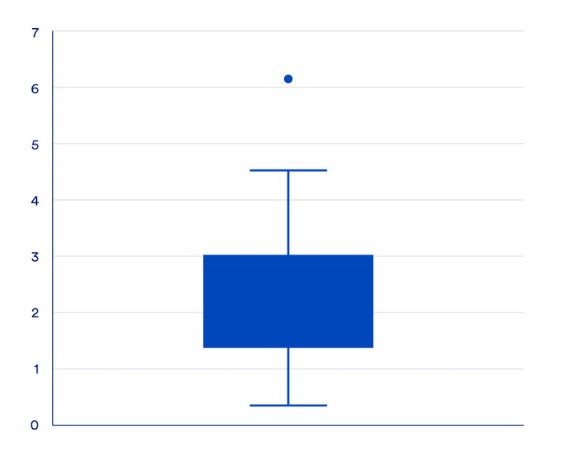
Of these 15 cases, around half of the challengers were successful in establishing standing for NEPA claims and were able to proceed to the merits of the case. All completed cases—except for the one against Cape Wind—were unsuccessful in forcing a new round of environmental review. Of the seven completed cases where motions for preliminary injunctions were filed, none were granted, and projects were able to begin construction. The offshore wind industry, meanwhile, faces other headwinds, most notably including a multi-pronged effort from the federal government to block development as well as supply chain challenges, high interest rates, and community opposition. CATF has recently analyzed the status of and ongoing challenges to offshore wind development and presented that information in a separate post.
Outlier: Cape Wind
While commonly cited as a marquee example of NEPA’s role in delaying or preventing clean energy deployment, our research found that it was an outlier rather than an exemplar: “Cape Wind is the only project where it can be confidently said that its legal battles under NEPA, fought for over a decade at both the state and federal levels, contributed heavily to its cancellation, and this high-profile example created the perception that NEPA is a major barrier to offshore wind development. However, given that Cape Wind was the first ever attempt to construct an offshore wind project, and the offshore wind permitting process was still in its infancy, Cape Wind now appears to be an outlier among all cases.”
Our offshore wind research concludes that “NEPA is not a barrier for development; rather, it is the designation of a necessary process that ensures infrastructure development is productive, informed, and provides a crucial opportunity for meaningful community engagement that can improve buy-in and reduce project timelines.”
While our transmission and offshore wind NEPA research relied on carefully constructed datasets to generate insights, they were limited by technology and by data availability. This was, in large part, due to the fragmented nature of agency NEPA documentation practices. NEPA documents are scattered across numerous agency databases, often in machine-unreadable formats that lack basic metadata and other identifiers, making it hard for researchers to work at scale and draw definitive conclusions. This began to change with the Pacific Northwest National Laboratory’s PermitAI project, which in August 2025 released the NEPATEC 2.0 dataset. NEPATEC 2.0 contains more than 120,000 NEPA documents from 60,000 reviews prepared by more than 60 different agencies (though comprehensive environmental assessment and categorical exclusion documentation is limited to the Department of Energy [DOE] and Bureau of Land Management [BLM] – another data limitation). Of these, nearly 21,000 involve “decarbonization” technologies and nearly 11,000 involve fossil fuel technologies. The bulk of the NEPATEC 2.0 dataset spans roughly 2000 through 2025, with a handful of project records as early as the 1980s; decarbonization- related reviews in particular span roughly 2010 through 2025, with a handful of projects recording dates from earlier in the 2000s.
CATF partnered with data scientist Kasey Zapatka to analyze this data corpus and investigate how NEPA functions across a range of energy infrastructure projects, in our “NEPA by the Numbers” project.1
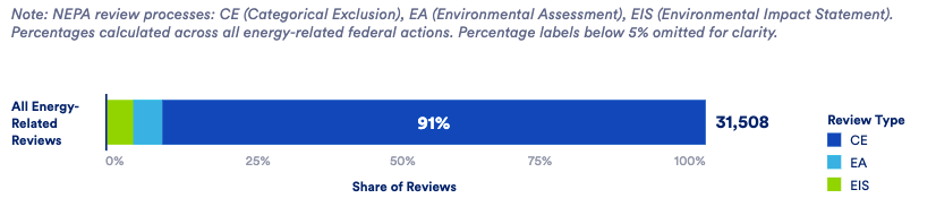
In our initial NEPA by the Numbers report, we found that the overwhelming majority of energy-related federal actions—91%—are categorically excluded from higher levels of NEPA review. This finding applies across both fossil and decarbonization technologies. A closer look at solar-related federal actions shows larger solar projects are more likely to receive higher levels of scrutiny than smaller ones. This reflects the intention of NEPA – agencies most often limit environmental review of smaller-scale solar projects while scrutinizing the impacts of larger ones.
Figure 2: Energy-Related Federal Actions Overwhelmingly Use Categorical Exclusions
Other findings from our initial research include that, for projects requiring more in-depth NEPA
reviews, effective agency use of programmatic or tiered reviews can reduce review times, and that, although it is too early to fully assess, permitting reforms on page limits set in the Fiscal Responsibility Act of 2023 are associated with real, but modest, reduction in page lengths for environmental impact statements involving energy technologies.
In phase two of our NEPA by the numbers research, we delve into three main questions for energy projects: (1) how long do NEPA reviews take, (2) what are the main NEPA triggers, and (3) how do federal agencies determine significance for decarbonization projects?
How long do NEPA reviews take?
The lack of comprehensive data on NEPA review timelines means the evidence record is dominated by anecdotes, hindering informed policy discussions. Where comprehensive data exists, it is typically limited to environmental impact statements, which comprise a small portion of federal actions subject to NEPA. In our new analysis, we build on previous research on NEPA timelines, using machine learning techniques to extract timeline data from the documents for energy technologies.
Our full findings can be found here, and include:
- The median categorical exclusion (CE) is completed in 20 days, the median environmental assessment (EA) in 117 days (~4 months), and the median environmental impact statement in 1,021 days (~2.8 years).
- Categorical exclusion durations pile up near zero; most environmental assessments (76%) are completed within a year, with a tail stretching past two years; and the environmental impact statement distribution is broad and heavy-tailed — 27% of environmental impact statements run longer than five years, and one in ten runs nine years or more (see Figure 3).
- Within each review process, decarbonization and fossil projects take roughly similar amounts of time. Decarbonization and fossil environmental impact statements have similar median durations (~34 vs. ~33 months), and categorical exclusion determinations are fast for all technologies.
Figure 3: Review Duration Distribution by Process for Energy Technologies
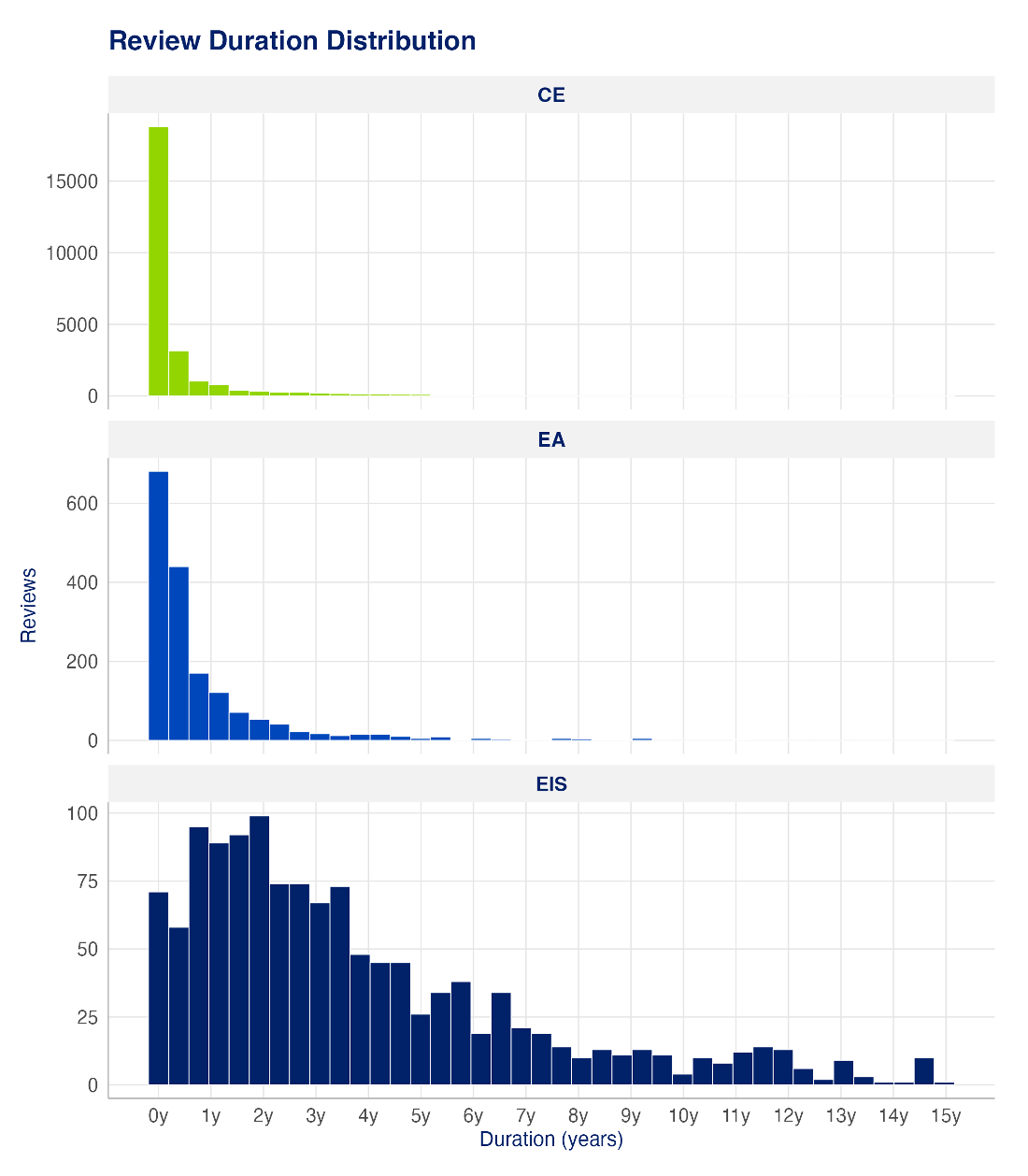
Across all technologies, review durations increase, as expected, with the level of NEPA review. The median CE takes weeks, the median EA about four months, and the median environmental impact statement (EIS) about three years; within each process, fossil and decarbonization projects take roughly similar time. For decarbonization deployment, this reinforces a conclusion from our initial NEPA by the Numbers report: because the vast majority of decarbonization actions are resolved through relatively fast CEs, reforms that focus solely on accelerating EISs would only affect a small share of projects, though often some of the largest and most consequential projects.
What triggers NEPA reviews?
The Fiscal Responsibility Act of 2023 exempted federal loans and loan guarantees from NEPA “where a Federal agency does not exercise sufficient control and responsibility over the subsequent use of such financial assistance or the effect of the action.”2 BAAJA would also exempt federal grant funding under a tighter standard, where NEPA would not apply if an agency “a Federal agency does not exercise predominant control and responsibility over the subsequent use of such financial assistance or the environmental effect of the action.” But the magnitude of this change—how many reviews this would exempt from NEPA, and the content of these reviews—has, until now, been unexamined. In our new report, we analyze which NEPA triggers apply to a suite of 20,725 decarbonization-related environmental reviews. Our full findings can be found here, and include:
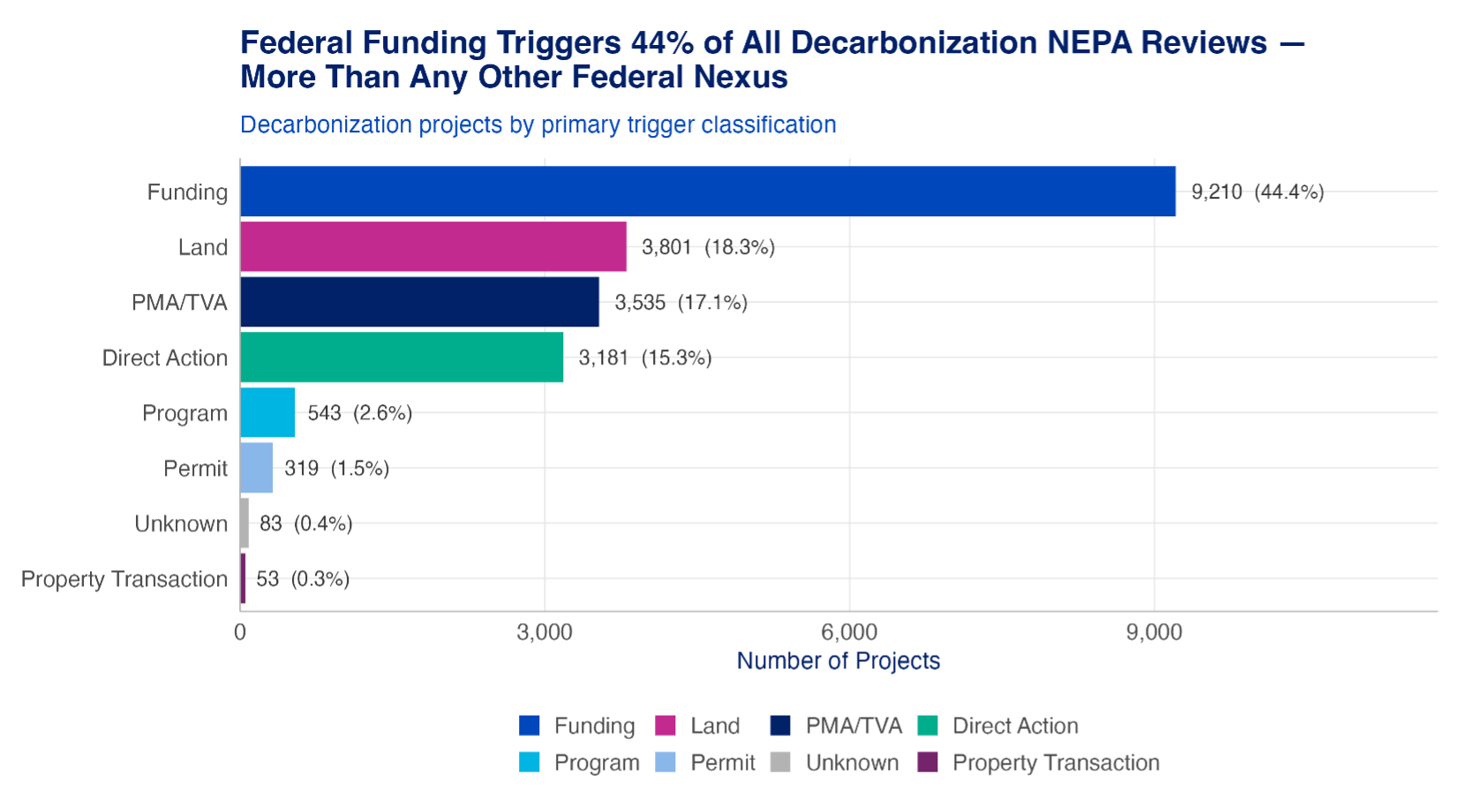
- Federal funding is the dominant NEPA trigger for decarbonization-related reviews— 9,210 of 20,725 reviews (44.4%). DOE’s grant and loan portfolio generates more decarbonization-related NEPA reviews than any other federal nexus in the dataset (figure 4).
- But funding-triggered reviews are almost entirely categorically excluded— of reviews for projects in the dataset, 99% of reviews for decarbonization technologies were completed through categorical exclusions. Removing federal funding as a trigger for NEPA would therefore mostly eliminate determinations that already finish in days or weeks.
- The triggers that result in more substantial reviews are federal land- and permit-related, not funding-related. Reviews triggered by federal land access or federal permits generate proportionally far more environmental assessments and environmental impact statements.
- There are clear patterns in review triggers. Reviews in the dataset for transmission projects are most commonly triggered by the federal Power Marketing Administrations, which build, own, and operate transmission lines; certain technologies (carbon capture, hydrokinetic, energy storage) are the most funding-driven; and solar and onshore wind are mostly funding-triggered, with BLM land access the clear second trigger.
In summary, of the reviews we analyzed, in most cases the federal funding trigger does not add significant time to project reviews.
Figure 4: Primary NEPA Trigger Across All Decarbonization Projects
Where NEPA draws the line: Significance determinations
The question of whether an action has “reasonably foreseeable significant effects on the quality of the human environment” determines whether a review is completed through a faster environmental assessment or a more in-depth environmental impact statement and therefore has notable implications for review timelines, potentially adding a year or more to the NEPA process. However, little is known about how agencies reach this important determination. Key information around which resources contribute to significance determinations, impacts on different technologies, and the role of mitigation completely nonexistent. More research and data are also needed to demonstrate and understand compliance around mitigation measures.
We provide the first systematic look at how agencies draw that significance line for decarbonization projects. Our full findings can be found here, and include:
- Most decarbonization Findings of No Significant Impact (FONSIs) are mitigated. About 58% of analyzed FONSI decision documents reach “no significant impact” only because the developer commits to specific mitigation measures to reduce impacts below a significance threshold. The mitigation burden concentrates in a handful of resources: biological (30%), soils / geology (28%), water (26%), cultural / historic (22%). The flip side are resources that break above the significance line more often than they are mitigated below it—visual impacts above all, along with land use and air quality (Figure 5).
- However, the committed measures behind a not-significant finding are often not tied to an enforceable permit condition, especially for cultural, soils, and public-health impacts.
Figure 5: Which Resources Drive Mitigation
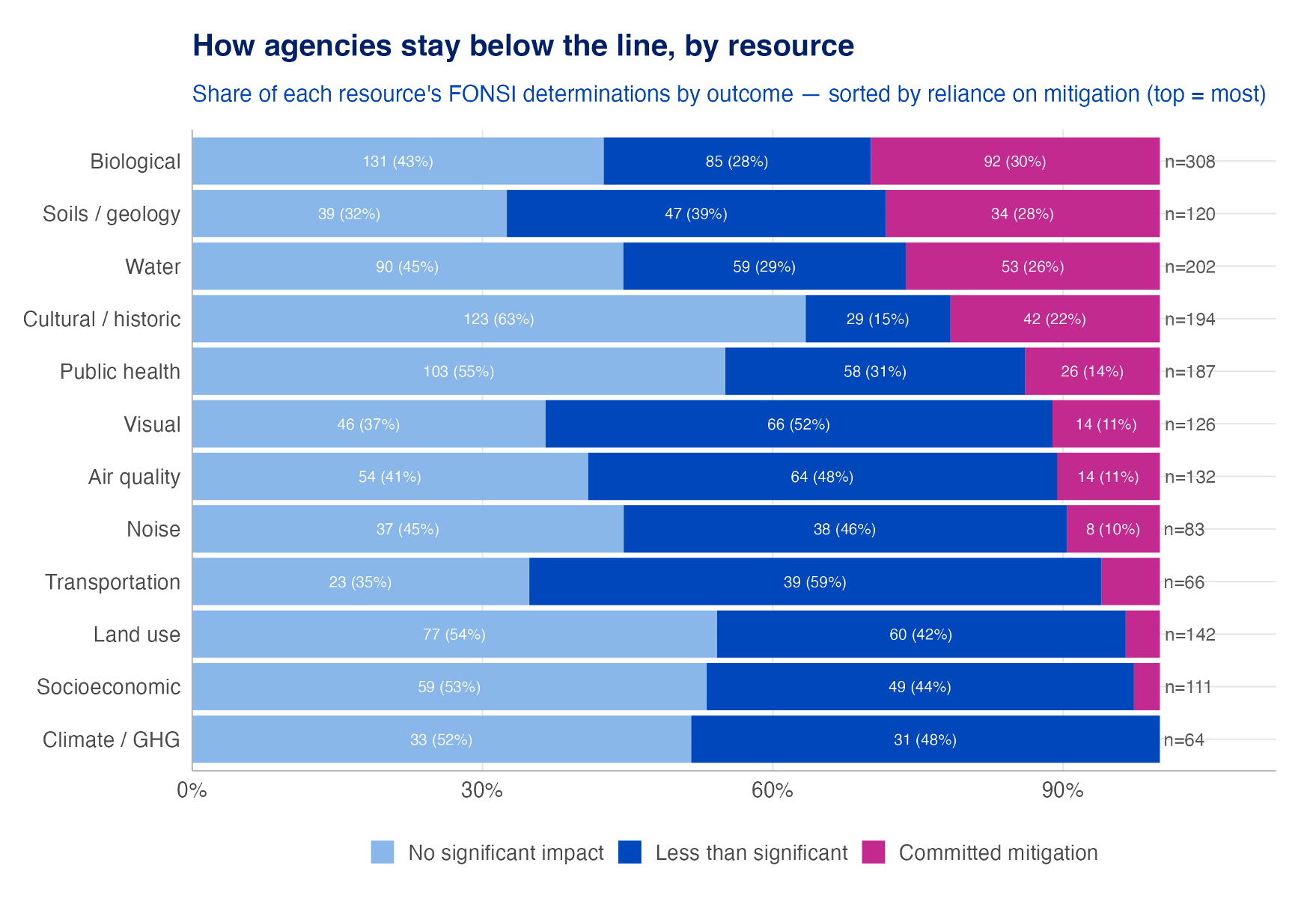
The implications of these findings are twofold. First, increased investment in, and standardization of, mitigation approaches for those harder resources could keep more projects on the faster FONSI track, provided the measures genuinely reduce impact. Second, making mitigation measures a legally enforceable project requirement could pay dividends in increasing environmental benefits. Neither of these effective reforms, which could both protect the environment and communities and reduce procedural burdens, are reflected in the current text of BAAJA.
BAAJA’s NEPA good governance reforms
In December 2025, the House of Representatives passed the ePermit Act by voice vote, a unanimous endorsement. The ePermit Act, which is replicated in full in BAAJA (Sec. 1121), is chock full of provisions that would modernize environmental reviews, build government capacity, and streamline processes. Among them are:
- A codification of CEQ’s data standard for NEPA reviews and the development of minimum functional requirements for agency NEPA systems (such as automated transfers of relevant environmental review data between agencies and integrated geographic information system analysis tools), which if adopted by agencies would standardize how the federal government manages NEPA data, allowing for greater interoperability, permitting efficiencies, and ability for researchers to identify trends and opportunities
- A required assessment from each agency of how its current systems match up to CEQ’s data standard and minimum functional requirements and an implementation plan for meeting them
- A requirement for CEQ to develop prototype tools to help agencies meet these requirements, prioritizing, among others, tools for better project management, transparency, and data exchange
- A requirement for CEQ and federal agencies to work toward the development of an ePermit unified interagency data system, as called for in CEQ’s 2024 e-NEPA report
- An authorization for $5 million per year to carry out this suite of work, which Congress would still have to fund in future appropriations bills.
Another positive element of BAAJA’s NEPA changes is the establishment of a Permitting Improvement Fund in Section 1133. This section would authorize $20 million a year through fiscal year 2033 for the CEQ Chair to fund permitting improvements at key agencies for a wide array of permitting activities, including professional development for staff, improving opportunities for public engagement, and supporting interagency detailee and rotation opportunities.
If fully appropriated—which would have to occur in separate funding bills—Sections 1121 and 1133 would, taken on their own, go a fair way toward overcoming the federal coordination, cooperation, and capacity challenges that CATF identified in our 2024 report as a key federal permitting barrier. For example, more staff capacity, particularly staff with stronger expertise in linear infrastructure permitting and interagency operations, could be better partners to transmission developers, working together to complete required process steps in a timely manner and proactively engaging with agencies with equities in projects. Improved data transparency and data sharing could reduce duplicative work for agencies and developers alike and allow researchers and agency staff to better and more quickly identify pain points in permitting processes for resolution. Even direction of funds towards permitting indicates that improved permitting is a priority of the federal government.
Another helpful, albeit minor, reform includes the requirement that developers submit a record of stakeholder engagement with their application, which would encourage early community outreach. CATF’s research has identified early engagement as a key part of building community support for projects. However, this requirement should be paired with a more robust requirement for the agencies themselves to collect public input as they did under prior CEQ and agency regulations, such as by requiring notice and comment on all draft environmental impact statements.
BAAJA makes it unlikely agencies will take a hard look at environmental effects or alternatives
Unfortunately, these good government reforms are undermined by BAAJA’s other proposed changes to NEPA that largely eliminate incentives for agencies to take a hard look at environmental impacts. Among other troubling provisions (such as extremely broad legislative categorical exclusions, limitations to alternatives analyses, allowing project sponsor goals to override agency-set project purpose and need, decreased roles for cooperating agencies, and restrictions to which impacts agencies must analyze in reviews), section 1110 of BAAJA would add a new judicial review provision to NEPA (NEPA section 111) to narrow who can bring a lawsuit and place limits on available judicial remedies. Together, these provisions would undercut agency incentives to effectively implement NEPA.
The first major change is to add new restrictions on who can file a lawsuit against agencies for violations of NEPA. Lawsuits could also only be brought by parties who “submitted a substantive comment during the public comment period associated with that authorization, with such comment being sufficiently detailed to put the applicable federal agency on notice of the particular issue on which the party seeks judicial review” (new NEPA Sec. 111(b)(2)). The statute of limitations for bringing a claim would be reduced from the current six years to just 150 days after the authorization is issued.
While the notice requirement may, on its face, seem like an extension of NEPA case law, this provision is narrower than existing standards and must be considered in the context of changes to government-wide and agency-specific NEPA regulations that no longer require taking public comment on draft environmental impact statements. While there is a statutory requirement to take public comments on the notice of intent to prepare an environmental impact statement, this step occurs at the very beginning of the NEPA process, often before key details of a project are known. It is therefore unrealistic to expect all relevant parties to, first, be aware of the comment opportunity in the first place, and second, submit a comment sufficiently detailed as to raise the precise issue that may be litigated later. The predictable results of this change would be that parties with relevant claims but fewer resources may miss the comment opportunity at the notice of intent stage, thereby losing the ability to later bring a claim at all, and that better-resourced parties will submit overly long, potentially less-relevant comments at every opportunity to maintain the ability to have standing later on, which increases the paperwork burden on agencies while doing little to inform environmental decision making.
To address this issue, drafters have several options: eliminate this restriction on standing entirely, limit it to environmental documents where the draft is published for notice-and-comment, or require that all federal agencies take public comment on draft environmental impact statements for a reasonable time period of at least 45 days.
Even more importantly, even if a court rules that an agency violated NEPA, BAAJA Section 1110 would eliminate the ability of courts to vacate the agency decision or issue an injunction for that violation. The only available remedies are either sending the environmental review back to the agency while a project continues or issuing a preliminary injunction (or vacating an agency’s decision) for a violation of some other law.
However, BAAJA’s proposed changes to NEPA go much further than cutting down on needless paperwork exercises to stave off litigation risk. The limit of judicial remedies entirely eliminates the incentive for agencies to comply with the law. As Judge David Tatel, a retired D.C. Circuit judge with three decades of service, recently explained, without the possibility of meaningful litigation there would be “little constraint on agencies and project sponsors that would prefer not to consider environmental consequences and not to hear the public’s views.” Similar points have been made by Columbia Law School’s Michael Gerrard and Stanford Law School’s Deborah Sivas.
The way that agencies and project proponents attempt to make their NEPA reviews “litigation-proof” due to the threat of litigation can increase the time spent on environmental reviews without improving the quality of decision-making or public participation has long been recognized as a problem. CATF raised this very point, for instance, in 2023 comments on CEQ NEPA regulations.
Fortunately, here, too, there are more reasonable approaches that would decrease the need for agencies to go through extraneous work to litigation-proof environmental reviews while still preserving NEPA’s important action-forcing purpose of taking a hard look at environmental effects and alternatives. For instance, Senate amendment 6897 would have made the default remedy sending an environmental review back without vacating the authorization while still allowing injunctions of appropriately limited duration and scope if certain requirements are met. It also would have allowed a court to vacate the authorization if the agency fails to fix its errors on remand.
Another option instead of eliminating the possibility of vacatur would be for the proposed section 111(c)(5) of NEPA to be changed to a requirement for courts, before vacating an environmental document or authorization or issuing an injunction for a violation of NEPA, to consider (1) the seriousness of the order’s deficiencies and (2) the disruptive consequences of an interim change that may itself be changed. These factors come from a leading appellate court case, Allied-Signal, Inc. v. U.S. Nuclear Regulatory Commission,3 and they are regularly applied by district and appellate courts to determine if vacatur is the appropriate remedy in administrative law cases.
Either of these approaches would address the concern that litigation over minor NEPA errors would prevent construction of projects while still maintaining the incentive that ensures agencies comply with NEPA’s requirements.
Proponents of these changes to judicial review have argued that reducing the NEPA litigation burden will help clean energy projects win out in the energy transition. However, research from David Adelman at The University of Texas at Austin’s law school indicates otherwise. Examining the 409 NEPA cases challenging infrastructure cases in federal court from 2015 through 2025, Adelman finds that no wind or solar project approvals were set aside. In fact, courts set aside or enjoined a project in only 37 cases. Temporary restraining orders and preliminary injunctions, which would require a developer to stop construction, were rarer still (17 cases). Crucially, he notes: “Moreover, the cases with vacaturs or injunctions largely involved fossil-fuel and mining projects: 25 were oil, gas and coal leasing, drilling, pipelines or export terminals, and 8 were mines; none involved wind, solar or transit projects.” Given these findings, it is likely the changes to judicial review under NEPA may have only a minor impact on clean energy projects while making it much more difficult to challenge fossil fuel-related activities.
Conclusion
BAAJA’s good governance provisions for e-NEPA, bolstering staffing, and encouraging developers to engage with communities are all worthy inclusions that CATF research indicates would pay dividends in accelerating review times in a responsible manner. Ultimately, however, the ability to hold agencies accountable when environmental reviews fall short is essential to ensure effective implementation that considers environmental impacts fully, evaluates alternatives, informs the public, and serves as an effective agency coordination tool. The restrictions on judicial review in BAAJA would, taken together, eliminate the incentive to comply with NEPA, thereby undercutting the good governance reforms that would otherwise be effective. Members of Congress should work toward an environmental review system that allows for speed, efficiencies, meaningful public input, and accountability.
1 In October 2026, PNNL released NEPATEC 3.0, which adds map images, geospatial layers, and additional documents and metadata. Our research was conducted before NEPATEC 3.0 was released and uses the 2.0 version.
2 42 U.S.C. 4336e(10(B)(iii)
3 988 F.2d 146, 151 (D.C. Cir. 1993).

