
2026 Colorado Legislative Session: Progress across clean energy and infrastructure

The Colorado General Assembly ended its 2026 legislative session on May 13. Both directly and with partners, CATF engaged on over a dozen bills in the state during this session, as well as other bill concepts that did not get introduced but created opportunities for a productive session next year. Though there were missed opportunities to advance clean firm-enabling policies through failed data center bills, a post-2030 clean electricity standard (CES), and pro-nuclear energy standalone bills, there was legislative progress on policies that will help strengthen the grid and accelerate deployment of renewables – not only wind and solar, but notably next-generation geothermal too. The progress this session demonstrates the General Assembly’s ongoing interest in advancing climate and clean energy policies to reduce air pollution and strengthen the state’s grid.
Major legislative wins aligned with CATF priorities
- Development of Thermal Energy Resources (SB26-142): A standalone geothermal bill designed to accelerate both conventional and next-generation projects. It includes recommendations from CATF’s forthcoming western states geothermal report that will improve data collection and spur new large-scale projects up to 300 MW, directing utilities to issue Requests for Proposals (RFPs) and the Colorado Public Utility Commission (PUC) to evaluate them based on key factors, including the need for clean firm generation resources to meet the state’s economy-wide goal of net-zero emissions by 2050.
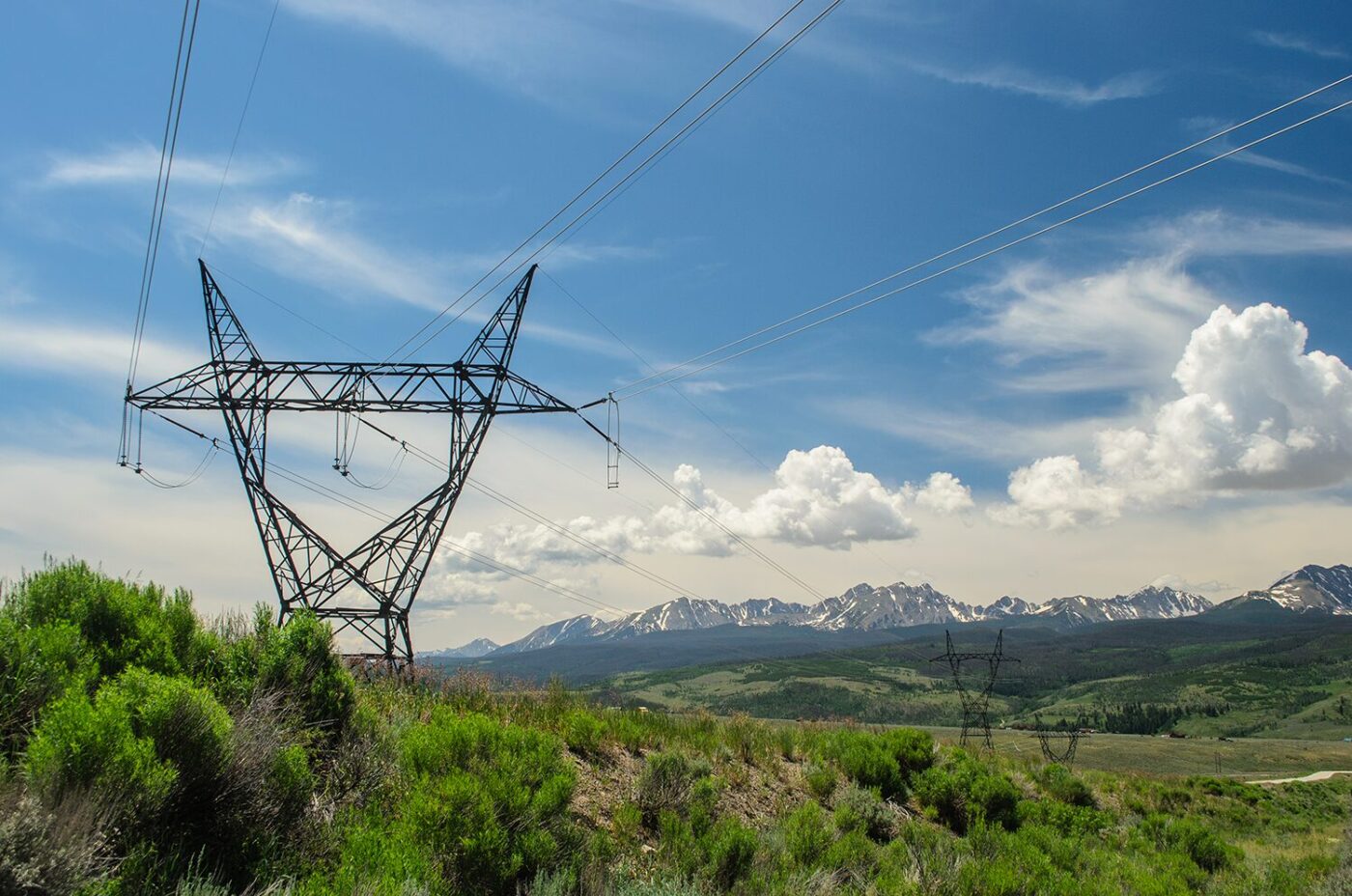
- Colorado Grid Optimization Act (HB26-1081): Requires regulators and utilities to identify strategies to reduce transmission costs, incorporate advanced transmission technologies, and consider financing options like bonds through the Colorado Electric Transmission Authority (CETA), while enhancing CETA’s role in state transmission planning efforts.
- Renewable Energy Development on Disturbed Lands (HB26-1268): Authorizes local governments to designate renewable energy reinvestment areas (RERAs) on previously disturbed lands to facilitate siting and streamline permitting of renewable energy and storage projects. The bill expanded the “eligible sites” definition from brownfields to also include lands affected by mining, oil and gas development, closed landfills, and others.
- Sunset Public Utilities Commission (HB26-1326): Reauthorizes the Colorado Public Utilities Commission (PUC) through 2037 and updates its authorities, processes, and oversight to support modern utility regulation and longer-term clean energy planning. Key clean firm-enabling provisions include directing the PUC to study and address barriers to joint procurement of “non-emitting clean firm generation” resources in the next 18 months, aligning renewable energy standards with clean energy plans, and expanding financing tools (e.g., securitization) for utility investments.
There were several bills we engaged on that did not pass, including:
- Competing data center bills (HB26-1030 and SB26-102): The incentives bill (HB26-1030), led by data center developers, had no guardrails while the guardrails bill (SB26-102), led by environmental groups, had guardrails for setbacks, water usage, and renewable energy—but no incentives. A potential path forward is to harmonize the bills, upgrade the renewables guardrail to clean, and include a “targeted resource acquisition” (i.e., large-load sleeve tariff) mechanism that allows the data center operator to pay for the additional power on their own, protecting ratepayers while pulling forward new clean energy technology.
- A bill that sought to grant the state authority to seek primacy for Class I, IV and V underground injection control (UIC) wells (HB26-1112): Colorado already has state primacy for Class II and VI wells. Class V UIC primacy would have helped accelerate geothermal permitting in the state.
- A bipartisan bill that sought to accelerate nuclear energy development in the state (HB26-1337): This bill incorporated several CATF recommendations, including establishing a state-led permitting coordinator, directing utilities to identify potential sites, and setting statewide goals to identify at least one nuclear project site by 2035 and begin construction by 2040. It also tasked regulators with developing approval criteria and financing mechanisms for nuclear and other clean firm resources.
- A bipartisan bill (SB26-045) that sought to create a nuclear workforce development council at the Colorado School of Mines and a grant program to expand nuclear engineering education, funded by external donations rather than state general funds.
Opportunities moving forward
This legislative session showed that the politics and policies around climate and clean energy established in the late 2010s and early 2020s are facing new headwinds as political and economic dynamics shift at home and abroad. Domestically, policymakers are working to address rapid energy demand growth and affordability while contending with global price shocks and investment uncertainty.
New CES and other clean firm-enabling policies can help address these affordability challenges by reducing the cost of power sector decarbonization, supporting efficient transmission buildout, and helping hard-to-decarbonize sectors electrify with zero-emission electricity. If Colorado wants to fully decarbonize its grid, the state, environmental groups, and other stakeholders will need to work through complex issues such incentivizing an optimal mix of renewable and clean firm resources and updating renewable siting requirements to balance local and state authorities as well as energy and conservation priorities.
Progress was still made despite missed opportunities: CES and siting reform bills stalling
Though CES and siting reform bills did not get introduced, largely due to gridlock between certain key stakeholders in each space, we still saw progress this session. The geothermal bill (SB26-142) has provisions that can be used as models for other states seeking to derisk next-generation geothermal development and pull forward demand for clean firm generation in a softer way than a procurement mandate. And the grid optimization bill (HB26-1081) and renewables development on previously disturbed lands bill (HB26-1268) will accelerate grid capacity expansion and renewables deployment. Further, with its new authorization (HB26-1326), the state PUC is now directed to study barriers to joint procurement of clean firm generation for the first time. These are significant steps worth celebrating that lay foundations and create opportunities for future sessions.

