
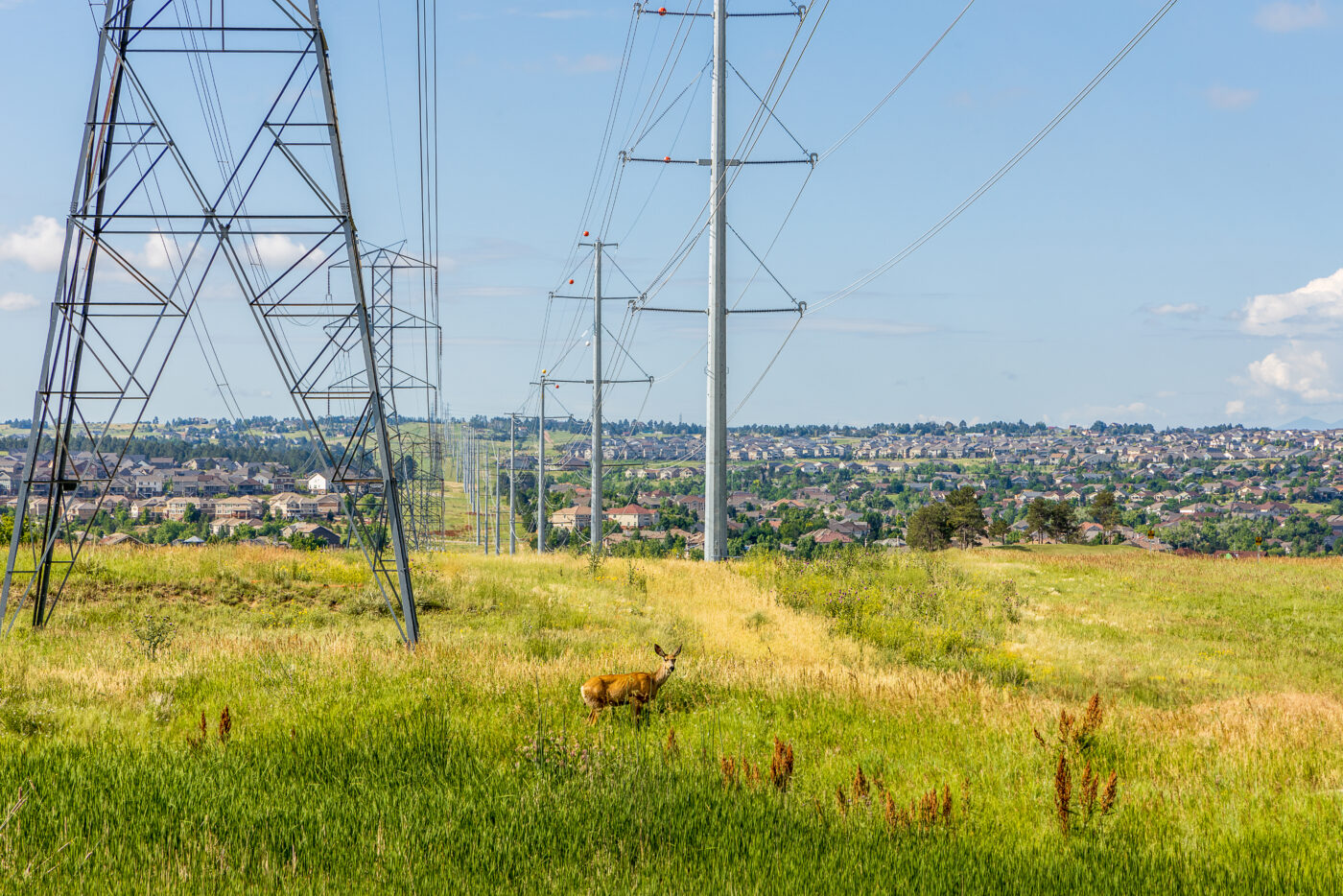
Colorado Electric Transmission Authority could unlock faster, lower-cost transmission, finds CATF
Denver, CO – As Colorado’s electricity demand grows and the state pursues ambitious climate and electrification targets, a new policy brief from Clean Air Task Force (CATF) finds that the Colorado Electric Transmission Authority (CETA) could play a decisive role in expanding the state’s high-voltage transmission network. Pathways to Developing Transmission in Colorado and the Role of the Colorado Electric Transmission Authority examines how CETA’s potent combination of financing and partnership tools could accelerate transmission buildout, reduce costs, and help achieve Colorado’s clean energy and reliability goals.
“Colorado has set ambitious energy and climate targets, but some of the transmission lines needed to meet them are precisely the ones that are hardest to build,” said Nicole Pavia, Director, Clean Energy Infrastructure Deployment at CATF. “Projects that span utility territories and state lines or require extensive stakeholder and community engagement often carry higher risks and coordination challenges—even when they deliver clear statewide benefits. By convening stakeholders, supporting permitting and environmental review, and providing financing tools, CETA can help move forward complex, high-impact projects that might otherwise stall despite being in the public interest.”
“This is an indispensable desk reference for anyone looking to understand transmission development pathways in Colorado,” said Maury Galbraith, Executive Director at the Colorado Electric Transmission Authority. “It provides clear, reliable insights into how both public utilities and independent transmission developers plan, finance, and build projects while navigating the state’s complex and varied regulatory landscape—a must-have resource for policymakers, developers, and stakeholders alike.”
CETA’s 2024 Transmission Capacity Expansion Study identified near-term gaps in San Luis Valley, Northeast Colorado, and Southeast/South Central Colorado, where current transmission infrastructure may be insufficient to serve projected load growth or integrate new clean energy resources. The study found that roughly 80% of the state’s transmission needs could be met by upgrading existing lines and leveraging current rights-of-way, with 550 miles of new transmission lines needed over the next 20 years to meet long-term clean energy objectives.
According to CATF’s policy brief, CETA is uniquely positioned to address these gaps by:
- Facilitating partnerships. CETA’s structured partnership model helps public utilities and independent developers access technical support, stakeholder engagement, and coordination mechanisms.
- Lowering financing costs. Through revenue bonds and other financing tools, CETA can provide more affordable capital for projects that might otherwise struggle to attract private investment.
- Reducing siting risk. CETA can secure rights-of-way through proactive coordination, voluntary agreements, and early stakeholder engagement, allowing projects to move forward without costly delays.
- Supporting complex projects. CETA is equipped to help projects involving multiple utilities, federal lands, sensitive environmental areas, or Tribal engagement, which often stall under conventional planning models.
The policy brief emphasizes that early and meaningful community engagement, combined with innovative financing strategies, can reduce opposition, avoid costly delays, and create lasting benefits for both developers and local communities. By leveraging CETA, Colorado has an opportunity to modernize its grid, accelerate clean energy deployment, and meet its ambitious climate goals.
CATF supports the Colorado Grid Optimization Act (HB26-1081), which complements the report findings by encouraging the smarter use of existing transmission and stronger statewide coordination. CATF looks forward to supporting this legislation and working with policymakers to ensure Colorado’s grid is prepared to meet growing demand and long-term clean energy goals.
Press Contact
Natalie Volk, Communications Manager, [email protected], +1 703-785-9580
About Clean Air Task Force
Clean Air Task Force (CATF) is a global nonprofit organization working to safeguard against the worst impacts of climate change by catalyzing the rapid development and deployment of low-carbon energy and other climate-protecting technologies. With 30 years of internationally recognized expertise on climate policy and a fierce commitment to exploring all potential solutions, CATF is a pragmatic, non-ideological advocacy group with the bold ideas needed to address climate change. CATF has offices in Boston, Washington D.C., and Brussels, with staff working virtually around the world. Visit catf.us and follow @cleanaircatf.

