
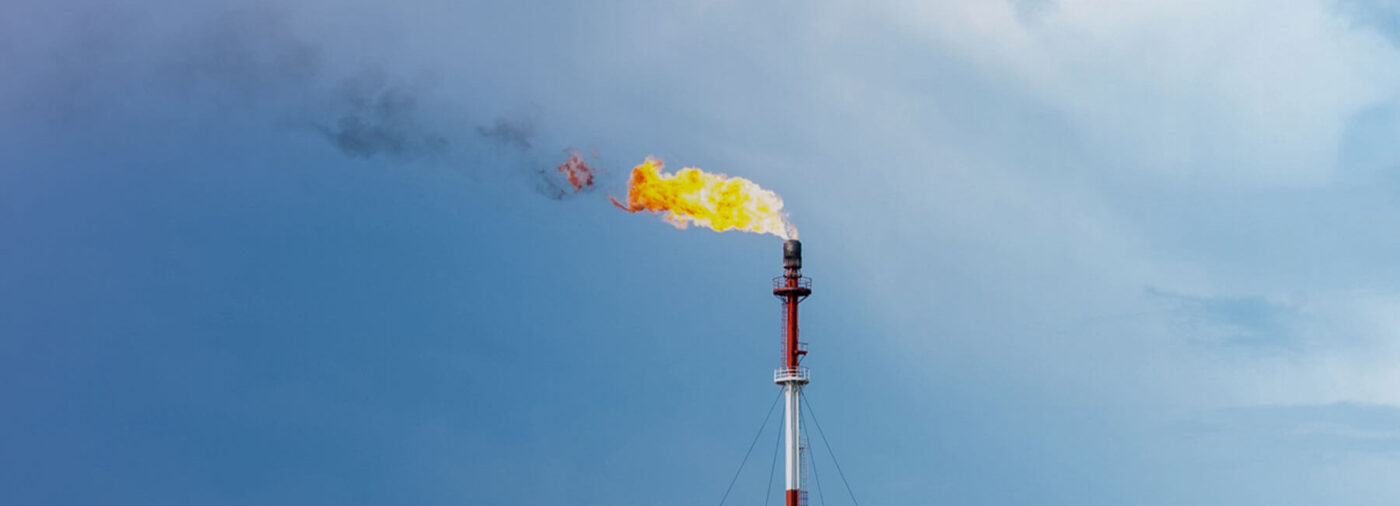
EU methane rules are working – but delays risk undermining progress, NGOs warn
Brussels – Investigations across seven European countries reveal early progress in methane mitigation at the national level since the EU Methane Regulation (EUMR) took effect, but implementation gaps persist. NGOs condemn the provisional outcome of trilogue negotiations between the European Parliament and the Council, which extends the Commission’s proposed delay on key methane obligations for fossil fuel importers from one to two years and also broadens its scope to include EU domestic producers, undermining progress and implementation efforts already underway.
Two independent investigations conducted between April and November 2026 by the Europe-based team of the global climate organisation, Clean Air Task Force (CATF) and national NGO partners in France, Romania, Slovakia, Czechia, and Greece, and by U.S.-based NGO Earthworks in Germany and the Netherlands, documented methane emissions from oil and gas infrastructure across these seven European countries using specialised optical gas imaging (OGI) cameras. CATF’s 2026 findings point to signs of improved practices among some operators compared with its pre-EUMR investigations.
Signs of progress, but gaps remain
In France and Slovakia, routine intentional releases (venting) were observed less frequently than in previous years. In Romania, even some operators that have historically lagged behind appear to be improving their practices, capturing gas that was previously vented or flared.
Evidence of Leak Detection and Repair (LDAR) surveys from operators and third-party providers was identified in France’s gas networks and Romania’s oil production. Similar indications were found in Hungary and Germany during investigations last year, suggesting that LDAR requirements, which took effect in 2025, are being implemented in several Member States.
Yet, widespread emissions persist, including from equipment that operators had already identified during their own LDAR surveys but failed to repair. Of the 275 locations surveyed by CATF in 2026, methane was documented at 192, with 332 emission sources documented in total: 65 classified as venting and 267 from avoidable leaks and emissions from valves. In Czechia, routine venting from crude oil storage happened at the vast majority of facilities visited in South Moravia. In Romania, methane was vented from the stack of the Boldești-Scăeni compressor station, despite the presence of an adjacent gas capture and utilization unit.
Potential breaches of the Regulation prompted Environmental Action Germany (DUH) to file complaints with authorities in North Rhine-Westphalia and Lower Saxony, and Fossielvrij NL to file a complaint with the Dutch authority SodM.
“We’re seeing encouraging signs that practices are changing in EU Member States: less routine venting in places we’ve investigated before, more evidence of leak detection and repair, and equipment being installed to capture gas instead of releasing it. These are practical steps, and they show that implementation is possible. Member States should build on that progress, work proactively with operators and keep the momentum going,” said Théophile Humann-Guilleminot, Senior Campaign Manager, Methane Pollution Prevention at CATF.
European methane pollution is only the tip of the iceberg
The EU imports around 90% of its gas consumption, and an even larger share of the oil it consumes, meaning that substantial methane emissions occur along international supply chains, before fossil fuels reach European markets.
Applying existing methane mitigation measures across the EU’s main fossil fuel suppliers alone could unlock over 40 bcm of gas, without increasing EU dependence on additional imports. This is equivalent to more than half the volume of US LNG imported by the EU in 2025.
Earthworks’ investigations have repeatedly exposed methane pollution across US oil and gas infrastructure, including along the supply chain of Corpus Christi LNG, a major US export terminal supplying gas to Europe. As Europe becomes increasingly reliant on US LNG imports, tackling these upstream emissions is essential to strengthening the EU’s energy security.
“Our optical gas imaging (OGI) fieldwork and methane satellite data analysis across the oil and gas supply chain – from the wells in the U.S. where it is extracted to both export and import terminals – demonstrates the same issue that has been widely documented elsewhere, namely that oil and gas pollution is underestimated and under-reported to regulatory agencies. This is why we support the development, implementation, and enforcement of the strongest methane rules possible in the U.S. and the EU to address both the negative public health and climate impacts of this pollution,” said Dakota Raynes (PhD), Senior Manager of Research and Policy at Earthworks .
NGOs call on the EU to stand firm on methane action
Following the provisional trilogue agreement to impose a two year delay on key Monitoring, Reporting and Verification (MRV) requirements for both domestic and imported fuels, the participating organisations condemn the co-legislators’ decision to go beyond the scope and timeline initially proposed by the European Commission.
This unnecessary postponement risks slowing down momentum at a time when implementation efforts are already underway across Europe. The additional time must be used to support effective implementation and address practical challenges, not to justify new delays that undermine the Regulation’s ambition.
“For over a year, the fossil fuel industry has aggressively lobbied against the EU Methane Regulation, making unfounded claims that the rules are unworkable and threaten security of supply. Civil society investigations across Europe show otherwise: implementation is possible and improvements are already being made on the ground. Yet significant gaps remain, making delays to MRV rules the wrong response. The EU should instead accelerate implementation and deliver the technical guidance needed to put the rules into practice,” said Flora Witkowski, Gas Policy Coordinator at Climate Action Network (CAN) Europe.
Press Contact
Julia Kislitsyna, Communications Manager, Europe, [email protected], +4915116220453
About Clean Air Task Force
Clean Air Task Force (CATF) is a global climate organisation working to advance the full range of solutions needed for a healthy climate and a thriving planet. Founded in 1996, CATF conducts research and analysis to identify promising solutions, then works across governments, industry, and partners in more than 40 countries to deliver them at scale. It takes no funding from governments or the industries it works to influence, so its analysis and advocacy follows the facts. Over 30 years, its work has helped shape major climate and energy policy around the world. CATF is consistently recognised as one of the most effective climate organisations in the world by independent evaluators including Giving Green and Founders Pledge. Learn more at cleanairtaskforce.org.

