
California’s cement sector has a net-zero mandate. This is what it will take to meet it.


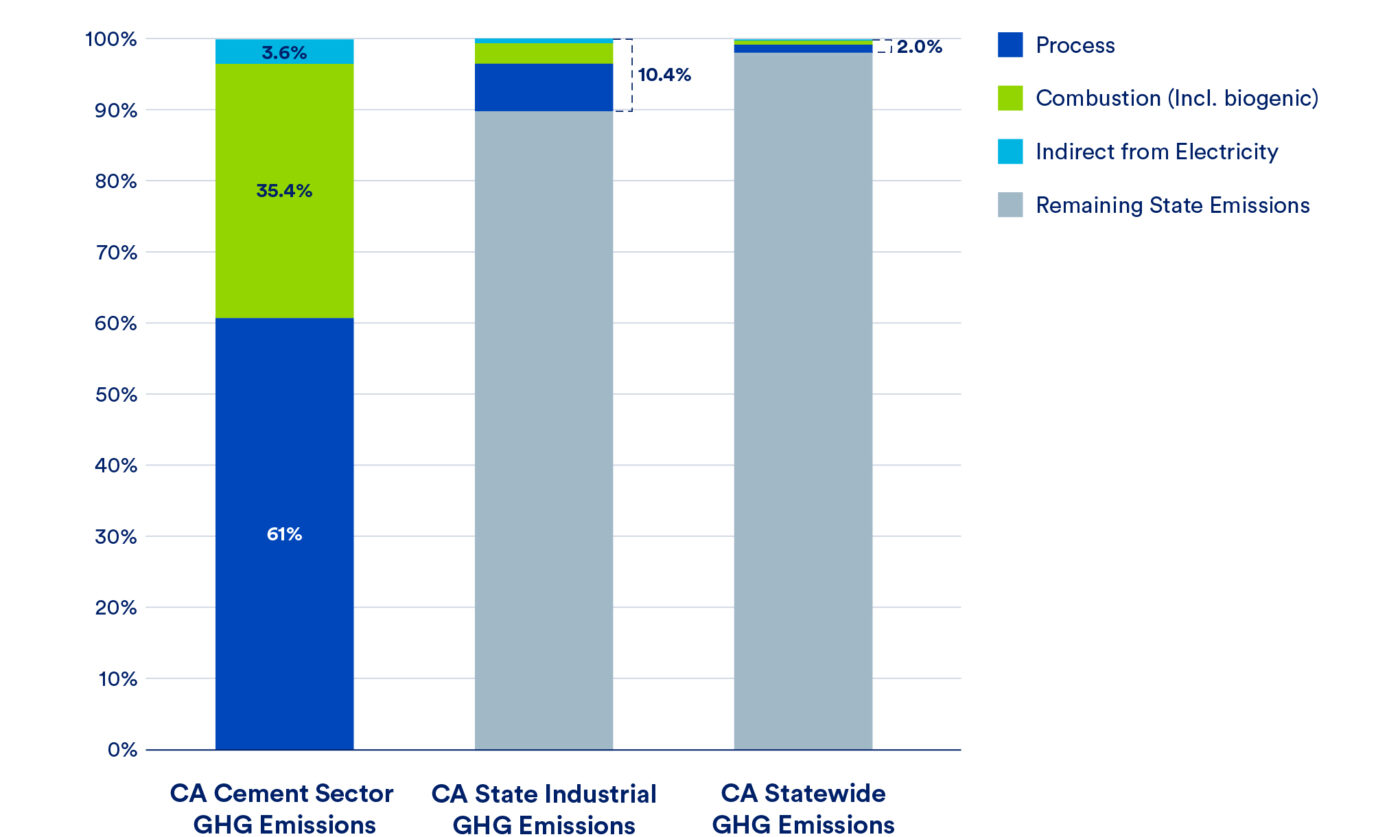
Cement production presents unique decarbonization challenges due to process emissions and high-temperature heat requirements. Through SB 596 (Becker, 2021), California established a first-in-the-nation mandate to achieve net-zero emissions of greenhouse gases associated with cement used in the state by 2045, recognizing that deep emissions reductions from cement production will be necessary to meet the state’s broader climate goals. Cement is responsible for around 2% of California’s greenhouse gas emissions and is one of the sectors the state must decarbonize to meet its broader goal of reaching economy-wide net-zero GHG emissions by 2045. Globally, cement production is responsible for roughly 7-8% of emissions, giving California a unique opportunity to develop policies that can influence decarbonization well beyond its borders.
Achieving the SB 596 target, however, will require overcoming substantial technological, economic, infrastructure, and investment barriers before locking in the next generation of long-lived capital investments that continue emitting CO2. While multiple decarbonization pathways exist — including low-carbon cement blends, alternative fuels, electrification, and carbon management technologies like carbon capture and storage — many remain costly, face regulatory and infrastructure barriers, or have not reached commercial readiness for large-scale deployment.
With the California Air Resources Board (CARB) now advancing the carbon management framework as directed by SB 905 (Caballero, 2022) and incorporating carbon management pathways and a new manufacturing decarbonization incentive to support deployment of high-cost industrial decarbonization technologies as part of its Cap-and-Invest amendments, California is increasingly establishing the policy framework needed to support industrial decarbonization in emissions-intensive industries like cement. These developments represent some of the clearest signals to date that the state is beginning to operationalize industrial decarbonization policy. They also create an opportunity to evaluate what additional policy tools may be needed to overcome the remaining barriers.
As CARB begins developing the 2027 Scoping Plan, the state has an opportunity to further define its long-term strategy for industrial decarbonization by identifying the policy, infrastructure, and investment needs that remain. Two new reports from Clean Air Task Force (CATF) examine what it will actually take to meet California’s cement decarbonization mandate: the technologies available, their costs and tradeoffs, and the policy tools needed to support their deployment.
California has multiple plausible technical pathways to reach its net-zero cement goal by 2045
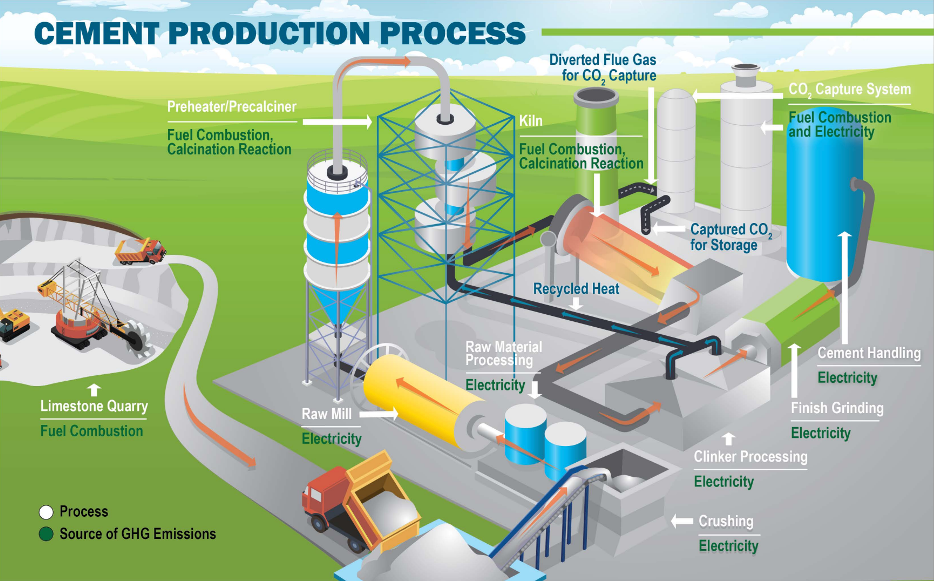
Cement is one of the hardest industries to decarbonize, with nearly 60% of its CO2 emissions coming not from burning fuel, but from the chemical process of turning limestone into clinker, the core ingredient in cement. That process emissions problem means it will take more than electrification and a cleaner grid to meet the state’s climate goals for the cement sector.
California Cement Sector Scope 1 and 2 GHG Emissions (Mt CO2e), 2019
To better understand the options California might have available address carbon dioxide emissions from cement production, CATF contracted Synapse Energy Economics to model four pathways for a representative California cement plant. Each pathway combines carbon capture and storage (CCS) with additional strategies including electrification, alternative fuels, and production of blended cement with lower embodied CO2.
| Pathway | Technology |
|---|---|
| Pathway 1 | CCS only (Amine-based) |
| Pathway 2 | Electrification + CCS (Compression, Putrification) |
| Pathway 3 | Blended cement (LC3) + CCS |
| Pathway 4 | Blended cement (LC3) + Alternative Fuels + CCS |
All four pathways were found to reduce cement production CO2 emissions by 72% to 89% immediately upon deployment, and by 88% to 93% by 2050, compared to today’s production methods.
CO2 emissions breakdown by process, purchased electricity, fossil, and biogenic in each pathway
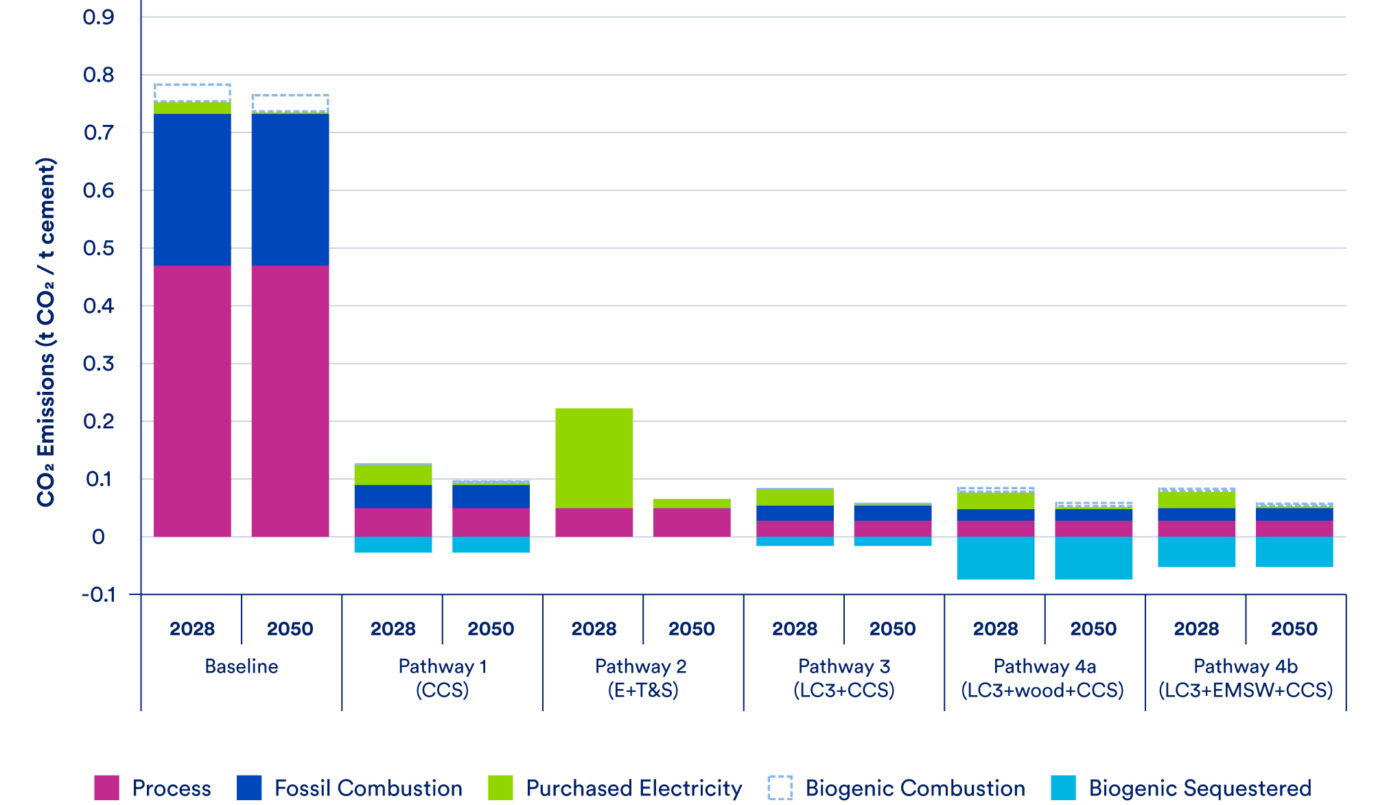
Pathways producing limestone calcined clay cement, a blended cement with lower embodied CO2 emissions, in conjunction with carbon capture reduced clinker use by 44% per metric ton of cement and achieve the lowest lifetime abatement costs, around $100 per metric ton of CO2. Electrifying cement production delivers the deepest cuts, reducing emissions by 92% by 2050, but at an estimated $479 per metric ton of CO2 it was also the most expensive option analyzed.
Carbon capture plays a central role across the pathways modeled but comes with energy and cost tradeoffs. For example, retrofitting cement plants with amine-based carbon capture can cut CO2 emissions by 84-89%, but it also increases energy use by as much as 87% in some configurations, ultimately driving higher operating costs.
California’s cement sector also has a distinct opportunity to employ bioenergy with carbon capture and storage by leveraging woody biomass resources, through planned forest fuel load reduction efforts to reduce wildfire impacts. Non-electrification pathways generate, capture, and permanently sequester biogenic CO2 resulting from the combustion of biogenic-based alternative fuels. Pathways employing alternative fuels with CCS can achieve net-zero or net-negative CO2 emissions (scope 1 and 2 only), particularly as the grid decarbonizes toward 2050.
The challenge is not whether solutions exist, but whether California can scale them fast enough. Timing is critical because cement plants are long-lived assets: the modeling assumes retrofits occur when kilns reach end-of-life, around 2028, highlighting that business and policy decisions made this decade will shape emissions outcomes for decades to come. While significant CO2 emissions reductions are achievable with the technologies analyzed in this report, reaching net-zero across all pathways will require designing for higher carbon capture rates, demonstration of kiln electrification at scale, decreasing electric grid carbon intensity, additional carbon removal, or other strategies.
Strong policy support is needed to close cost gaps and enable solutions deployment
While the potential decarbonization pathways outlined in the Synapse report are plausible, all face cost, infrastructure, or implementation barriers that cannot be overcome by the market alone. Rather, a suite of supportive policies is needed to reduce financial risk, accelerate early deployment, and enable the pace of investment required to meet state climate targets and mandates in SB 596.
CATF’s new policy report, co-authored with AJW, identifies a range of actionable policy approaches that California policymakers should consider to help overcome the above barriers and support the deployment of low-carbon cement technologies. Recommendations from the report are summarized below:
- Closing cost gaps with financial support mechanisms: State-level financial tools could address high upfront costs and investment risk, particularly for capital-intensive technologies like carbon capture, alternative fuels, electrification, and novel cement blends. For example:
- Standing up a State Revolving Loan Fund: A revolving loan fund could provide low- or zero-interest financing for commercially ready cement decarbonization projects, recycling public dollars to support multiple generations of investment.
- Expand funding for early-stage technologies: For technologies that are not yet commercially ready, expanded research, development, and demonstration funding could move promising innovations toward pilot and commercial scale.
- Compliance recognition for sequestered CO2: Ensuring timely recognition of CCS under the Cap-and-Invest program by developing quantification methodologies under SB 905 will enable projects at cement facilities to receive credit for reduction emissions. As the program evolves, tightening sector-specific benchmarks and refining market mechanisms can encourage continuous emissions reductions while maintaining appropriate protections against carbon leakage.
- Protecting in-state producers from carbon leakage: A carbon border adjustment mechanism for cement could help ensure that in-state producers that invest in cleaner technologies are not placed at a competitive disadvantage.
- Using public procurement to build demand for cleaner cement: State procurement policies, standards, and environmental product declarations could help create reliable markets for low-carbon cement and concrete.
- Providing regulatory clarity for carbon capture deployment: Statewide guidance on Best Available Control Technology for carbon capture projects could reduce permitting uncertainty while ensuring strong community health protections.
- Providing greater transparency on industry decarbonization pathways: Early transparency in the permitting process can support meaningful public participation that has the opportunity to influence technology choices and project outcomes.
Delaying policy action increases the risk of missing the state’s 2045 goals. California’s cement decarbonization leadership also carries implications beyond its own borders. SB 596 has already influenced other states: Illinois referenced California’s approach in its own comprehensive climate action plan, which models a net-zero cement requirement by 2050. As California moves from target-setting to implementation, the policy tools it develops could provide a model not only for other U.S. states, but for jurisdictions around the world seeking practical approaches to decarbonizing an emissions-intensive industry.
These reports outline the technologies and policy tools needed to turn the state’s ambition into action and provide a model for industrial decarbonization efforts in California and beyond.

