
A Policymaker’s Guide to Implementing Leak Detection and Repair for Methane Mitigation
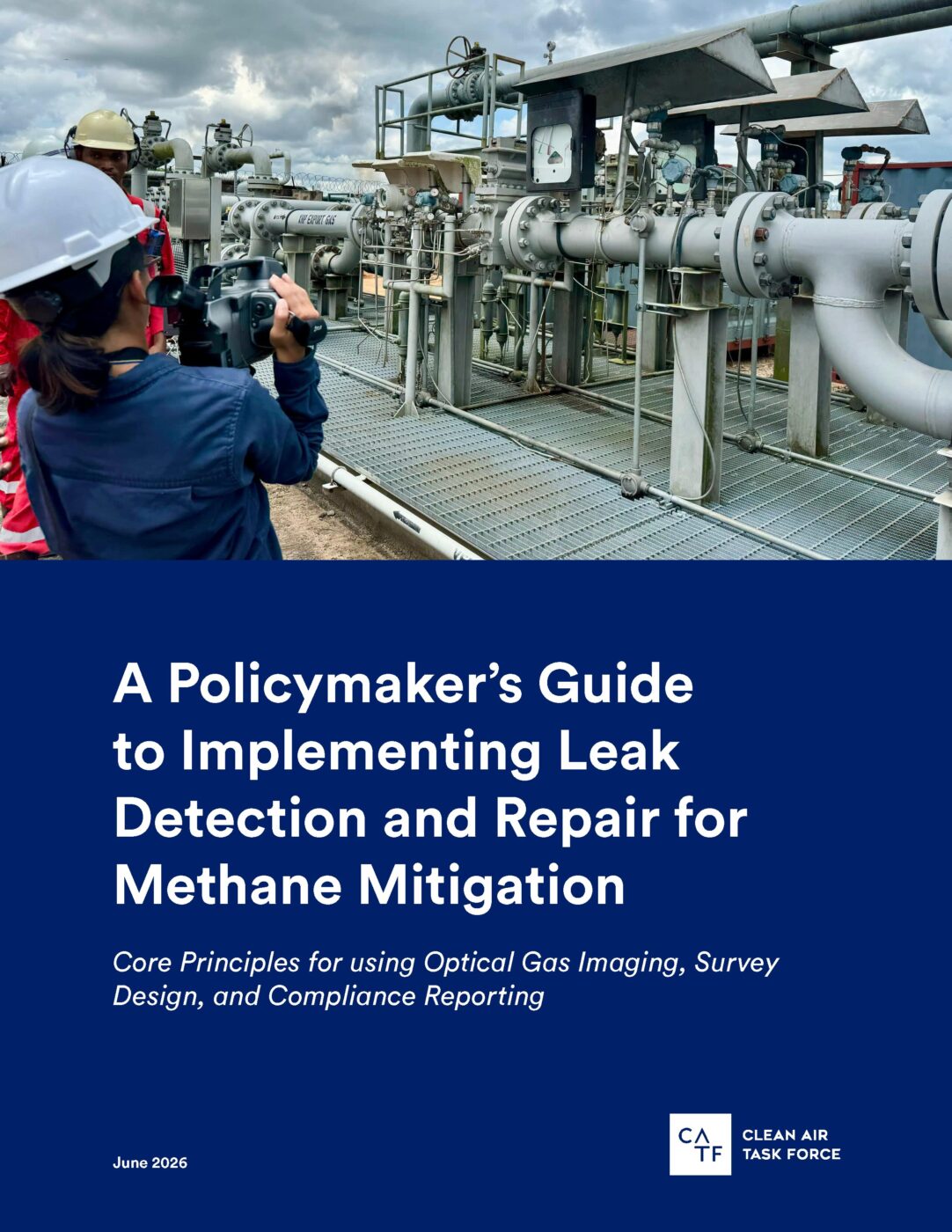
A significant share of oil and gas emissions come from persistent, unnoticed leaks from routine on-site operations and equipment failures, which add up to one of the sector’s largest sources of methane. Systematically identifying and addressing these leaks through Leak Detection and Repair (LDAR) programs can substantially reduce methane emissions from leaks while also supporting operational safety and regulatory accountability.
In practice, however, several hurdles undermine successful LDAR implementation: field methods lack standardization, documentation is inconsistent, resources are limited, and technical requirements are interpreted differently across operators, which can significantly lower emissions reduced.
This report aims to fill that gap and support more effective LDAR implementation by providing practical, step-by-step guidance informed by CATF’s field experience with Optical Gas Imaging (OGI) cameras and aligned with existing, well-regarded international best practices.
With these technical insights into OGI’s capabilities and limitations, regulators can confidently require operators in their jurisdictions to implement LDAR programs. Simultaneously, operators can plan and implement LDAR programs with the certainty that their efforts will be supported and understood by regulators. Through this increased shared understanding of LDAR program requirements, both operators and regulators can ensure that LDAR mitigates methane to the greatest extent possible.

