
Explainer: Europe’s heatwaves are testing nuclear plants. What does it mean for nuclear energy in a warming climate?
Europe has experienced another summer of extreme heat. Temperatures have climbed toward 40°C across parts of the continent, rivers are running unusually warm or low, and drought is putting pressure on infrastructure that depends on water, including nuclear energy.
In France, several nuclear reactors reduced output or temporarily shut down as high river temperatures approach environmental limits for cooling-water discharge, tightening electricity supplies and pushing power prices higher. At the Gravelines nuclear power plant on France’s northern coast, jellyfish clogged cooling-water intake systems, temporarily placing several reactors offline. In Romania, record-low water levels on the Danube forced the shutdown of the country’s two operating reactors at the Cernavodă plant. These low water levels have also forced Hungary’s Paks nuclear plant to reduce power output.
These events raise a fair question: Can nuclear power remain a reliable source of electricity as climate change brings more extreme heat and water stress?
The short answer is yes – but it will require adaptation.
As extreme heat and drought put pressure on energy infrastructure across Europe, the following explainer breaks down what recent nuclear power disruptions actually mean: why some European reactors reduced output during the heatwave, how cooling-system design, water availability, and environmental protection limits affect nuclear plant operations, and what these events tell us about designing and operating nuclear power plants in a changing climate.
Why did France take some of their nuclear power plants offline?
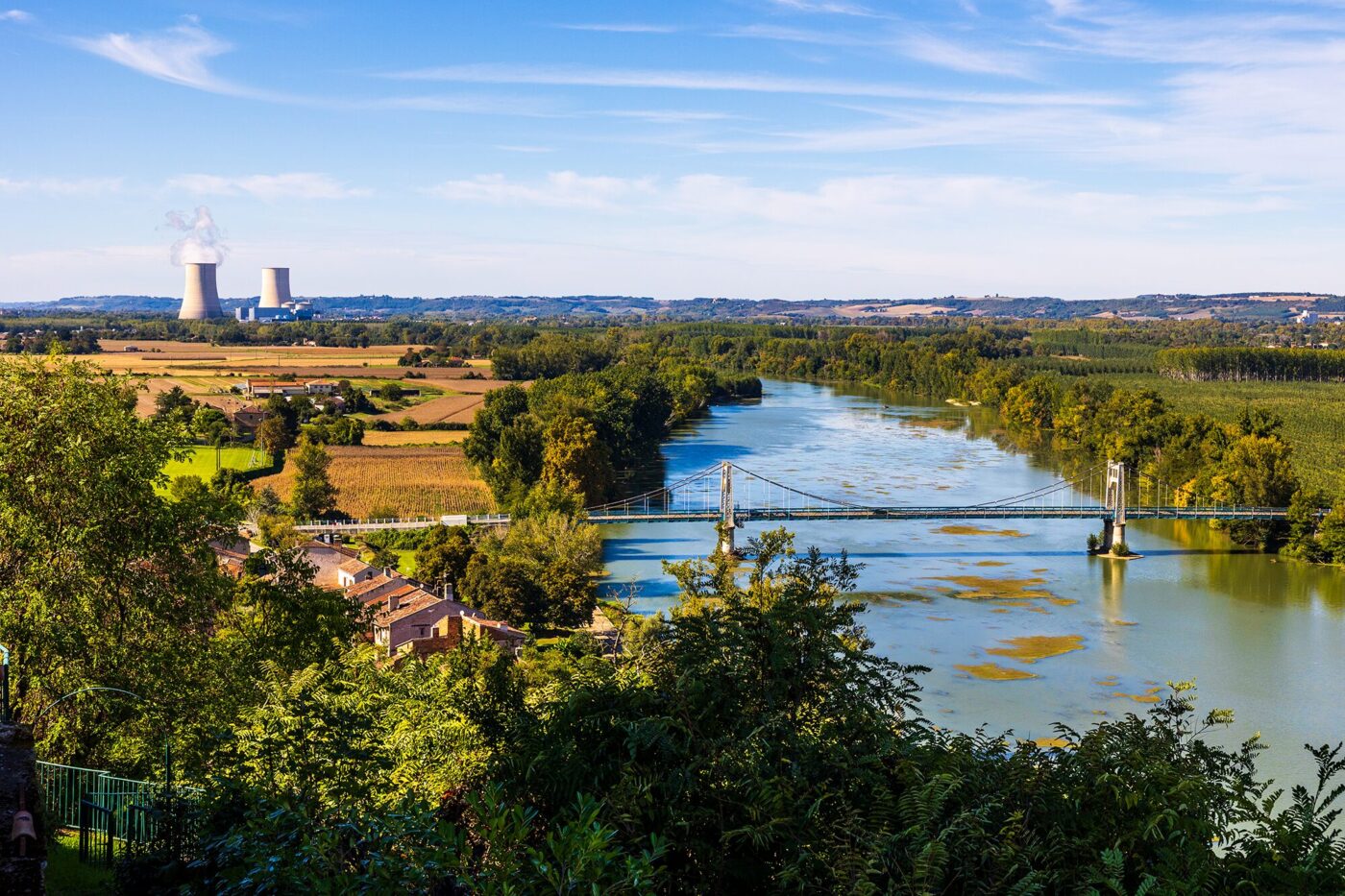
In June and August, temperatures in France climbed above 44°C (111°F), warming rivers across the country. On the Garonne River, for example, water temperatures rose high enough to constrain cooling operations at the Golfech nuclear power plant.
Like all other thermal power plants, nuclear reactors generate heat to produce electricity. The laws of thermodynamics limit how efficiently power plants can convert heat into electricity. Any remaining heat that is not converted into electricity must be released into the environment. At some French reactors, the remaining heat is released to the environment via a once-through or direct cooling system, which draws water from a nearby river, uses it to absorb heat from the plant, and returns it to the river a few degrees warmer. These systems require large amounts of water to remove the remaining heat. At other French reactors, the remaining heat is released to the environment via an indirect cooling system, which uses evaporative cooling to release heat into the atmosphere and draws water from a nearby source to make-up for evaporative water losses. These systems require much smaller amounts of water to remove the remaining heat but will still return some unused water to the river a few degrees warmer.
French environmental regulations, similar to those in other European countries, limit the total volume of water used for cooling, the temperature of discharged water, and the total temperature increase between the water intake and discharge to protect river ecosystems and aquatic life from excessive heat. When river temperatures rise during extreme heat, there’s less room to add heat to the water while staying within those limits. Operators can respond to higher water temperatures by reducing reactor output or, in some cases, temporarily shutting down a reactor until water temperatures decrease.
The important distinction is that this is an environmental operating constraint, not a nuclear energy safety limitation. Reducing reactor power or temporarily shutting down reactors means environmental regulations are working as they should. The reactor remains capable of generating electricity, but the plant may not be able to operate at full power while also meeting limits designed to protect the river ecosystem. In some cases, excessively high river temperatures will decrease plant performance and operating efficiency, incentivizing reactor operators to reduce reactor power or temporarily shutting down reactors to protect plant systems against degraded operating conditions.
This isn’t unique to nuclear power. All thermal power plants including coal- and natural gas-fired plants that use once-through cooling can face similar constraints when rivers become too warm or water levels fall. The underlying issue is the same: a thermal power plant needs to remove waste heat, and the conditions of the water used for cooling can affect how much power it can produce and how efficiently the power is produced.
What happened in Romania and Hungary?
Romania’s Cernavodă nuclear power plant relies on the Danube river for cooling. Exceptionally low river levels during the current drought have severely reduced cooling water availability, forcing the plant’s two operating reactors to precautionarily shut down. The Cernavodă plant typically supplies around one-fifth of Romania’s electricity.
Reduced water levels can require plants to reduce power output so that they do not exceed the environmental limits on heating the rivers. As water levels drop, the same amount of thermal energy discharged into the river can have a more significant impact on overall river ecosystems and aquatic life. If water levels drop to extremely low levels, it may not be possible for nuclear power plant cooling systems to pump sufficient river water to cool plant systems under normal operations.
Reactor operators may choose to proactively reduce reactor power or temporarily shut down reactors to protect plant systems. When shutdown, reactors will only require a small fraction (typically less than 5%) of normal cooling water flow necessary to remove residual decay heat and maintain safe operation. If river water is not available at all, this shutdown cooling could also be provided by normal operating systems (e.g., indirect water cooling supplied by municipal water systems or dry cooling systems) or emergency back-up cooling systems depending on plant design. Hungary’s Paks nuclear power plant, which also relies on the Danube, has faced similar challenges as water levels have fallen and water temperatures have risen. In France, the immediate issue has been that river water is too warm to absorb additional heat while remaining within environmental limits. In Romania and Hungary, low river levels have created an additional constraint on the amount of cooling water available.
That distinction matters because it points to a broader consideration for nuclear plants that rely on rivers: both water temperature and water availability need to be considered over a plant’s operating lifetime.
Does this mean nuclear energy can’t operate in a warming climate?
No. But like with any source of generation, it means climate conditions need to be considered when nuclear plants are designed, sited, and operated. The potential impacts also depend on the type of cooling system a plan uses and the local conditions where it operates.
Nuclear plants use a range of cooling systems. Some use water directly from rivers, lakes, or the ocean, while others use indirect cooling systems. Each approach has different operating requirements and potential limitations under changing climate conditions. For example, plants that rely on river water for direct cooling and be affected by high water temperature or low river flows, while other cooling systems may be more sensitive to high ambient temperatures or other factors. Many of the nuclear plants operating in Europe today were designed and built in the 1970s and 1980s and rely on direct or indirect cooling systems. Roughly half of nuclear power plants operating today globally rely on direct cooling from oceans, 25% of nuclear power plants use indirect cooling using cooling towers, while the remaining nuclear power plants are cooled by direct cooling from lakes or rivers (15% and 14%, respectively).
These plants were planned and constructed using the temperature, precipitation, and water conditions understood at that point in time. The original designs did account for significant variations in conditions but may not have been designed for the more extreme conditions that we see today and are likely to see in the future. That doesn’t mean existing nuclear plants are inherently unsuited to today’s climate. But it does mean operators and regulators need to understand how changing conditions could affect plant operations over the remainder of their lifetimes and make adaptations where appropriate.
For new nuclear plants, these considerations can be incorporated into the design and siting process from the outset, including by accounting for projected future climate conditions and selecting cooling systems suited to local conditions.
Is this challenge unique to nuclear energy?
No, this isn’t unique to nuclear power. Coal and natural gas plants that use water for cooling can face similar constraints when rivers become too warm or water levels fall. Heatwaves can also affect other sources of generation: during the recent heat dome, below-normal wind generation was forecast across western Europe. In the UK, extreme heat placed additional stress on the power grid as rising temperatures led to increased electricity demand for air conditioning.
What we’re seeing is that hotter summers are putting pressure on energy infrastructure across the board. The challenge is to build an energy system that is reliable, affordable and lower carbon, while ensuring that the technologies powering the grid today — and those we build tomorrow — are equipped to withstand increasingly extreme weather.
What can existing and new nuclear plants do to prepare?
Going forward, cooling-system design will remain an important part of making nuclear power plants more resilient to extreme heat and water stress. Depending on location and reactor design, plants can use a variety of different system configurations to release excess heat into the environment. Some power plants could use indirect cooling systems like natural convection cooling towers or mechanical draft cooling towers to reduce water use and temperature requirements. Other coastal power plants could use seawater from farther off-shore or deeper to reduce the impacts of changing water levels and temperatures. Dry cooling systems could largely eliminate the need for external cooling water sources by cooling the plant systems using large heat exchangers that transfer heat to ambient air.
These different cooling configurations could reduce reliance on the temperature or flow of a particular water source. The best cooling approach will vary by site, depending on factors such as local water availability, environmental regulations, geography, cost, and reactor design.
For existing plants, this looks like operators assessing how changing temperatures, drought, and water availability could affect operations over the remainder of a plant’s lifetime. Where needed, adaptation could include changes to operating procedures, additional monitoring, water-management measures, or upgrades to cooling systems.
For new builds, climate conditions can be considered from the outset. Developers can account for projected temperatures, water availability, and drought when selecting sites and designing cooling systems. Small modular reactors or microreactors, spread across country or region, could reduce the water demands on any single water source as compared with a single large reactor and reduce the environmental impact on a specific body of water. Other advanced reactors can operate at higher thermal efficiency and would need to discharge less heat into the environment per unit of electricity generated than existing reactors. Water requirements vary by reactor and cooling system design, but new build could use indirect or air cooling systems that can reduce or effectively eliminate water consumption or dependence on freshwater or ocean resources. This flexibility could make some new reactors better suited to locations facing greater water stress.
What should we take away from Europe’s heatwaves?
Extreme heat and drought are putting new pressures on energy infrastructure across Europe, including nuclear power. Each heatwave has served as a reminder that climate resilience needs to be part of energy planning.
For nuclear power, that means understanding how changing temperatures, water availability, and other environmental conditions and regulations could affect plants over the coming decades, and then planning accordingly. Existing plants may need operational or cooling-system adaptations, while new projects can incorporate future climate conditions and modeling into site selection and design. These changes can ensure that nuclear power plants are a resilient source of energy that support a reliable, affordable, and clean grid.
The goal is to build an electricity system that can remain reliable under increasingly challenging conditions. That means ensuring the technologies on the grid today, and those built tomorrow, are designed to withstand a changing climate while providing reliable, affordable, and low-carbon electricity.

