
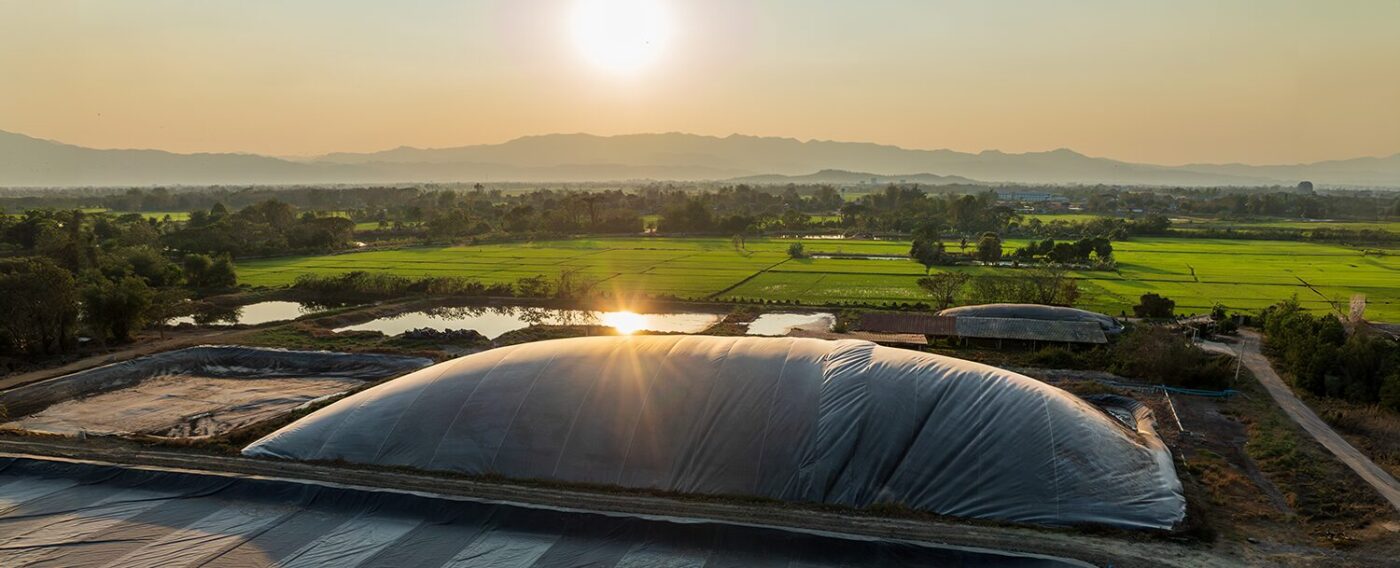
To truly help the environment, anaerobic digestor regulations need an overhaul


Anaerobic digestion (AD) is widely promoted as a climate solution, and not without reason. By capturing methane from organic biomass and waste, agricultural residues, manure, and wastewater, and converting it to usable energy like biogas and biomethane and organic material like nutrient rich digestate, AD systems can reduce emissions from waste and agriculture that would otherwise escape into the atmosphere.
But the climate benefits of AD are not guaranteed, depending entirely on keeping methane emissions from the AD systems themselves tightly controlled. A new CATF report finds that current oversight frameworks are falling short of that standard, and the gap between where policy stands today and where it needs to be to maximize AD climate benefits is substantial.
Left unchecked, emissions occur across the entire AD system
An AD system typically encompasses four major process stages:
- Feedstock processing and storage: intake, pretreatment, and mixing of organic inputs before they enter the digestor
- Anaerobic digestion: the core process where microorganisms break down organic matter in sealed, oxygen-free tanks to produce biogas
- Biogas utilization and upgrading: combustion in combined heat and power units or purification into biomethane for pipeline injection or use as transportation fuel
- Digestate processing and storage: handling of the liquid and solid residues left after digestion, which retain methane-producing potential and are typically stored before land application
Methane does not just escape from one part of the system; it escapes from components at every one of these stages: from digestor tanks and pressure relief valves, from combined heat and power units and biomethane upgrading equipment, and from digestate storage lagoons where residual organic matter continues to decompose after the digestion process ends.
Scientific literature estimates that modern AD plants lose between 0.5% and 6% of total methane produced, with a mean value approaching 5%. For comparison, the oil and gas sector averages methane losses of around 1.2%. Digestate storage alone accounts for 2 to 4% of losses on average, with higher values observed during warmer months and at facilities without gas-tight covers. Uncovered digestate lagoons, common in the United States, are a particularly significant source of avoidable emissions.
Unfortunately, this isn’t a marginal problem; It reflects the structural reality of how AD systems are currently designed and operated across much of the world.
Most AD regulations weren’t built to address methane emissions
Despite the scale of these emissions, national regulations have yet to impose rigorous monitoring and mitigation requirements on methane.
CATF reviewed regulatory frameworks in Denmark, the United Kingdom, Germany, France, and the United States. The dominant model across these countries was designed to protect workers from the safety hazards associated with biogas but have yet to extend their coverage to minimize methane emissions.
No country reviewed imposes an emissions cap covering all four major AD process stages and none has implemented a comprehensive framework for measurement, monitoring, reporting, and verification (MMRV), the systematic tracking and independent verification of emissions that is essential to ensuring AD systems deliver real climate benefits. Digestate storage, which research consistently identified as one of the largest emissions sources, is almost entirely absent across regulatory requirements. In the United States, which is a large biogas producing country globally, there are no binding federal AD methane regulations at all, leaving industry to operate on voluntary guidance and best-practice recommendations.
Where rules do exist, enforcement is inconsistent and independent oversight is rare. Germany and the United Kingdom both rely on operator-run self-monitoring programs with no third-party verification requirement. Germany’s equipment tightness checks are required only every three to twelve years for most components, a frequency that bears little relationship to how often leaks and breakdowns actually occur. Reports from the German Commission for Plant Safety show that more than two-thirds of inspected biogas plants have exhibited significant deficiencies since 2007, pointing to an enforcement gap rather than isolated non-compliance.
Denmark’s framework is the most rigorous reviewed. It requires third-party development of monitoring plans, verification of leak detection reports and repairs, and withdrawal of state subsidies for non-compliance. Even so, it stops short of requiring continuous monitoring or imposing any emissions cap on digestate storage.
Carbon markets are not currently filling the gap
Ideally, carbon crediting systems could work to compensate where regulations fall short, rewarding AD operators who can demonstrate genuine emissions reductions, but the major standards don’t fill in this gap in practice.
The American Carbon Registry, Gold Standard, and Verified Carbon Standard, collectively responsible for issuing the vast majority of carbon credits traded, all rely on default emissions factors that may not reflect actual facility performance. None of their protocols require facility-level MMRV, nor do they allow operators to substitute measured values for defaults in calculating emissions reductions.
The result is a credibility problem: Carbon credits issued under these methodologies may not represent real emissions reductions, which means climate finance may be flowing to AD projects that deliver limited real-world benefit. This leaves credit buyers having no reliable way to distinguish high-performing facilities from poor ones.
While current AD methane policies may be lacking, solutions do exist
None of this reflects a lack of technical solutions. Gas-tight digestate storage, modern biogas upgrading technologies, well-maintained pressure relief valves, and regular leak detection and repair surveys can meaningfully reduce emissions at every process stage. The barrier is not technological.
What is missing is policy. Specifically: mandatory MMRV frameworks that cover all four AD process stages and require independent verification; enforceable emissions standards that support worker safety while also addressing methane directly; and carbon accounting protocols that incorporate facility-level measured data rather than generic defaults.
AD is expanding fastest in precisely the regions where regulatory capacity is weakest. Global installed biogas capacity has more than doubled since 2010, and the industry continues to expand rapidly across Latin America, Asia, Africa, and Eastern Europe. Getting the governance frameworks right now, before deployment scales further, is essential.
The climate value of anaerobic digestion is real, but it has to be earned through rigorous oversight. Our report lays out what a credible framework could look like. What remains is for regulators, crediting standards, and industry associations to action oversight as the baseline it needs to be, rather than an optional add-on.

