
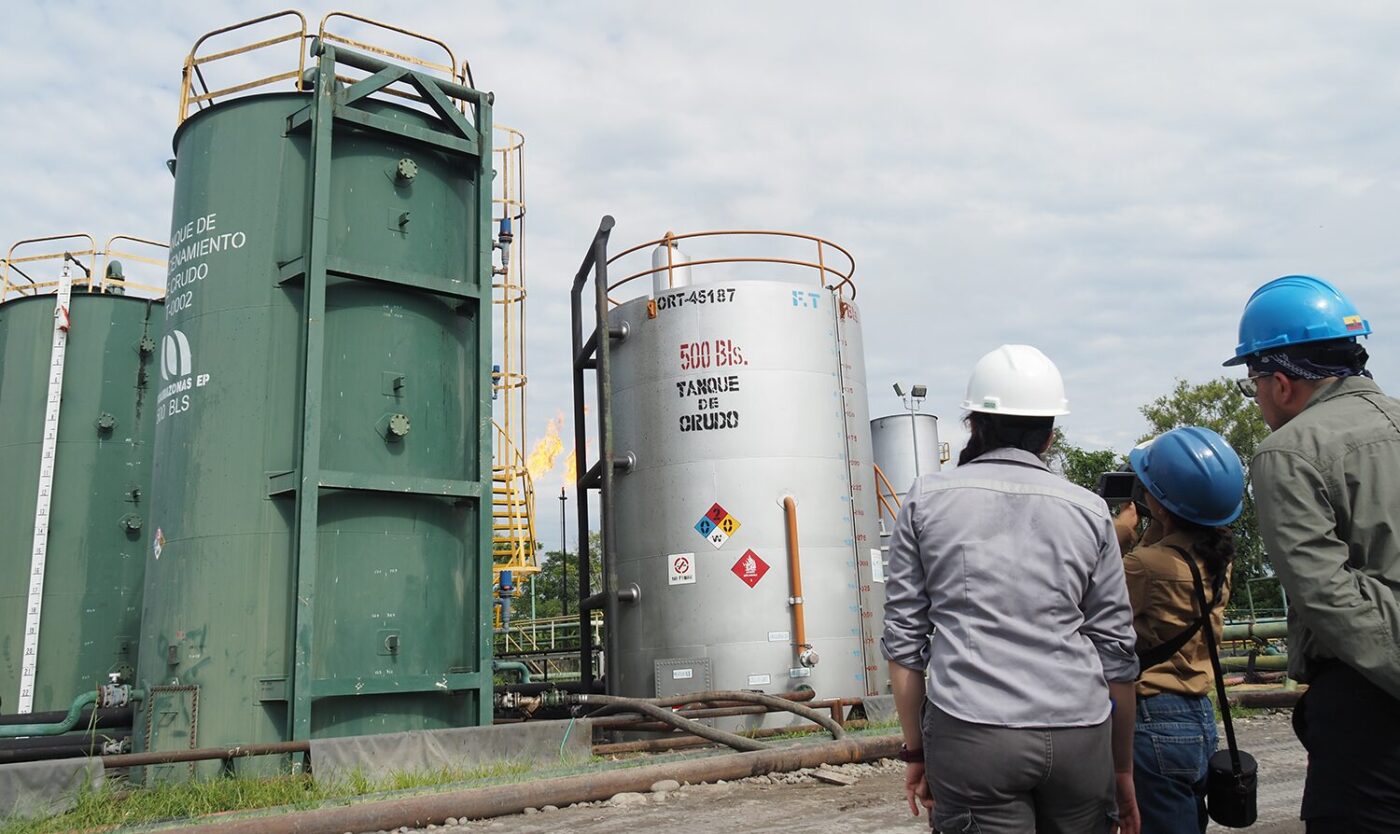
Closing the methane gap between LDAR on paper and LDAR in practice



The oil and gas industry is responsible for roughly one-third of global anthropogenic methane emissions, and a significant share of those emissions comes from leaks that go undetected during on-site operations and equipment failures.
Leak Detection and Repair (LDAR) programs exist precisely to address this problem. And when they are well-designed and rigorously implemented, they work, delivering substantial emissions reductions while also improving operational safety and regulatory accountability. The challenge is that “well-designed and rigorously implemented” is rarer than it should be. Our new report outlines the source of this challenge and a replicable means of addressing it.
What LDAR is and why it matters
An LDAR program is a structured action plan for conducting systematic field surveys to identify, document, and repair leaks from equipment, piping, and tanks. It is worth distinguishing these fugitive emissions, which are unnoticed losses of natural gas, from venting, which refers to the intentional and known release of methane from equipment or process activities. LDAR primarily targets the former: the emissions that operators may not even know are happening. But when equipment and process venting is excessive due to malfunctioning equipment or poor operational practices, LDAR surveys also act as a necessary check to reduce these emissions.
LDAR programs are also effective when implemented alongside other prescriptive measures, particularly bans on routine venting and flaring. In those cases, rigorous LDAR surveys provide a necessary check on whether venting and flaring equipment is functioning as intended. Jurisdictions that implement these standards in tandem with LDAR programs are better positioned to achieve comprehensive, verifiable methane reductions.
The regulatory momentum behind LDAR has never been stronger. Since the launch of the Global Methane Pledge in 2021, the European Union and more than a dozen countries have adopted, drafted, or are in the process of developing dedicated methane regulations that include LDAR. Voluntary frameworks like the Oil and Gas Methane Partnership (OGMP) 2.0 have established measurement and reporting standards that complement these regulatory efforts. Together, they reflect a growing global consensus that reducing fugitive emissions from oil and gas is both in reach and central to near-term climate action.
Why aren’t emissions falling faster?
Despite this momentum, emissions from the oil and gas sector are projected to decline only marginally in the near term, leaving a significant gap between current emissions trajectories and what is needed to meet global methane targets. The gap between regulatory ambition and real-world outcomes is partly attributable to persistent implementation issues that continue to limit mitigation progress across countries.
In practice, LDAR programs face significant hurdles. Field methods lack standardization. Documentation is inconsistent. Technical requirements are interpreted differently across operators and jurisdictions. The result is widespread uncertainty about survey quality, with programs functioning as a compliance checkbox rather than a genuine effort to minimize emissions. An LDAR program that looks good on paper but is poorly executed in the field is not delivering the emissions reductions it promises.
The guidance gap
Foundational resources to guide LDAR implementation do exist. The U.S. EPA’s Appendix K as well as international initiatives like the Global Methane Initiative are widely referenced. But these resources were not designed for today’s regulatory context, which demands greater survey rigor, more detailed reporting, and consistent evaluation across diverse jurisdictions and operating environments.
Regulators are increasingly asked to assess technically complex surveys and interpret diverse data streams, often with limited capacity and resources. Operators, meanwhile, lack standardized protocols for conducting and documenting surveys in ways that satisfy regulatory requirements. Both sides are working from different playbooks, and the resulting misalignment undermines LDAR’s effectiveness even where the regulatory intent is strong.
What good LDAR actually requires
Effective LDAR is not a single activity so much as a chain of interconnected elements, each of which needs to work well for the program to deliver results. That means:
- A clear regulatory framework that establishes applicability, survey frequency, and enforcement mechanisms
- Appropriate detection technology, with Optical Gas Imaging cameras as the leading best practice for identifying leaks in real time, complemented by aerial surveys and continuous monitoring where appropriate
- Systematic survey planning and execution that ensures consistent, high-quality coverage across equipment and facilities
- Accurate and safe leak identification and repair, supported by a clear understanding of what different source types look like in the field and how they can be addressed
- Transparent, detailed reporting that gives regulators the documentation they need to evaluate compliance
- Robust regulatory evaluation that enables regulators to assess whether operator actions meet the standard required
Underlying all of this is the essential condition that operators and regulators must share a common understanding of what good LDAR implementation looks like. When both sides are aligned on field protocols, detection technologies, reporting standards, and compliance expectations, LDAR programs can deliver the reliable emissions reductions they are designed to produce.
A resource built for practice, not just policy
CATF’s new report, A Policymaker’s Guide to Implementing Leak Detection and Repair for Methane Mitigation, is designed to bridge this gap. Drawing on the field experience of CATF experts, and aligned with established international best practices, it provides structured, practical guidance across the full arc of LDAR implementation, from regulatory design and technology selection to survey execution, leak identification, reporting, and regulatory evaluation. It is written primarily for regulators, but operators, third-party LDAR service providers, and civil society organizations will find it equally useful.
Accompanying the report are leak videos, model reporting templates, and other supplementary materials designed for direct use in the field and in regulatory review.
Methane from oil and gas is one of the most readily abatable sources of near-term emissions we have. LDAR, done right, is a powerful tool to address it, provided we get implementation right, consistently across jurisdictions and operators.

