
The High Cost of Retreat: Impacts of Department of Energy Project Cuts

Executive summary
America’s long-run economic prosperity depends on affordable, abundant energy. Durable, bipartisan congressional majorities have repeatedly endorsed a comprehensive energy strategy that delineates a clear role for the federal government, led by the Department of Energy (DOE), in the research, development, and deployment of innovative energy technologies. In just the last five years, Congress has come together across party lines on three separate occasions to pass landmark energy legislation under presidents of both parties: the Energy Policy Act of 2020, the CHIPS and Science Act, and the Bipartisan Infrastructure Law. Together, these laws formed the backbone of an economic strategy that met the moment to deliver affordable, clean, and abundant energy for American consumers and businesses; they also provided the private sector with the resources necessary to compete and win in the competitive international marketplace.
However, the Department of Energy has unilaterally reneged on congressionally mandated spending by cutting federal funds from hundreds of projects. In May, DOE announced the cancellation of 24 awards for clean energy demonstrations – including carbon capture and industrial demonstrations – totaling more than $3.7 billion in awards. Then, in early October, DOE announced the termination of 321 awards for energy projects worth approximately $7.56 billion in obligations, largely impacting states and congressional districts represented by Democrats. Subsequently, it was reported that an even larger DOE cut list – with about 300 additional projects, including many in states and districts represented by Republicans – was circulating on Capitol Hill and among advocates. Although this list was reportedly sent to the White House Office of Management and Budget, the administration has yet to say if it will be moving forward with the additional cancellations, as Republican lawmakers have pushed back.
These announced cuts and additional cuts being considered impact approximately 650 projects, encompassing $23 billion in federal funding, and span a wide array of energy projects that support Trump administration priorities such as reducing electricity costs, supporting cutting-edge technologies like carbon capture and storage, nuclear energy, and next generation geothermal, grid and transmission infrastructure, natural gas technologies, onshoring manufacturing, and industrial innovation. Locally, these cuts will have devastating impacts on communities and private sector businesses, eliminating jobs and economic opportunities.
They would also impact nearly every state across the U.S. Each project represents local jobs and economic development, partnerships, upstream and downstream supply chains with their own private investments, and up to 50% non-federal cost share from project partners. Altogether, the economic impact is far greater than the amount of stated federal investment to be canceled.
The most-impacted states1 by federal investments (combining announced cuts and additional cuts being considered) include:
- California — $3.6 billion
- Texas — $1.6 billion
- Illinois —$1.1 billion
- Indiana —$854 million
- Michigan — $846 million
- Louisiana —$705 million
- Colorado —$653 million
- Georgia —$624 million
- North Carolina —$591 million
- Minnesota —$555 million
Table 1. Total Estimated “Officially Terminated” and “Being Considered for Termination”* Project and Funding Cuts by District
| Total | Democratic District** | Republican District** | |
|---|---|---|---|
| # Grants Officially Terminated | 321 | 179 | 91 |
| # Grants Being Considered for Termination | 327 | 191 | 92 |
| Total # Grants Officially Terminated and Being Considered for Termination | 648 | 370 | 183 |
| $ Officially Terminated | $8 billion | $3 billion | $2 billion |
| $ Being Considered for Termination | $15 billion | $4 billion | $5 billion |
| Total $ Officially Terminated and Being Considered for Termination | $23 billion | $7 billion | $7 billion |
**Project and funding numbers are reflective of the project’s place of performance. Not all place of performance District data is available; therefore, numbers reflect a minimum. Multi-state projects are not reflected in district data.
Table 2. Total Estimated Announced and Being Considered for Termination Project and Funding Cuts by Key Sector
| Sector | Total Estimated Announced and Considered for Termination Project Cuts | Total Estimated Announced and Considered for Termination Funding Cuts |
|---|---|---|
| Industry and Manufacturing | 69 | $3.6 billion |
| Hydrogen | 76 | $821 million |
| Carbon Capture | 95 | $959 million |
| Methane Pollution Prevention | 21 | $686 million |
| Near-Term Infrastructure | 133 | $1.6 billion |
| Vehicles and Transportation | 90 | $2.1 billion |
In addition to negatively impacting state and local economies today, these cuts threaten energy deployment and long-term energy innovation in a way that hampers U.S. economic competitiveness. For instance, the U.S. government and private sector are squarely focused on the promise of artificial intelligence, a technology that requires significant electricity deployment to power data centers – cuts to solar and wind deployment, as well as grid resiliency, will harm that industry. Meanwhile, American manufacturing requires cheap energy and electricity to modernize and reduce input costs; announced cuts and additional cuts being considered threaten existing and future energy supplies for the sector, including low-cost electricity and hydrogen.
Lawmakers must use all available channels of influence to instruct the Department of Energy to reinstate or reissue project awards, and refrain from making future cuts.
The high cost of retreat: What happens when federal commitment to energy innovation falters
Congress has provided strong bipartisan authorizations and appropriations for federal funding programs that advance energy innovation, designating the Department of Energy (DOE) with a key role to support technology advancement from research and development to demonstration and commercialization. The Energy Policy Act of 2020, Creating Helpful Incentives to Produce Semiconductors and Science Act (CHIPS Act), and Bipartisan Infrastructure Law (BIL) all received bipartisan support and set in place grants and loans to bridge the financing gap that private lenders and companies alone cannot support. This type of federal support is vital to bring more energy solutions to market, boost U.S. competitiveness, and maintain global energy leadership.
In May and early October, the U.S. Department of Energy (DOE) announced it was canceling billions of dollars in awards to hundreds of projects funded by this bipartisan legislation, particularly BIL, and recent reporting indicates additional project cuts are likely underway. Cutting these project awards not only violates Congress’ clear direction to DOE to fund energy innovation across a variety of technologies; it undercuts the administration’s stated goal of energy dominance, negatively impacting American businesses and both national and local economies.
DOE’s role and partnership is critical to bridging the financing gap to build domestic energy security and reliability and compete in global markets. Many emerging energy infrastructure technologies face bankability challenges that prevent private investment and stunt technology development. To overcome these challenges, government investment has and will be essential to get these technologies to market.
Withdrawing this federal funding would not only undermine our global leadership in energy, but also negatively impact communities and drive uncertainty across multiple industries of national importance. The effects of withdrawing federal funding – from job loss, local economic development impacts, cascading effects up and down supply chains, and a long-term erosion of trust in bipartisan federal financial incentives – risks the viability of future investments directed by the federal government and threatens local economic prosperity.
DOE announced cuts and additional cuts being considered
DOE issued its Secretarial Policy on Ensuring Responsibility for Financial Assistance in May 2025. This policy establishes the following criteria for reviewing projects: 1) financially sound and economically viable, 2) aligned with national and economic security interests, and 3) consistent with federal law and this administration’s policies and priorities and program goals and priorities. These criteria run counter to the bipartisan legislation directing DOE to bridge the funding gap for innovative energy technologies as these technologies are not yet economically viable for commercial lenders and require DOE support to advance to commercialization. The criteria also run counter to how federal funding is established and executed: Congress passes legislation to direct the policies and funding, which federal agencies must carry out.
DOE proposes to terminate federal investment cost-share in over 650 projects totaling over $23 billion
DOE is now considering pulling billions of congressionally-directed investment from research and development (R&D) to large-scale demonstrations necessary to move technologies toward commercialization. These awarded investments span a variety of cutting-edge energy technologies – including carbon capture and storage, nuclear energy, next-generation geothermal, grid and transmission infrastructure, and natural gas technologies – that support stated administration priorities like reducing electricity costs, onshoring manufacturing, and industrial innovation.
Project awardees potentially impacted include hundreds of U.S.-based companies, organizations, and state and local governments across the country – including auto giants General Motors, Volvo, and Harley Davidson, as well as major oil and gas companies like Chevron and ExxonMobil. Also at risk are projects among the $5+ trillion in new investments touted this year by the White House. For example, GE Vernova announced plans to invest $600 million in U.S. manufacturing over the next two years, creating more than 1,500 new jobs. This includes a $50+ million project to expand gas turbine manufacturing in Schenectady, NY – a project DOE would be walking away from. DOE would also be rescinding federal cost-share from other private sector partners making massive investments in the U.S., including TS Conductor Corporation, Siemens, Schneider Electric, Diageo, FirstEnergy Corp., Westinghouse, General Motors, and Kraft Heinz.
A number of these cost-share investments date back to the first Trump administration and have benefited from years of bipartisan support as they’ve progressed from research and development to pilot and demonstration. DOE would be rescinding its share of investment in a number of first-of-a-kind pilot and demonstration projects before they get the real bang for their buck, which comes from shepherding technology advancements to commercialization and enabling private sector deployment. That is the return on investment that Congress directed and that American taxpayers benefit from. Millions, if not billions, of previous federal investments that supported these projects in earlier R&D project stages could be wasted if DOE walks away from project partners that are finally at the demonstration stage.
This move, along with its lack of transparency, risks the integrity of DOE’s longstanding project development pipeline.
The impacts of announced cuts and additional cuts being considered
Announced cuts and additional cuts being considered would impact nearly every state across the U.S. Each project represents local jobs and economic development, partnerships, upstream and downstream supply chains with their own private investments, and up to 50% non-federal cost share from project partners. Altogether, the economic impact is far greater than the amount of stated federal investment to be canceled.
The most-impacted states2 by federal investments (combining announced cuts and additional cuts being considered) include:
- California — $3.6 billion
- Texas — $1.6 billion
- Illinois —$1.1 billion
- Indiana — $854 million
- Michigan —$846 million
- Louisiana — $705 million
- Colorado — $653 million
- Georgia — $624 million
- North Carolina — $591 million
- Minnesota — $555 million
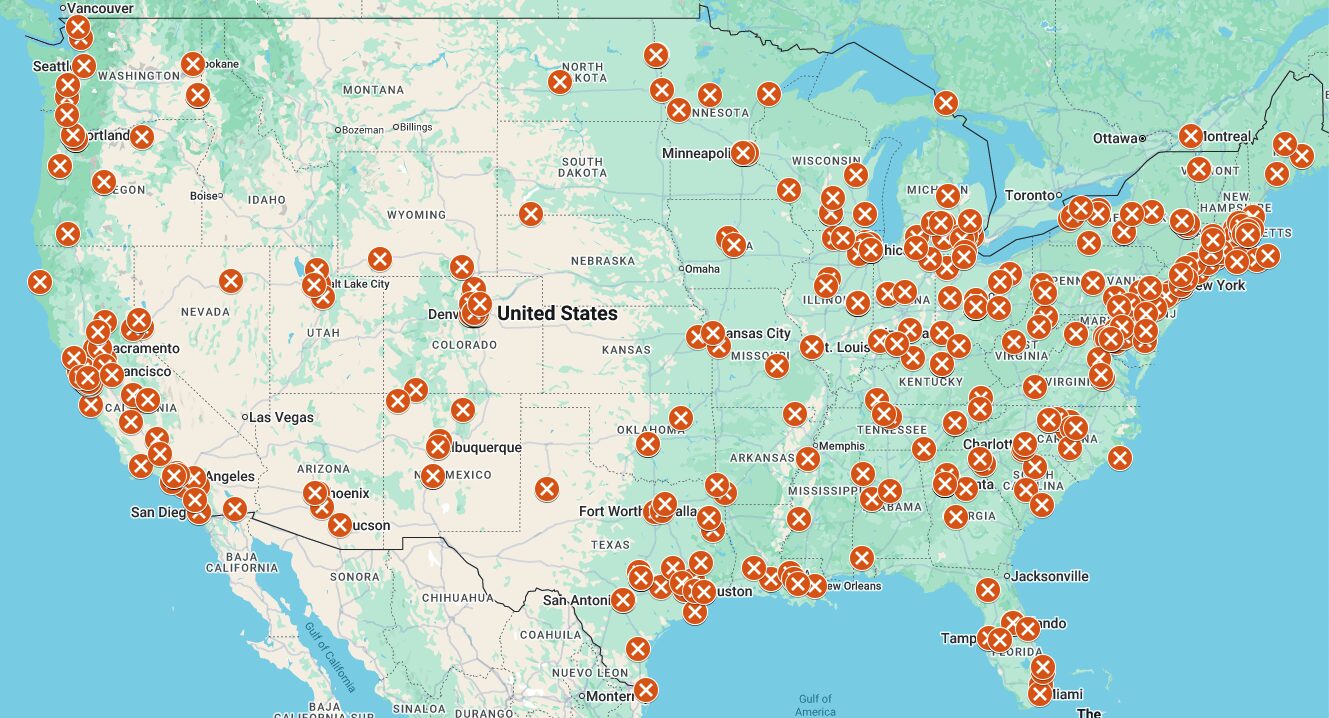
From projects to cut emissions from the industrial and transportation sectors to projects that would reduce methane emissions and air pollution, the impacts of DOE cuts touch a wide range of projects that propel American innovation and competitiveness.
Industrial Innovation
U.S. manufacturing, including heavy industrial sectors, is essential for economic security – and innovation in these sectors is critical to enabling future growth of U.S. manufacturing on a global scale.
U.S. manufacturing directly employs more than 12.8 million workers3 and for every $1.00 spent in manufacturing, there is an approximate 264% return in cumulative impact to the overall U.S. economy.4 Industrial sectors like the U.S. chemical manufacturing and petroleum refining sectors contribute ~8%5 of U.S. GDP and are exposed to global trade dynamics, making up 9% of U.S. exports.6 Goods with lower carbon intensities are best positioned to win future market share for manufacturers with an export-oriented market, as many foreign markets develop mechanisms to explicitly account for carbon intensity of imported goods.7
Innovative industrial demonstration projects supported by the federal government are a foundation for future private sector investment, as follow-on projects will be less risky and costly for the private sector. Demonstration projects are essential for validating innovative technologies’ operational and commercial viability at scale. Large complex infrastructure projects, such as carbon capture projects, typically require two to six commercial-scale demonstrations of the technology to prove their effectiveness and reduce cost through a process known as “learning by doing.”8 Industrial demonstration projects drive innovations in production processes, heat delivery, alternative fuels and feedstocks including hydrogen, carbon management, and product recycling. These innovations will lead to reductions in capital and operating costs. They will also increase U.S. industrial technology export competitiveness, leading to cutting edge technologies being licensed abroad bringing benefits to U.S. companies.
U.S. companies want to innovate and reduce their emissions in partnership with DOE, as exemplified by the overwhelming interest in DOE’s Industrial Demonstrations Program (IDP), which was 10 times oversubscribed. Through the IDP, DOE received over 400 concept papers from U.S. companies requesting over $60B in federal funding matched with ~$100B in private cost share. The application and negotiations process resulted in 33 first-of-a-kind projects across 20+ states with $6B in federal funding, matched by $14B in private cost share.9
The announced and additional considered cuts to the IDP include 21 projects with ~$3.5B of obligated federal cost share across multiple sectors and technologies. These indiscriminate cancellations undermine the intent of the IDP to increase manufacturing competitiveness, increase U.S. industrial technology export competitiveness, achieve emissions reduction in industrial sectors, and build shared prosperity for American workers and communities through job creation and local partnerships. The cuts to the Mitchell Cement Plant Decarbonization Project are an especially detrimental example of the lapse of federal-private relationships, as the DOE has been working closely with the Indiana facility.10 The latest award was the fourth related to this project, which has a history of DOE funding since at least 2022.11 U.S. cement plants will have trouble meeting net-zero without CCS due to their process emissions, and the Mitchell project was a prime example of one facility leading the charge. Other proposed project cancellations, such as Dow’s $95M award to capture by-product CO2 from their ethylene oxide operations in Freeport, Texas to produce electrolyte solvents was aimed to strengthen the domestic battery supply chain and reduce reliance on China.12 Canceling these projects hurts America’s ability to compete on a global scale.
Additional industrial-focused DOE-funded projects outside of the IDP were also impacted by the recent funding cuts. These include projects from the Office of Fossil Energy (FE) like the testing of a novel carbon capture technology on blast furnace gas at U.S. Steel’s Edgar Thompson Works in Pennsylvania, a facility that the federal government has a vested interest in through its “Golden Share.”13
Businesses also require a level of certainty throughout the entire project development process, from project conception to final investment decision, construction, and startup. Because DOE is now canceling previously awarded projects, the private sector may be less willing to participate in future federal partnership opportunities to achieve any administration’s goals, given a perception of increased political risk.
Carbon Management
U.S. investment in CCS and DAC commercial pilots and demonstrations is essential for maintaining national competitiveness in export markets as global demand for low-carbon products grows. Other countries, including China, Canada, Qatar, the United Arab Emirates, and members of the European Union, are making major investments in DAC, CCS, and carbon utilization to secure advantages in low-carbon trade. Limited federal investment can help bring new CCUS applications to market by reducing risk for first-of-a-kind projects that would not otherwise advance. Public-private partnerships for commercial pilots and demonstrations are therefore critical for building investor confidence and creating market conditions where follow-on projects can attract private capital without federal support. Recent bipartisan funding decisions have placed the United States on a path to lead in these technologies and in related economic and workforce development. Reducing these investments now would unnecessarily jeopardize that progress.
In recent years, federally funded research and investment have helped launch a new wave of carbon management pilots and demonstrations in key industrial sectors, including refining, chemicals, steam methane reforming, steel, and cement. These projects can accelerate the wider deployment of commercial CCS, particularly in export-oriented states such as Louisiana and Texas and drive new investment and job creation. To date, more than 270 publicly announced carbon management projects across the country represent more than $77.5 billion in capital expenditure. For these commercial investments to succeed and continue generating economic benefits, including from demand for low-emission industrial products abroad, the United States should prioritize the funding already committed to major pilot and demonstration projects.
Federal investment in CarbonSAFE projects derisks carbon management for private sector investment by performing the complex and costly work of characterizing storage reservoirs, analyzing core and seismic data, and preparing Class VI applications. Because carbon capture and storage operate as a three-part value chain consisting of capture, transport, and storage, the sector faces a chicken-and-egg problem in which none of these links can function without the others. Building out storage capacity first is the key step that allows the rest of the system to scale. DOE’s announced cuts and additional cuts being considered to several CarbonSAFE and storage-focused grant awards weakens the foundation for large-scale carbon management in the United States. Most of the affected projects were in regions that are essential for deployment, including in Louisiana, where four projects were cut, the Southeast, where an additional four projects were canceled, and the Illinois Basin.
The latest project cuts could set back innovation across several novel and emerging industries that the United States has pioneered, such as DAC. Carbon removal is a growing global industry; without federal support, project developers will deploy first-of-a-kind projects in other countries. In fact, U.S.-based startup Carbon Capture Inc. has already decided to relocate the company’s first commercial DAC pilot project from Arizona to Canada due to better incentives and a more stable regulatory environment. The project is expected to go online by the end of October, and at full capacity, it will be Canada’s biggest operating system of its kind.
One of the funding cuts is for a DAC hub powered by next-generation geothermal energy. Next-generation geothermal is an exciting new technology with enormous potential to meet growing U.S. energy demand, including for DAC. Canceling this project would hamper the rollout of DAC as well as the rollout of next-generation geothermal. According to the Carbon Business Council, rolling back U.S. investment in DAC Hubs puts 130,000+ jobs at risk, billions lost, and idle factories, while other countries seize the industry leadership opportunity.
Despite the administration’s stated priorities on coal and natural gas, these rollbacks include promised investments in carbon capture technology that would improve local air quality during the operation of coal and natural gas resources. Funding cuts include coal-sector demonstrations, FEED studies, pilots, and a planned CO2 trunkline, wiping out U.S. innovation testbeds for integrated capture, transport, and storage on coal flue gas. These include the large-scale pilot and integrated FEED at Wyoming’s Dry Fork Station, a FEED study at the Four Corners Generation plant in Navajo Nation, funding for Wyoming’s Integrated Test Center, a test-bed for carbon capture innovation, the Edwardsport IGCC FEED in Indiana, and regional CO2 trunkline planning Trail of the Chiefs, which would have connected multiple emitters in Montana, North Dakota, and Wyoming to geologic storage sites. The additional cuts being considered also include DOE funding for Project Tundra, a major retrofit at the Milton R. Young station. The Wyoming funding cut is notable because the state legislature has also maintained its coal carbon‑capture mandate, enacted in 2020 as HB0200.
Cutting these U.S. demonstrations and pilots may push capture developers to validate equipment abroad, like at the test center in Mongstad Norway, rather than at U.S. facilities with American workers and operating under U.S. conditions.
Hydrogen
Hydrogen is a necessary input for many essential industrial processes, including crude oil refining, clean steel manufacturing, and fertilizer production. It also has important applications as a feedstock and/or fuel in aviation and marine shipping. Catalyzing the hydrogen industry promotes domestic energy security, independence, and reliability via an all-of-the-above approach to energy production and development. Federal funding incentivizes domestic hydrogen production, innovation, and delivery from a variety of sources, including nuclear energy, renewable power, and natural gas with carbon capture. Promoting hydrogen production maintains the U.S. as a global market leader, especially while other countries are increasingly seeking new energy sources. Moreover, the U.S. can lean on existing infrastructure like pipelines that are already built out in the Gulf Coast. The U.S. is on its way to a self-sufficient hydrogen industry which will strengthen the economy and create good-paying jobs, but more investment is needed to continue to spur innovation.
The announced cuts and additional considered cuts destabilize the burgeoning hydrogen economy. The proposed cuts include eliminating all of the awards by the Regional Clean Hydrogen Hubs program as well as 76 other hydrogen projects that support the buildout of a domestic hydrogen industry. These projects represent over $821 million of obligated federal funding for: hydrogen production pathway research and scaling; fuel cell technology innovation; hydrogen storage, transport, and infrastructure; hydrogen vehicles and mobility applications; and industrial hydrogen use and decarbonization. The DOE cuts threaten to stall the momentum needed to build a competitive, self-sustaining domestic hydrogen industry. These projects are critical to advancing technology readiness, commercialization, and workforce development across the entire hydrogen value chain. Their funding cuts would significantly undercut progress in decreasing costs, accelerating market deployment, and building a skilled workforce – precisely what is needed to attract private capital and build market confidence. Sectors such as steel, refining, chemicals, and heavy-duty transportation stand to be most affected: without continued public investment, these hard-to-abate sectors lose near-term decarbonization opportunities made possible using hydrogen.
A full cancellation of the Regional Clean Hydrogen Hubs program would rescind almost $7B of federal funding from innovative clean energy projects, jeopardizing hundreds of thousands of jobs and billions of dollars of private investment nationwide. The hubs program was a bipartisan initiative passed in a bipartisan law; cutting the support now would be antithetical to the administration’s stated goals to bolster domestic energy production and American competitiveness and would undermine the development of the domestic hydrogen industry. The U.S. will risk its leadership position on the global stage, both in terms of exporting a variety of transportation fuels that rely on hydrogen as a feedstock and ceding leadership in technological development as other countries continue to fund and make progress on a variety of hydrogen production pathways and end uses.
Methane Pollution Reduction
The oil and gas sector is the largest anthropogenic source of methane emissions in the U.S. Federal financial and technical assistance for methane pollution reduction prevents loss of valuable energy resources, decreases human and ecosystem exposure to harmful pollutants, strengthens industry competitiveness in the global market, and creates good jobs.
Announced and additional considered cuts include awards to projects that were selected as part of the Methane Emissions Reduction Program (MERP). Through MERP, Congress authorized DOE and EPA to leverage their joint expertise in advancing methane mitigation technologies by providing financial and technical assistance to help oil and natural gas operators implement cost-effective solutions to implement innovative methane emissions reduction technologies. These funded projects would have spurred innovation in the U.S. methane mitigation sector while creating jobs and reducing emissions of methane and other air pollutants, such as volatile organic compounds and hazardous air pollutants like benzene from the oil and gas sector. The projects would have also reduced emissions from oil and natural gas infrastructure in or near overburdened communities where people live, work, and go to school, creating clear air quality benefits for those communities and the industry alike.
Other methane-related projects that were cut pre-date MERP and were already partially funded. These are ongoing projects, and many are midway through data collection and analysis. These projects supported technology and inventory development to understand methane emission sources and mitigation opportunities while also creating jobs. The funding cuts threaten all these benefits, creating uncertainty for both the communities surrounding oil and gas development and the industry itself at a time when companies are asking for more certainty.
Near-Term Energy Infrastructure
DOE’s investments in solar, wind, and grid upgrades, and associated community engagement, community benefits, and workforce programs, are a key component to promoting affordability, resilience, and reduced pollution in the near term, and to spurring innovation that will pay future dividends. Announced cuts and additional cuts being considered in each of those areas will harm communities and the environment and reduce future American competitiveness.
Solar and Wind
Federal investment in solar energy has reduced energy costs for consumers and enhanced American economic competitiveness: as DOE itself notes, without DOE’s involvement, the average solar photovoltaic (PV) module production cost per watt would have been $5.27 in 2008 rather than $1.92. Solar’s affordability-in large part a product of targeted federal investment-contributes to the technology’s decade-long installation growth.
The next generation of solar innovation funding awards announced cuts and additional cuts being considered includes many instances of research, development, and deployment that would have continued to drive down the cost of solar energy and support domestic manufacturing, including awards of nearly $3 million to Silfab Solar Cells’ Washington production facility to scale a new high-performance silicon module technology; nearly $5 million to Silfab Solar Cells’ South Carolina production facility to demonstrate efficiencies in next-generation solar cells; and $6.4 million to Swift Solar to improve efficiencies in different climate zones. Funding for wind technology innovation was also hard-hit, with commensurate consequences for energy affordability, American manufacturing and economic competitiveness. Multiple million-dollar-plus investments in agrivoltaics-the dual use of solar generation and agriculture, which can provide an important revenue stream for farmers while reducing solar land use requirements-have also been cut or are reportedly at risk of being cut by DOE.
DOE’s announced cuts and additional considered cuts include funding to projects to improve community engagement, investigate community benefits mechanisms, and evaluate solar siting practices-all essential avenues to deploying energy infrastructure in communities across the country. These projects included $2.3 million awarded to the Solar & Storage Industries Institute to research community acceptance of large-scale solar projects, nearly $2 million awarded to Princeton University to reimagine community benefits mechanisms for large-scale solar projects with an eye toward promoting community-driven and equitable benefits, and nearly $2.5 million awarded to the University of Pennsylvania to gain insights into the drivers of community support or opposition. CATF’s research has found that community engagement, when done well, can build lasting relationships, reduce permitting timelines and litigation risk, and ensure that projects deliver real benefits to the people most affected by them. This research into how developers and communities work productively together to achieve positive outcomes is an essential component of energy deployment.
Grid Resiliency
A stronger, more resilient grid is a precursor for the next chapter of American economic growth. As new demand sources, including data centers for artificial intelligence, come online and new energy sources are deployed to meet that load growth, targeted federal investment can deliver high returns on investment. Deployment of grid modernization technologies, rebuilding and reconductoring lines to enhance capacity, and other direct grid infrastructure upgrades will improve reliability, maximize existing assets, and improve affordability while reducing the need to build greenfield infrastructure. These efforts can quickly and cost-effectively create additional grid capacity and interconnect new resources to locations served by existing infrastructure, particularly when more interconnection capacity will be needed to serve projected load increases in the near term. Deployment of grid modernization technologies, rebuilding and reconductoring lines to enhance capacity, and other direct grid infrastructure upgrades will improve reliability, maximize existing assets, and improve affordability while reducing the need to build greenfield infrastructure. These efforts can quickly and cost-effectively create additional grid capacity and interconnect new resources to locations served by existing infrastructure, particularly when more interconnection capacity will be needed to serve projected load increases in the near term.
DOE’s announced and additional considered cuts to grid related investments directly reduce efforts that would strengthen grid reliability, efficiency, and resiliency. For example, cuts include a $50 million grant to Minnesota Power to modernize its high-voltage direct current (HVDC) transmission system to meet future energy needs while increasing the reliability and resilience of the regional grid. GDO’s cuts included investments in a number of programs that would develop advanced management for distributed energy resources (DERs) such as energy storage, solar systems, and chargers. These distributed and demand-side resources can be some of the most cost-effective and quickly deployed resources that provide both energy and capacity to maintain resource adequacy and other grid services. The benefits of DERs, aggregated into a Virtual Power Plant (VPP), have been demonstrated in several studies, including the Department of Energy’s VPP Liftoff report, which estimates that 30-60 GW of VPP capacity operated on the grid in 2023. Additionally, according to a recent Brattle report, the cost-effective load flexibility potential in New York is estimated to reach 3 GW by 2030, or 11% of the New York power system’s summer peak.
Microgrids and energy resilience hubs can provide significant grid reliability and resilience benefits to communities whole, especially during periods of grid disruption from severe weather or disasters. The primary purpose of many of the DOE projects was to improve resilience to extreme weather events, including for rural and remote communities. Among the cuts was a $17.3 million grant to Jamestown, NY, for a microgrid system that would ensure energy is delivered to public services, the hospital, designated emergency shelters, schools, and other businesses. These projects are intended to decrease risk of blackouts and brownouts and contribute to grid stability. Microgrids can also be designed to strengthen grid reliability and resilience through smart grid technologies.
Grid Planning
Well-planned transmission that more broadly supports connecting low-cost generation resources with load centers can reduce rates and improve affordability, reduce grid congestion and improve system efficiency, and build connections between regions that allow electricity to be transmitted during emergencies. Unfortunately, our national grid today is disjointed with multiple regional operators and transmission planning that is solely conducted at state and regional levels. While states and regions are often eager to collaborate with each other and explore these opportunities, collective action problems and differences in governance between states and regions can hinder much-needed progress in connecting our grid. Federal investment can provide the resources necessary to support cooperation, planning, and coordination across regions to help overcome these challenges. Yet, funding to projects that support regional planning and deployment, such as the Minnesota Commerce Department/JTIQ project, are among those announced cuts and additional cuts being considered by DOE. Cancellation of awards to support collaborative grid projects not only hinders the development of lines identified proactively between regions but also disincentivizes further regional collaboration efforts. Cancellations like this only serve to maintain a grid unprepared to address the demands of the 21st century.
Transportation
DOE’s transportation-related programs are central to reducing air pollution and decarbonizing the nation’s largest source of greenhouse gas emissions. The recent $3 billion in funding cuts to innovative transportation projects would jeopardize progress across a broad portfolio of investments that accelerate zero-emission mobility, including producing low-carbon fuels, building EV charging and freight corridors, electrifying heavy-duty and public transit fleets, modernizing ports and airports, and training the skilled workforce needed to deploy these systems. In addition to bolstering domestic transportation infrastructure, these investments would underpin U.S. innovation capacity and industrial competitiveness in rapidly emerging global markets for clean transportation technologies and fuels. One of the funding projects being targeted would support a John Deere-led effort in Illinois to develop charging systems for zero-emission off-road equipment ($2 million); another would help Blue Bird retool an existing factory in Georgia to produce zero-emission school buses ($80 million); and another would support converting a GM vehicle assembly facility in Michigan for EV production ($500 million).
The list of considered cuts also includes the Orsted Star e-Methanol project ($99 million) in Texas and the M2X Energy low-carbon methanol project ($6 million) in North Dakota, both aimed at producing clean methanol for marine fuel to decarbonize one of the hardest-to-abate segments of global transport. These initiatives are critical for demonstrating scalable, low-carbon liquid fuel pathways that can displace fossil bunker fuel and strengthen U.S. leadership in the modernization and decarbonization of the maritime industry, a sector where international regulations and private shipping commitments are already driving rapid change. Defunding such projects would not only slow technological progress but also erode investor confidence and cede competitive ground to other nations investing heavily in low-carbon fuel innovation. By halting demonstration and deployment efforts just as they begin to scale, these cuts would delay near-term emissions reductions, weaken domestic supply chains that are poised to become globally competitive, and risk fragmenting regional planning efforts essential to long-term energy and economic security.
Conclusion
DOE’s role in energy innovation is necessary to bridge the financing gap for innovative energy technologies. Existing investments add to U.S. energy security and global competitiveness while adding billions of economic investment across the country, supporting local supply chains, jobs, and communities. These investments also represent bipartisan demand for the deployment of innovative energy technologies, which will support many American industries, including industrial manufacturing, power, and transportation.
Industries need certainty in federal investments if they are to expend the private costs necessary to bring more energy options to market. Canceling DOE’s financial commitments to these projects would inject more market uncertainty while going against congressional direction and the administration’s priorities to enhance energy reliability and security. DOE should maintain its existing commitments.
Footnotes
- This list excludes $7.1B in awards that are categorized as “multi-state” projects.
- This list excludes $7.1B in awards that are categorized as “multi-state” projects.
- https://www.bls.gov/emp/tables/employment-by-major-industry-sector.htm
- https://nam.org/mfgdata/facts-about-manufacturing-expanded/
- Decarbonizing Chemicals and Refining – Pathways to Commercial Liftoff
- Ibid
- European CBAM – Implications for global refining Report | Wood Mackenzie
- E. J. Moniz et al., Turning CCS Projects in Heavy Industry into Blue-Chip Financial Investments, Energy Futures Initiative Foundation, 2023, https://efifoundation.org/reports/turning-ccs-projects-in-heavy-industry-into-blue-chip-financial-investments/.
- https://www.aceee.org/sites/default/files/pdfs/the_industrial_demonstrations_program_is_essential_for_american_competitiveness.pdf
- https://netl.doe.gov/sites/default/files/netl-file/23CLD_Ronczka.pdf
- https://netl.doe.gov/sites/default/files/netl-file/23CLD_Ronczka.pdf
- https://investors.dow.com/en/news/news-details/2024/Dow-announces-intent-to-invest-in-new-world-scale-carbonate-solvents-facility-in-the-U.S/default.aspx
- https://www.recyclingtoday.com/news/us-nippon-steel-trump-agreement-golden-share-investors-tokyo-june-24/

