WASTE Methane Campaign
Tracking methane emissions from Europe’s landfills
The waste sector is responsible for about 20% of human-caused methane emissions and about 27% of the EU’s methane emissions. By documenting methane emissions at landfills, we can drive transparency, measure methane concentrations, improve air quality and health, inform policy, and tackle climate change – one European landfill at a time.
How we track methane emissions from landfills
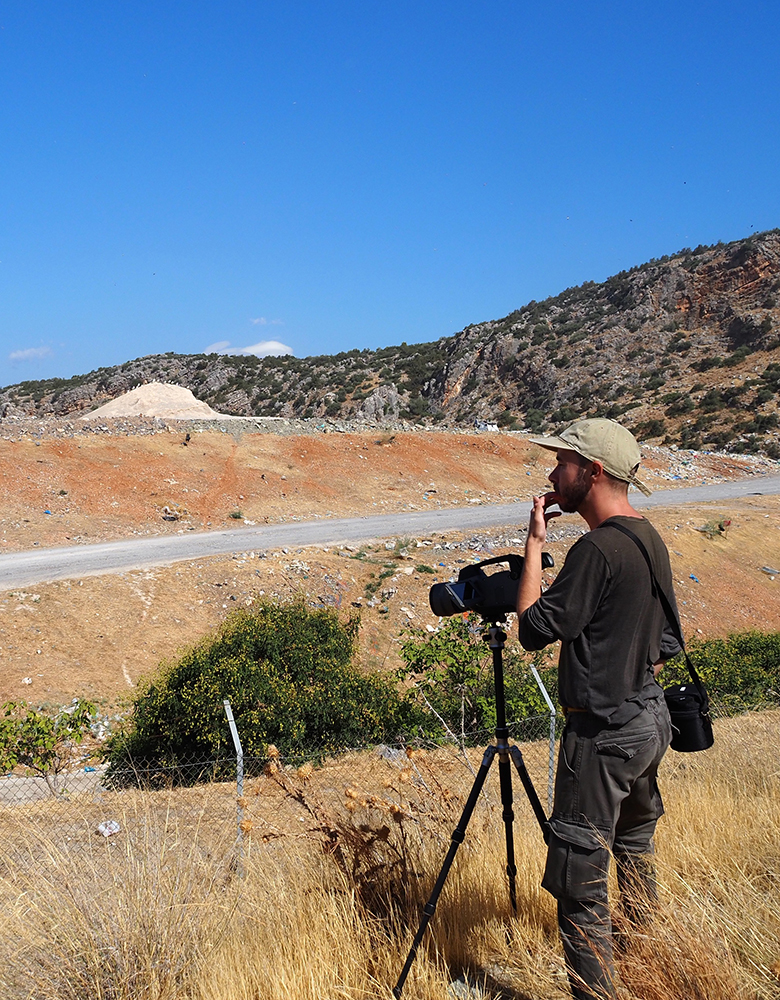
With real-time methane detection at landfills, we can spotlight the problem
and drive action to cut pollution and slow global warming.
Why documenting methane
emissions matters
Independently collected data from a gas analyzer can be a powerful tool for civil society groups. Even without precise emissions quantification, the data from surveys can document the presence and persistence of methane emissions, which can be used as credible evidence to engage operators and/or local authorities regarding the landfills they oversee.
Combined with community testimonies about odor or health concerns, this data can help build a case for stronger oversight of landfills and disposal sites, including policies such as enhanced organic waste separation and limits on landfilling of untreated organic waste.
Finally, data from surveys can be used to introduce communities to methane science – including how landfill emissions form, how they may interact with the surrounding community, and what residents can do to understand, report, and advocate for better landfill gas management and practices that reduce methane pollution.
How existing European landfill laws impact methane emissions
The EU currently does not have specific targets related to methane mitigation from solid waste. However, the existing legislative framework aims to 1) stop waste from entering landfills, 2) improve waste segregation and shift the focus of waste management to practices that are higher in the waste hierarchy, 3) enhance landfill gas capture and treatment, and 4) ensure that all waste disposed in landfill is inert and does not biodegrade there. Taken together, this framework promotes a number of methane mitigation best practices. While many countries in the EU report reductions in landfill methane over time, implementation remains uneven across Europe.
Methane Effects
80x
Methane traps over 80 times more heat in our atmosphere than carbon dioxide over the first 20 years.
0.5°C
Global warming from methane experienced to date.
27%
Percentage of methane emissions from the EU’s waste sector.
20%
Percentage of human-caused methane emissions from the waste sector.
How does the gas analyser work?
CATF is pioneering the use of state-of-the-art equipment to raise awareness of
methane pollution and push for urgently needed reduction action.
CATF’s gas analyser kit
Gas analysers measure gas concentration in the atmosphere. Due to their precision, sensitivity, and dependability, gas analysers have become essential tools in scientific research and monitoring emissions within the oil and gas, waste, and other sectors.
CATF is pioneering the use of state-of-the-art equipment to raise awareness of methane pollution and push for urgently needed reduction action. CATF’s gas analyser, which can detect tiny concentrations of methane and carbon dioxide in the air, allows for the reliable detection of emissions even from methane sources that are spread over large surface areas, such as landfills.