
Financing Nuclear as a Fleet: What Changes in the Cost of Capital, and What Policy Can Do About It
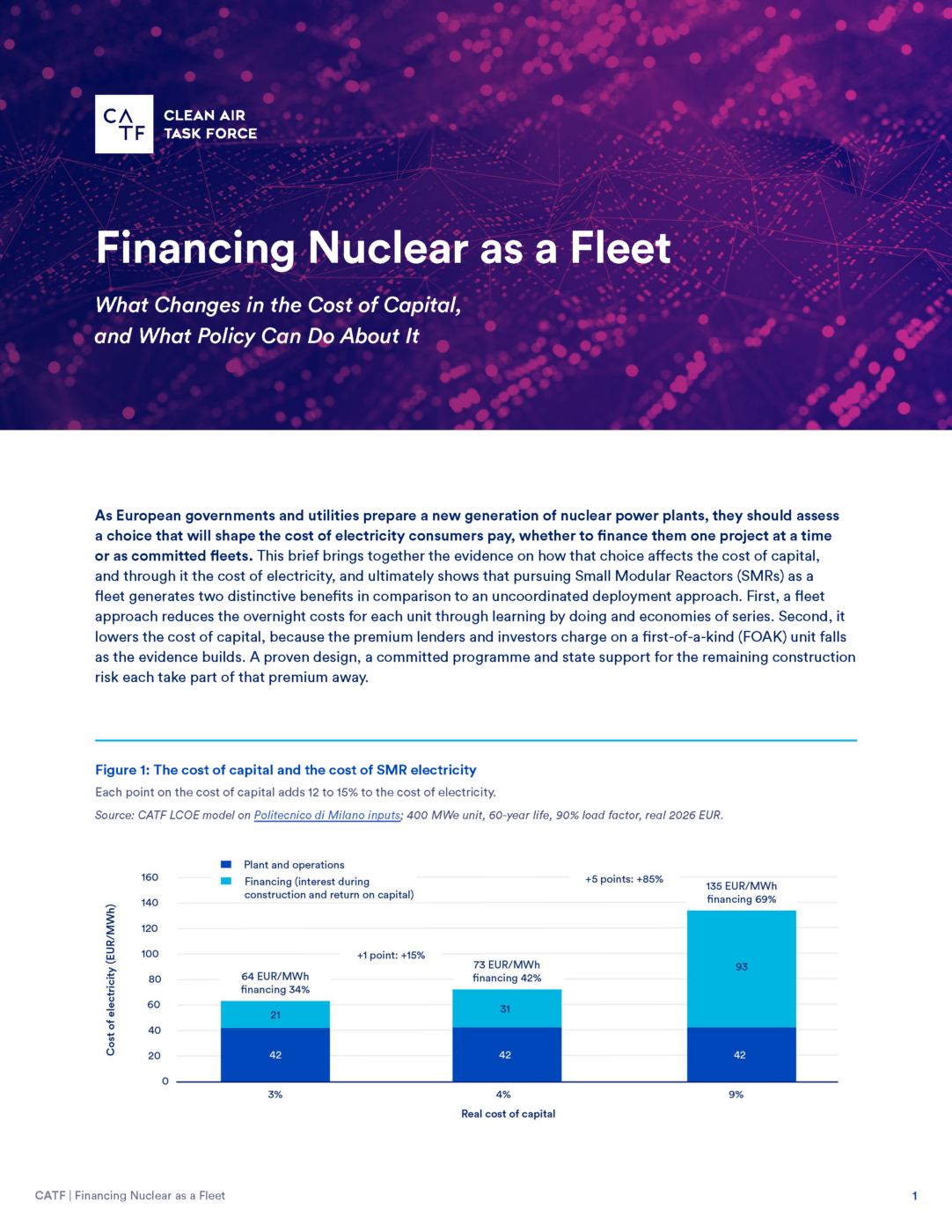
As European governments and utilities prepare a new generation of nuclear power plants, they should assess a choice that will shape the cost of electricity consumers pay, whether to finance them one project at a time or as committed fleets. This brief brings together the evidence on how that choice affects the cost of capital, and through it the cost of electricity, and ultimately shows that pursuing small modular reactors (SMRs) as a fleet generates two distinctive benefits in comparison to an uncoordinated deployment approach. First, a fleet approach reduces the overnight costs for each unit through learning by doing and economies of series. Second, it lowers the cost of capital, because the premium lenders and investors charge on a first-of-a-kind (FOAK) unit falls as the evidence builds. A proven design, a committed programme and state support for the remaining construction risk each take part of that premium away.

