Mainstreaming geothermal energy in Central and Eastern Europe: Key takeaways from the Central European Energy Conference


Contributing authors: Nolan Theisen, Senior Research Fellow for Energy and Climate Policy, Slovak Foreign Policy Association and Katarzyna A. Kurek, Chief Executive Officer, Geotermia Polska
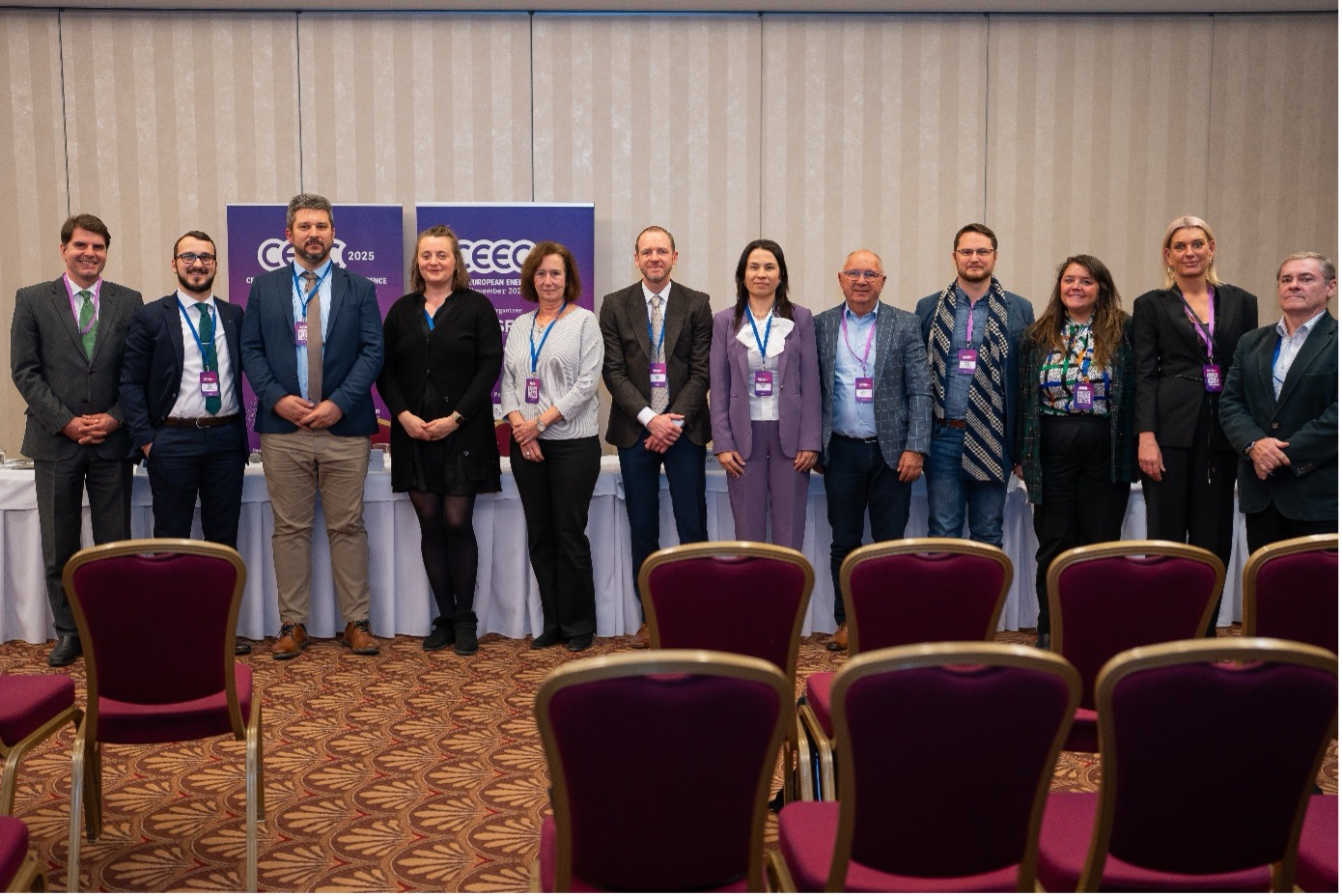
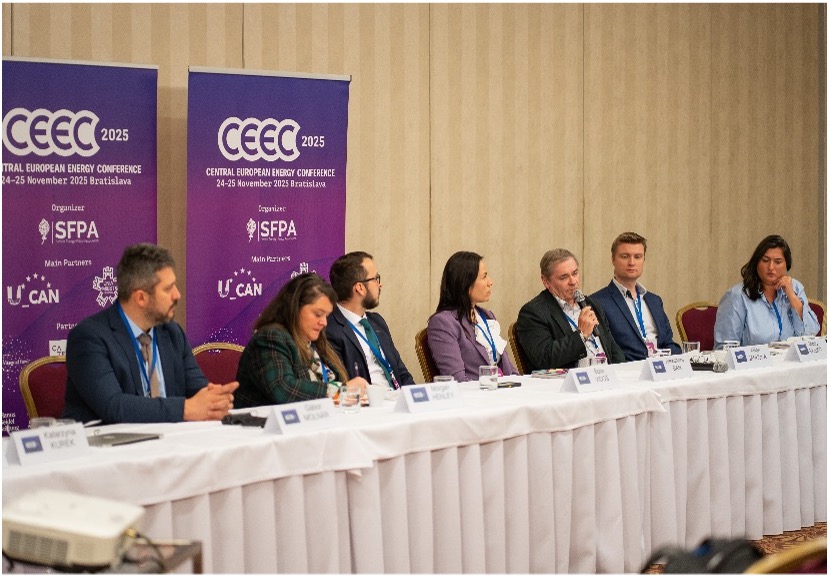
At the Central European Energy Conference (CEEC) organized by Slovak Foreign Policy Association in Bratislava on 24 November 2025, the CEEGEO roundtable, Advancing Geothermal in CEE: Key aspects of national strategic frameworks, financial models and innovation potential gathered a broad mix of leading voices from across Central and Eastern Europe. This included policymakers, public financiers, project developers, technology providers, geological institutes and NGOs from Hungary, Poland, Croatia, Romania, and Slovakia. The event, co-organised by the CEEGEO initiative and Clean Air Task Force (CATF), provided an opportunity for experts to share experiences and best practices from their countries, forge new connections, and take new ideas and inspiration back home.
As the title suggests, the roundtable featured three topical sub-sessions – finance, innovation and national strategic frameworks – which included cross-cutting themes and calls to action that are summarized below.
Geothermal as a pillar of district heating decarbonisation
Across the discussions, participants agreed that geothermal can be a backbone of clean, local and reliable heat in Central and Eastern Europe – especially for district heating. Speakers repeatedly underlined that geothermal is strategically important for decarbonising the region’s extensive district heating systems, which today remain overly dependent on natural gas and biomass.
Concrete examples already exist to build upon. In Poland, geothermal district heating capacity is around 200 MW and expected to grow further by 2030, with explicit support from the state financial institution. Croatia has over 80 MW of installed geothermal thermal and district heating in five cities. In Hungary, geothermal has a 6.5% share in total heat production. At the same time, participants pointed to major untapped potential in Romania and Slovakia, where deep geothermal resources could play a much bigger role in urban heat networks if supported by appropriate policies and investment.
Finance and risk: The central bottleneck
Financing emerged as the key obstacle to scaling geothermal. Developers highlighted that even technically successful projects struggle without adequate risk-sharing tools, long-term visibility and supportive state-aid schemes. Public risk-insurance schemes and guaranteed loans, essential to cover high upfront drilling risk and make projects bankable, remain insufficient. Furthermore, clear, predictable support frameworks (such as Contracts for Difference or premium tariffs) are needed to crowd in commercial bank finance.
A positive example is Poland’s National Fund for Environmental Protection and Water Management, which has invested in geothermal exploration, capacity building and district heating projects for nearly three decades, while now evolving to leverage more private capital. This should be used as a model to inspire similar instruments in neighboring countries.
Without such instruments, promising projects in Croatia, Romania, Slovakia, and other countries remain stalled despite significant sunk investment and proven wells.
Innovation: From overlooked niche to strategic opportunity
The innovation-focused discussions stressed that next-generation geothermal and technology deployment are indispensable for fully unlocking the region’s potential. Next-generation approaches such as enhanced and advanced geothermal make geothermal viable in many more parts of Central and Eastern Europe by enabling development of deeper and harder-to-access resources. High-temperature and superhot systems create opportunities for power-dense energy production and industrial heat that can flow through cascading uses. These cascading uses of geothermal, which start with high-temperature applications, such as power production or industrial heat, and cascade down to lower-temperature uses like district heating and agriculture, can dramatically improve project economics and allow geothermal to reach areas previously seen as unsuitable.
For now, projects in Central and Eastern Europe are exclusively conventional, but these advanced systems should be considered for the future. For now, high costs and lack of R&D funding are prohibitive, and market access is limited for innovative projects.
In the realm of innovation, speakers called for EU and national programmes to explicitly support pilot and demonstration projects, leverage oil and gas expertise and infrastructure, and build a regional value chain around drilling, services and equipment.
National strategies: The key enablers for geothermal mainstreaming
The four countries represented in the final sub-session – Poland, Slovakia, Hungary and Croatia – are at different stages of building geothermal policy frameworks.
Hungary’s national geothermal strategy, adopted in 2024, is ambitious and robust:
- 2030 target – Aiming to double current geothermal capacity to 12-13 PJ
- Dedicated funding and financing – Risk-mitigation fund of EUR 25 million (covers 50% drilling cost for unsuccessful / 10% for successful projects) and EUR 50 million interest-free soft loan for 20 years
- Streamlined licensing procedure – Update to Mining Act centralized licensing for heat and power projects under the Mining Authority
- National geothermal cluster – Established to unify stakeholders across the value chain with regular meetings
Croatia’s government is also very supportive of geothermal energy for electricity, heating and agriculture. Together with the Croatian Hydrocarbon Agency, it has issued more than 30 extraction and exploration licenses under a well-established, streamlined permitting procedure. The Agency has launched a number of additional activities to support geothermal projects, including the creation of an extensive deep geothermal database for prospective investors.
Poland, meanwhile, is in the process of updating its geothermal roadmap and support schemes. There are several strategic pillars that will be addressed, including: district heating, cogeneration, EGS and super hot rock, a geological database, risk insurance program, and education. It has set an indicative target of a 4-5% share of geothermal in the energy mix over the next ten years from less than 1% today.
In Slovakia still struggles with low levels of public support and barriers to existing central heating systems have slowed project development. The government recently amended the environmental impact assessment (EIA) which will speed up implementation for qualifying projects.
Across the region, participants stressed that stable, long-term strategies, clear permitting rules, support aligned with EU “efficient district heating” criteria and robust de-risking tools are essential to attract investors and move from isolated projects to a sustained build-out of geothermal capacity in cities, towns and industrial clusters.
Call to action: A stronger, unified regional voice for geothermal energy
The roundtable underlined the need for a more coordinated Central and Eastern European industry voice towards the EU and national decision-makers. At the national level, this should cover a standardized suite of support measures to incentivize geothermal investments. At the EU level, engagement in timely EU processes, which are the EU Geothermal Action Plan, and the revision of the H&C and energy security strategies. This is especially important because geothermal is often excluded due to fragmented advocacy low visibility and the region is not well represented in Brussels.
This requires continued knowledge-sharing, capacity building, and joint advocacy by industry, public institutions, and civil society. A unified regional voice can help ensure geothermal is visible and prioritized in upcoming EU processes.
Overall, the CEEGEO roundtable sent a clear message: Central and Eastern Europe has the resources, expertise and early successes needed for a major geothermal push. With the right mix of policy, finance and innovation – and with this diverse community of actors working together – geothermal has all features to become a central pillar of the region’s energy security and decarbonisation over the coming decade. Moreover, next to the geothermal expansion in heating, agriculture and industry, the potential for electricity and innovations should not be ignored.